Literary landscape of the Cross-Channel Geopark
May 13, 2026
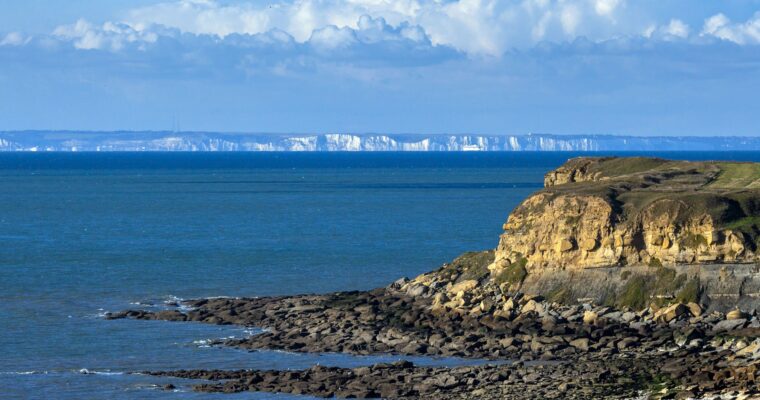
The coastline between southern England and northern France has always carried a profound sense of closeness.
Across the Strait of Dover, the rolling chalk landscape continues beneath the water and reappears on both sides. It is the same geology, split by sea but still visibly connected.
Writers have been drawn to this edge for centuries. William Shakespeare gives its cliffs scale and fear in King Lear. Charles Dickens moves through its roads and crossings in A Tale of Two Cities. Matthew Arnold hears its sound in the shingle of Dover Beach.
Across the Channel, Victor Hugo captures its force and motion, Pierre Loti writes from lived experience of its waters, and Georges Darien reflects its port cities and constrained coastal life. Their work traces a shared landscape shaped by proximity, movement, and exchange, which continues to inspire writing on both sides of the Channel.
It’s a landscape that never changes, yet never feels the same twice.
Charles Dickens and the Kent Downs
Credits: Shutterstock
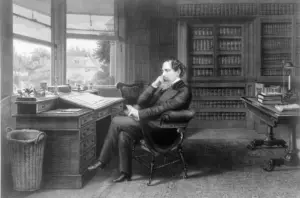
Charles Dickens (1812–1870) was a Victorian novelist whose work often reflects social change, movement, and the emotional geography of place.
Away from the coast, the Kent Downs open into rolling chalk hills. The ground here drains quickly, leaving dry valleys and pale soil that changes texture with the weather.
Charles Dickens uses this landscape in A Tale of Two Cities, where the road toward Dover cuts through this kind of terrain.
In A Tale of Two Cities, the mail coach’s struggle up the “steep hill” out of Dover is a masterclass in geological realism. Dickens captures the physical burden of the landscape, the way the white dust clings to the horses and the heavy, damp “channel air” that hangs in the dry valleys (coombes) of the Downs.
Across the Strait of Dover, the same chalky geology extends into the Boulogne area and, more broadly, into the Capes and Opal Marshes region.
Charles Dickens spent repeated extended stays in Boulogne-sur-Mer during the 1850s, living in rented houses overlooking the town and coastline. He referred to it as a “French watering place,” a common term at the time for seaside towns associated with sea air and seasonal residence.
As a tribute to Dickens and his affection for Boulogne, the town has named the promenade along its historic ramparts after him.
In a letter, he wrote: “If it were but 300 miles further off… how the English would rave about it!” – a remark that reflects the familiarity and proximity of the Cross-Channel landscape.
During these stays, he worked on parts of Bleak House and Hard Times.
Victor Hugo and the moving Channel
Credits: London Stereoscopic Company/ Hulton Archive/ Getty Images
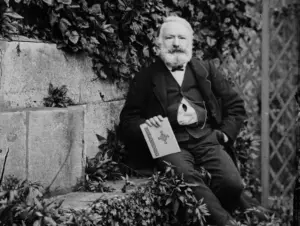
The sense of connection across the Channel is not only visible in the land, but in the movement of the sea itself.
Victor Hugo’s relationship with this coastline predates his exile. In a letter from 4 September 1837, written while travelling along the northern coast of France, he describes Boulogne-sur-Mer and Calais as spaces shaped by movement, ports, and the constant presence of the sea.
After 1851, Hugo crossed the Channel into exile, travelling repeatedly between France, England, and the Channel Islands. He lived in London before settling in Jersey and then Guernsey, where he wrote Les Travailleurs de la mer.
In this novel, the sea is never treated as a backdrop. Hugo describes it as an active system of forces, constantly reshaped by wind and tide. He focuses on opposing currents, turbulent waters, and the way the ocean works against the land.
The waters between France and England are narrow here, but never still. Strong tidal currents run in opposing directions, shaped by the funnel-like geometry of the Strait of Dover. The seabed rises and falls in shallow banks, forcing water into constant turbulence.
This reflects how Hugo’s language of struggle and motion corresponds directly to the physical behaviour of the Channel, where opposing tidal flows generate some of the strongest currents in Europe.
William Shakespeare and the White Cliffs of Dover
Credits: Getty Images
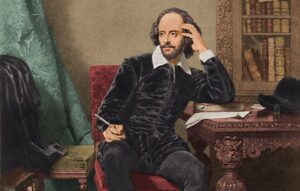
William Shakespeare (1564–1616) was an English playwright and poet whose work explores human psychology, power, and perception.
From movement across the water, the landscape shifts back to the solidity of land, most dramatically at the White Cliffs of Dover.
These cliffs are composed of Upper Cretaceous chalk, formed from microscopic marine organisms compressed over millions of years. They rise sharply, in some places over 100 metres above sea level, with very little gradual slope.
In King Lear, Shakespeare uses this verticality to create psychological intensity. The famous Dover cliff scene depends on the idea of a sheer drop so vast it distorts perception.
From the top, the sea appears flattened and distant. Birds look like small moving points. Sound travels differently, often delayed or softened by wind. These real sensory distortions feed directly into the disorientation experienced by the characters.
Matthew Arnold and Dover Beach
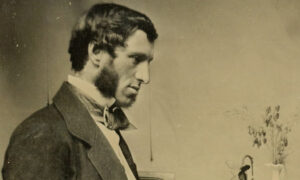
Credits: The Guardian
Matthew Arnold (1822–1888) was a poet and cultural critic concerned with modernity, faith, and emotional landscape.
If the cliffs define the landscape through height, the shoreline below is defined by sound.
Matthew Arnold wrote Dover Beach after spending time along the coast near Dover.
The beach there is made largely of flint pebbles derived from eroding chalk cliffs. As waves move in and out, the pebbles are pulled up and down the slope of the shore. This creates a distinct sound that varies with tide strength and weather conditions.
Arnold describes this as a “grating roar,” a direct observation of that movement. The poem connects this sensory detail with wider reflections on uncertainty in the 19th century, particularly changes in religious and social confidence.
The key point is the sound is not symbolic in origin. It comes from a specific geological process occurring on that shoreline.
Georges Darien and the Port of Boulogne
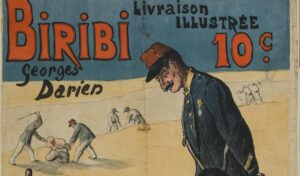
Credits: Bibliothèque de la ville de Paris
Georges Darien (1862–1921) was born in Boulogne-sur-Mer, a harbour city positioned at the meeting point of the open Channel and the chalk cliffs of the Boulonnais. He draws directly on this environment in Bas les cœurs.
Across the Strait of Dover, the same chalky geology extends into the Boulogne area and, more broadly, into the Capes and Opal Marshes region. Here, the coastline shifts abruptly. Chalk headlands give way to docks, harbour basins, and dense urban construction built around maritime trade. The shoreline is structured and heavily modified.
The harbour is shaped by strong tidal variation. At low tide, mudflats and channel edges are exposed, while rising water compresses movement into narrow navigable spaces. This confined geography—tidal rhythm, limited space, and maritime infrastructure—directly structures the tone of Darien’s observational writing.
Jane Austen and Kent Downs interior
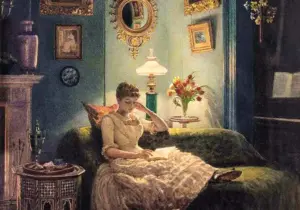
Credits: Edward John Poynter
Jane Austen (1775–1817) was an English novelist known for her insight into social structure, place, and human behaviour.
In the heart of the Kent Downs sits Chilham, a village of narrow streets, timbered houses, and a square that feels like it hasn’t changed in hundreds of years.
Jane Austen is said to have drawn inspiration from this part of Kent when writing Mansfield Park. She spent time nearby at Godmersham Park and visited Chilham Castle during family stays in the area.
Chilham sits at a meeting point between structured village life and open chalk downland. The compact arrangement of houses contrasts with the wider, rolling landscape of the Kent Downs beyond, creating a sense of both enclosure and openness.
In more recent years, Chilham and its surroundings have been used in film and television adaptations of Austen’s work, including the BBC’s Emma, bringing the landscape back into visual storytelling.
Édouard Lévêque and the Boulonnais Interior
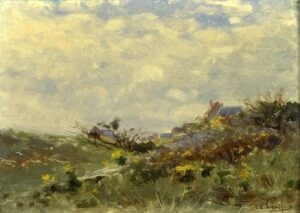
Édouard Lévêque (1863–1936) was a French painter and regional writer closely associated with the landscapes of the Boulonnais.
A similar transition from coast to interior can be found across the Channel.
Édouard Lévêque wrote extensively about these inland landscapes, where chalk plateaus break into wooded valleys and agricultural slopes. He also played a role in shaping the identity of the coastline by promoting the term “Côte d’Opale,” inspired by the shifting, iridescent light of the Channel.
Here, the cliffs give way to elevated chalk plateaus cut by erosion into a network of valleys and slopes. Rainwater drains rapidly through the porous ground, creating dry valleys and only occasional surface streams.
Lévêque’s descriptions focus on these quieter interior spaces: hedgerows following contour lines, villages set on higher ground, and fields that shift colour depending on season and moisture.
This shows how geological structure directly determines settlement patterns and land use across the region.
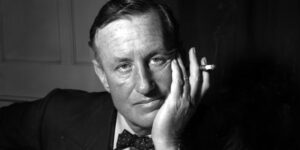
Ian Fleming and the St Margaret’s coast
Credits: Getty Images
Ian Fleming (1908–1964) was a British author best known for creating James Bond. He lived at St Margaret’s Bay on the Kent coast, a landscape that informed much of his writing.
The stretch between Dover and Deal introduces another layer of detail. This coastline is cut with small bays, steep paths, and concealed inlets. Chalk is relatively soft, so tunnels, bunkers, and defensive positions have been carved into it over time.
Ian Fleming lived at St Margaret’s Bay, a sheltered curve in the cliffs where the land feels contained but still exposed to the sea. When sea mist drifts in from the Channel, low cloud presses into the cliffs, or there is a stark clarity after rain, when it takes on an otherworldly quality that resonates with the mood of Moonraker, Fleming’s third James Bond novel.
This landscape has often been associated with his writing of Moonraker. The geography of the coast naturally creates high viewpoints, limited access routes, and clear boundaries between land and sea, shaping how movement and visibility work within the setting.
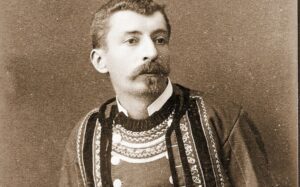
Pierre Loti and the northern seas
Credits: Musées-municipaux – Rochefort 17
Pierre Loti (1850–1923) was a French novelist and naval officer whose work is rooted in direct experience of the sea. Through his naval career, he repeatedly crossed the Channel and the North Sea, observing their conditions firsthand.
These northern waters are exposed and unstable. Strong winds move in from the Atlantic, temperatures remain low, and weather systems shift rapidly. Tides are pronounced, structuring both navigation and coastal activity.
In Pêcheur d’Islande, Loti follows Breton fishermen sailing into these northern seas. The journeys begin from coasts connected to the Channel system and extend into the North Atlantic.
The sea in this novel is not distant or abstract. It is immediate, physical, and often hostile. Loti focuses on exposure, risk, and the emotional strain of long absences from land.
The coastline appears as a narrow threshold—stable on one side, uncertain on the other—where departure means entering a space governed entirely by natural forces.
Loti’s writing reflects maritime life within the wider Channel and North Sea system, where environmental conditions shape movement, labour, and experience.
The Landscape continues to inspire
Across these landscapes, chalk, coast, and Channel form a continuous geological and cultural system. Writers have long responded to it through movement, observation, and imagination. That relationship continues today in geopoetic writing, where landscape is approached as something active, shaped by geology, water, and time. The Cross-Channel Geopark remains part of this ongoing dialogue, and new work continues to emerge from the same living landscape.
Popular articles
Explore the Cross-Channel Geopark with Our Geotouristic Map
Your guide to the Cross-Channel Geopark: download the free Geotouristic Map and…
The Best Viewpoints in the Cross-Channel Geopark
Discover the most spectacular viewpoints across the Cross-Channel Geopark, from the Kent…
Your guide to exploring the Cross-Channel Geopark with interpretation panels
Explore the Cross-Channel Geopark like never before with new interpretation panels that…