When place names cross the Channel
September 14, 2026
The place names of the Cross-Channel Geopark Transmanche can tell us a lot about the people, languages and landscapes that have shaped both sides of the Channel.
From the Kent Downs to the Boulonnais, some names look and sound surprisingly familiar. Look closely at towns, villages and landmarks across the Geopark and you may spot names that echo places on the other side of the Channel.
These similarities give us clues about the languages once spoken here and the people who shaped the places where they lived.
Surprisingly similar names
Some of the connections between the two sides are striking.
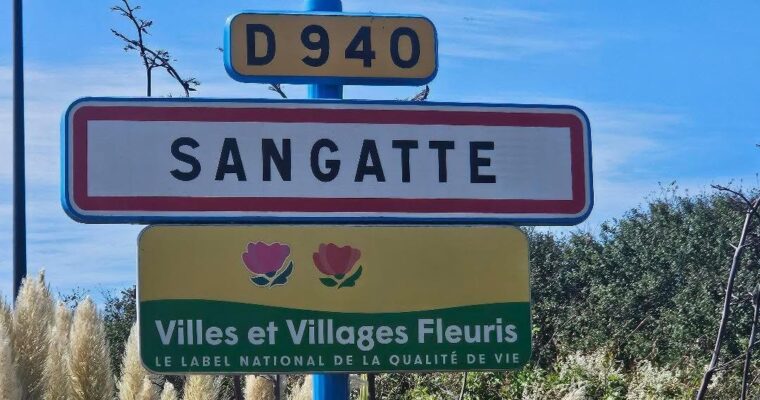
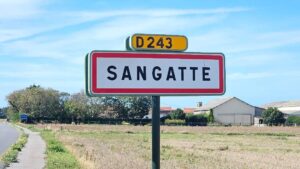
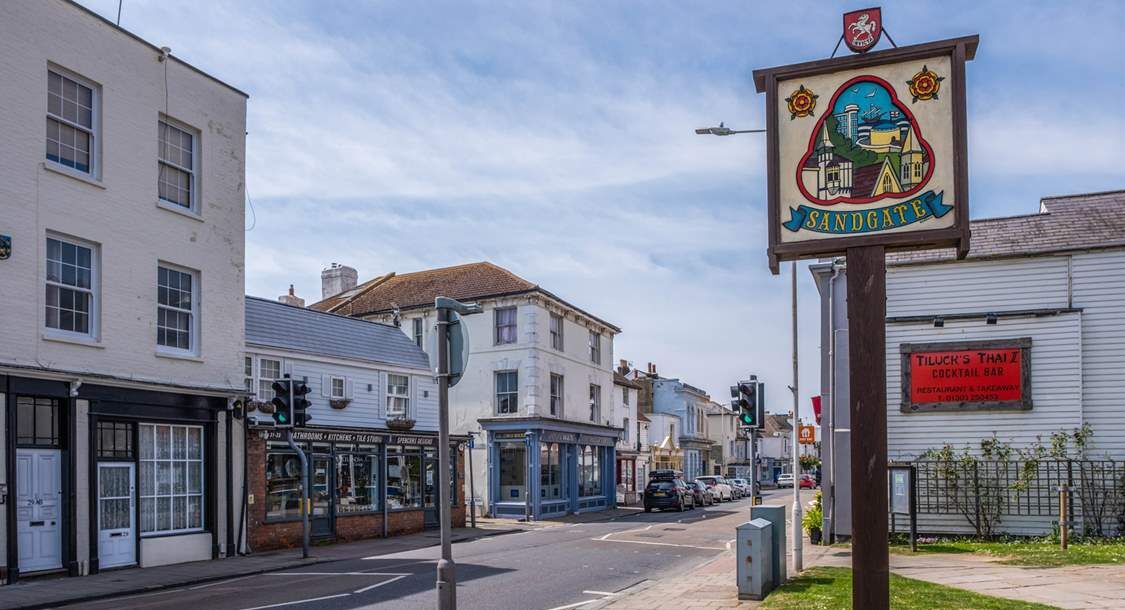
Sangatte, for example, closely resembles Sandgate in Kent. Gris-Nez is often compared with Greatness, while Pihem echoes Petham.
These similarities do not necessarily mean the places share the same origins. Instead, they reflect traces of Old English in place names on both sides of the Channel.
What the names tell us
Many of these names contain elements that tell us something about how people once described the places where they lived.
The suffix -hem, or -ham in England, originally referred to a settlement, dwelling or estate. It appears in French communes such as Tournehem-sur-la-Hem and Bouvelinghem.
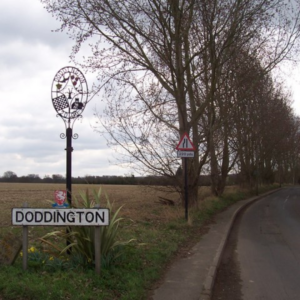
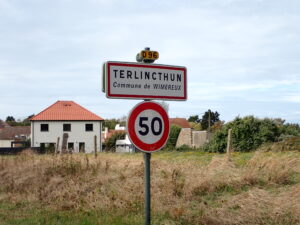
Another recurring ending is -thun, found in names such as Terlincthun, Todincthun and Verlincthun. It comes from the Old English tūn, meaning a farm, estate or settlement, and is related to -ton in modern English. The same element can be found in Kentish place names such as Doddington and Boughton Aluph.
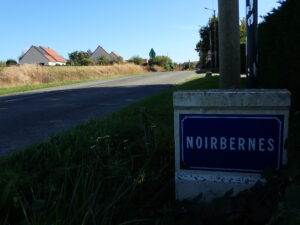
The element -bourne, referring to a stream or watercourse, also appears on both sides of the Channel. It links names such as Noirbernes in France with Northbourne in Kent. Both contain the Old English north, meaning “north”, and burna, meaning “stream”, giving the sense of “northern stream”.
One particularly distinctive feature of the Boulonnais is the use of -thun, especially -incthun. These endings are unique to the former county of Boulogne and are not found elsewhere on mainland Europe, making them an important trace of the region’s Anglo-Saxon heritage.
Names shaped by nature
Some place names describe the landscape around them.
- Welle refers to a spring or stream.
- Thorne / Thournes refers to thorny vegetation.
- Ness / Nez describes a coastal promontory.
Others hint at how the land was used. Sombrethun, for example, is linked to Somerton in England.
The name Somerton comes from the Old English words sumor, meaning “summer”, and tūn, referring to a farm or settlement. It can therefore be understood as a “summer farm” or “summer settlement”, referring to a place used seasonally for people and livestock.
A two-way story
The influence of language and culture across the Channel was not one-way. While the Boulonnais retains traces of Anglo-Saxon influence, Kent also bears the mark of French language and culture, particularly following the Norman Conquest.
After 1066, Norman French became an important influence on land ownership, administration and place names across England. Some of these names can still be found in the Kent landscape today.
French in the landscape
- In some places, the French influence is particularly clear:
- Capel-le-Ferne – from capelle (“chapel”) and Old French le ferne (“the ferns”), meaning “the chapel among the ferns”.
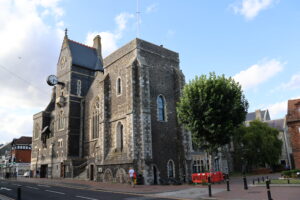
- Maison Dieu, Dover – meaning “House of God”, the name of a medieval hospital that provided care for pilgrims.
- The Grange – from Old French graunge, referring to a farm or agricultural building, often associated with a monastery.
A living connection
These connections are not confined to the past. They can still be seen in the landscape today.
Near Chilham, Domaine Evremond Vineyard, established by Champagne Taittinger, shows how the two sides of the Channel share both cultural and geological links. Its chalk landscape forms part of the same geological story that stretches from Kent towards the Champagne region.
Next time you look at a map of the Cross-Channel Geopark Transmanche, take a closer look at the names. A name that seems ordinary can tell us something about the landscape, language and people that came before us.
For further reading
This page has been made possible thanks to the extensive research of Jacques Mahieu, author of The Bunanshire, a work exploring the history behind the names of villages across the Cross-Channel Geopark Transmanche.
Born in Boulogne-sur-Mer in the immediate post-war period, Jacques Mahieu grew up surrounded by the visible traces of wartime bombing. His childhood, shaped by ruins and reconstruction, sparked an early interest in history. That curiosity soon turned towards the place names of the Boulonnais region. As a child, he began wondering about their origins and meanings, and a chance discovery in a library of an old book on Saxon settlement in the region proved decisive.
It marked the beginning of a lifelong interest in toponymy. Over the years, Mahieu wrote several books exploring medieval place names across the Boulonnais and the Opal Coast. He compared his research with English toponymy, uncovering numerous similarities between the two sides of the Channel.
This work eventually led him to write The Bunanshire, a term he coined to describe a shared historical space linking the Boulonnais with parts of England. The name refers to Boulogne, which was once known as “Bunan” in Old English.
Photo credits: ©Alamy ©David Anstiss ©Maxime Bodhuin
Popular articles
Explore the Cross-Channel Geopark with Our Geotouristic Map
Your guide to the Cross-Channel Geopark: download the free Geotouristic Map and…
The Best Viewpoints in the Cross-Channel Geopark
Discover the most spectacular viewpoints across the Cross-Channel Geopark, from the Kent…
Your guide to exploring the Cross-Channel Geopark with interpretation panels
Explore the Cross-Channel Geopark like never before with new interpretation panels that…