Exploring the chalk reef at St Margaret’s Bay with Shoresearch
November 3, 2026
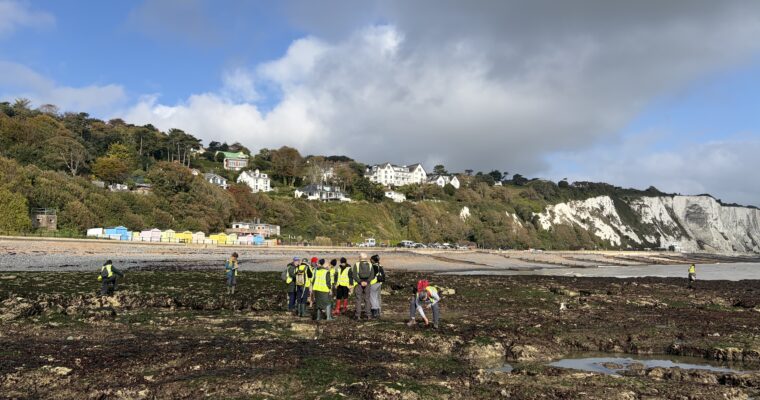
The Geopark Ambassadors recently joined forces with Kent Wildlife Trust’s Shoresearch team to explore the chalk reef at St Margaret’s Bay and discover more about the marine life along our stretch of the Channel.
Shoresearch is a long-running citizen science project led by Kent Wildlife Trust. Volunteers survey the intertidal zone at locations around the Kent coastline, recording the wildlife found between the high and low tide marks. If you’ve ever explored a rockpool, you’ll already have an idea of the sort of environment we’re talking about!
The day began at St Margaret’s Hall, where around twenty Shoresearch volunteers and GeoAmbassadors gathered for a morning of learning about seaweed and marine algae. Dr Ian Tittley, one of the UK’s leading seaweed experts, introduced the group to the different species found along the Kent coast and explained how seaweed communities vary around the coastline. The session offered an insight into the diversity of marine algae found in Kent and the different coastal habitats they occupy. Ian is also the author of A New Atlas of the Seaweeds of Kent, a valuable resource for anyone interested in the county’s marine life.
Ian also spoke about the impact of warming seas on seaweed along the Kent coastline. Kelp, a large brown seaweed which provides food and shelter for marine wildlife, has almost disappeared from parts of the county. On Thanet, it is now absent from the stretch between Birchington and Margate, while populations remain around Walpole Bay and Botany Bay. Further south, a healthy population survives between South Foreland and Folkestone, although this is gradually declining too.
Shoresearch plays an important role in documenting these changes. Volunteers record the species found at coastal sites, building a picture of how marine life and its distribution change over time. Their records provide a valuable baseline for understanding the impact of warming seas and other pressures on our coastline. You can read more about these changes in Ian Tittley’s reflection on the Kent Wildlife Trust website.
Discovering life on the chalk reef
With low tide approaching at midday, it was time to head down to the beach. After Sunday’s downpour, we were treated to a beautiful sunny afternoon, with the receding tide revealing the chalk reef beneath our feet.
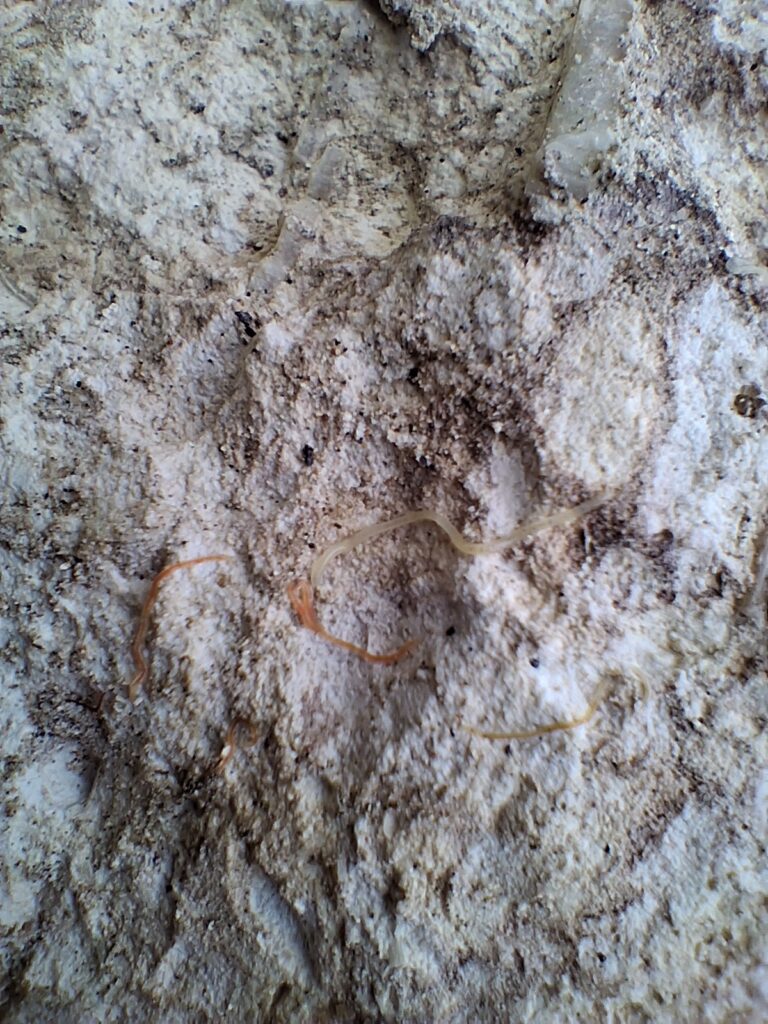
Chalk reefs are a globally scarce habitat, supporting a surprising variety of marine life. Look closely and you’ll find an entire world of creatures living among the rocks and crevices, from spionid worms and piddocks to blennies and even lobsters.
Following a safety briefing, the group headed out across the exposed reef to begin the survey. The Shoresearch veterans led the way, showing the GeoAmbassadors where to look, which rocks to carefully lift and how to spot some of the smaller creatures living on the reef.
The survey began as far out as conditions safely allowed, with volunteers gradually working their way back towards the shore, keeping a close eye on the incoming tide.
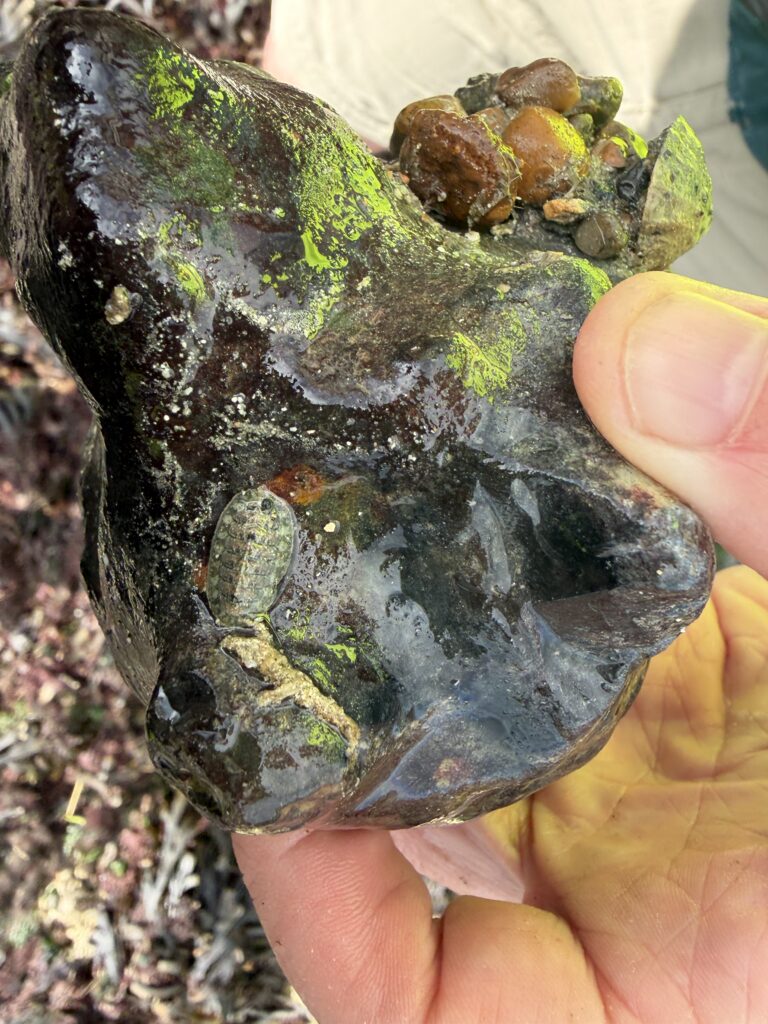
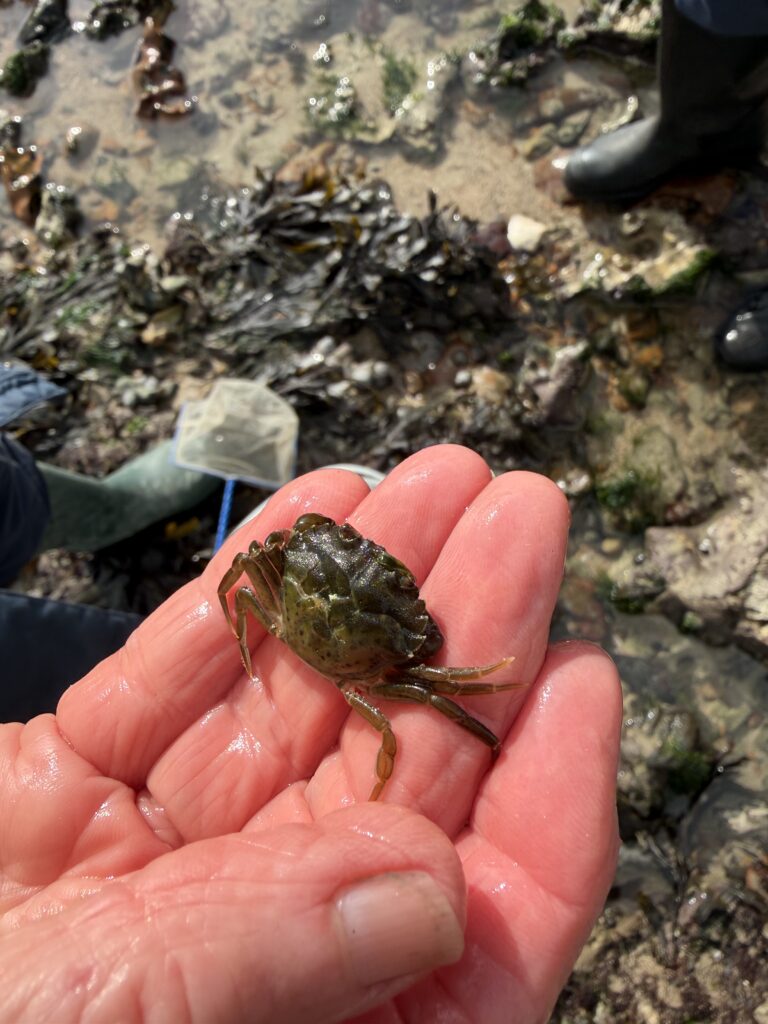
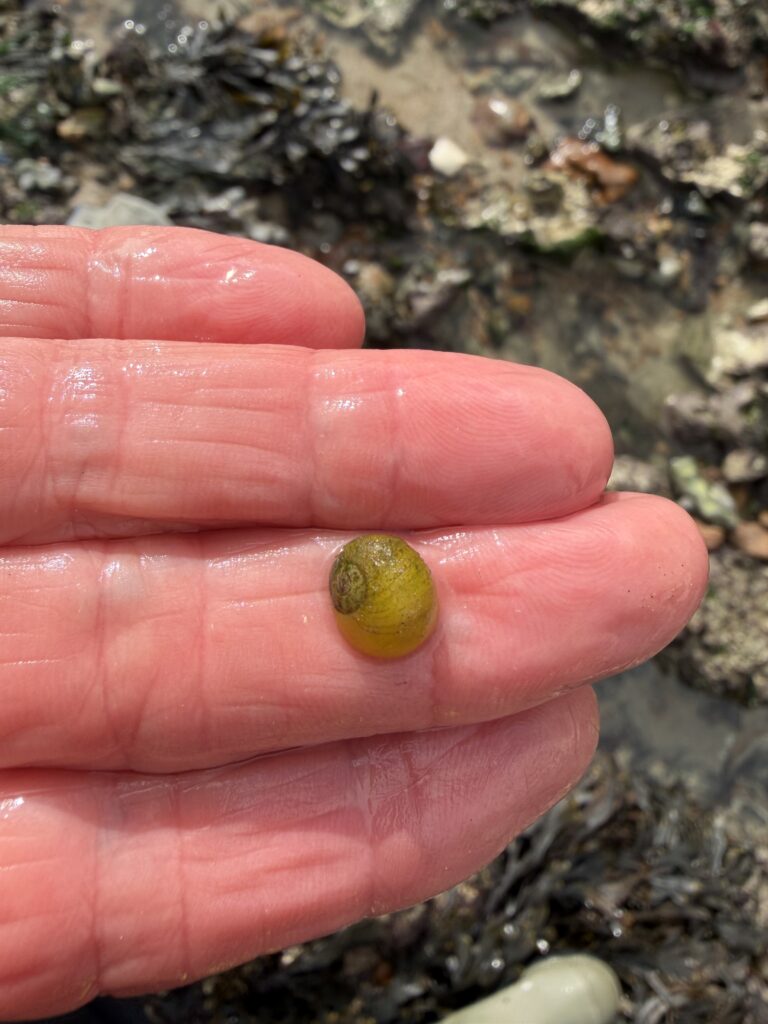
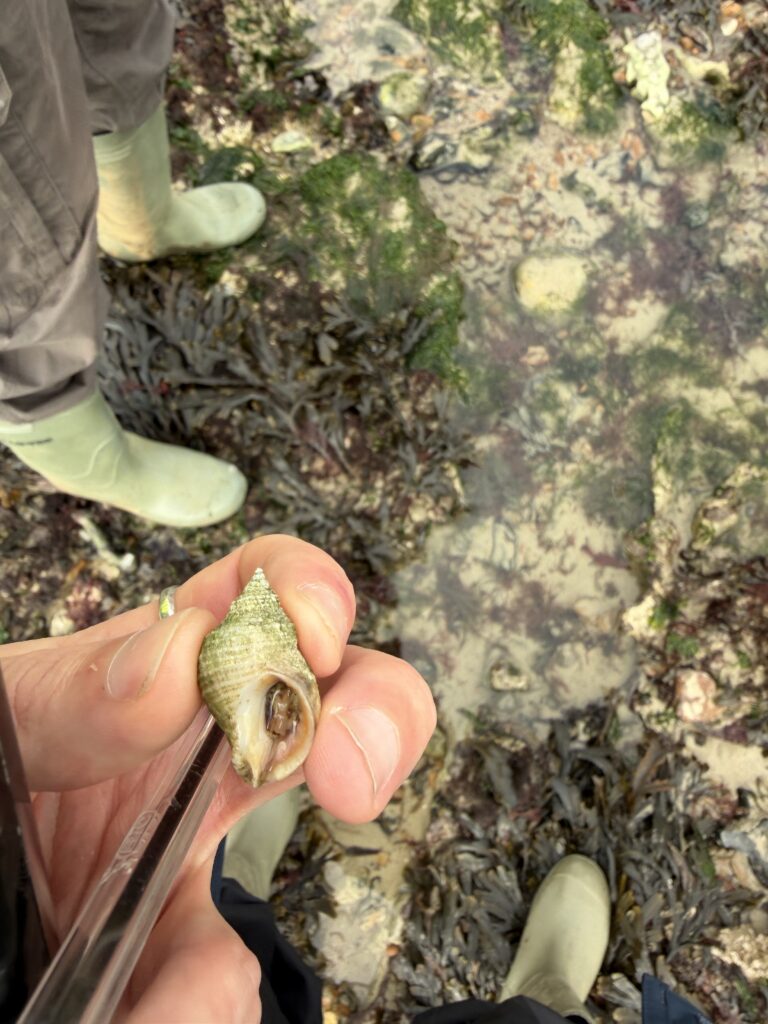
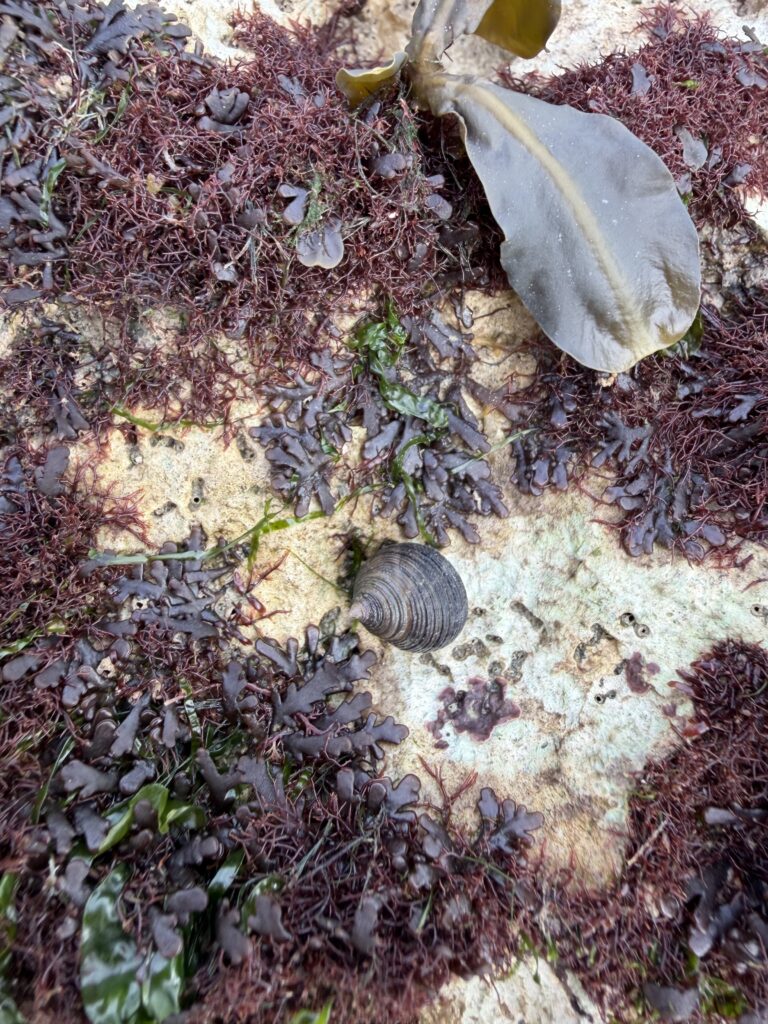
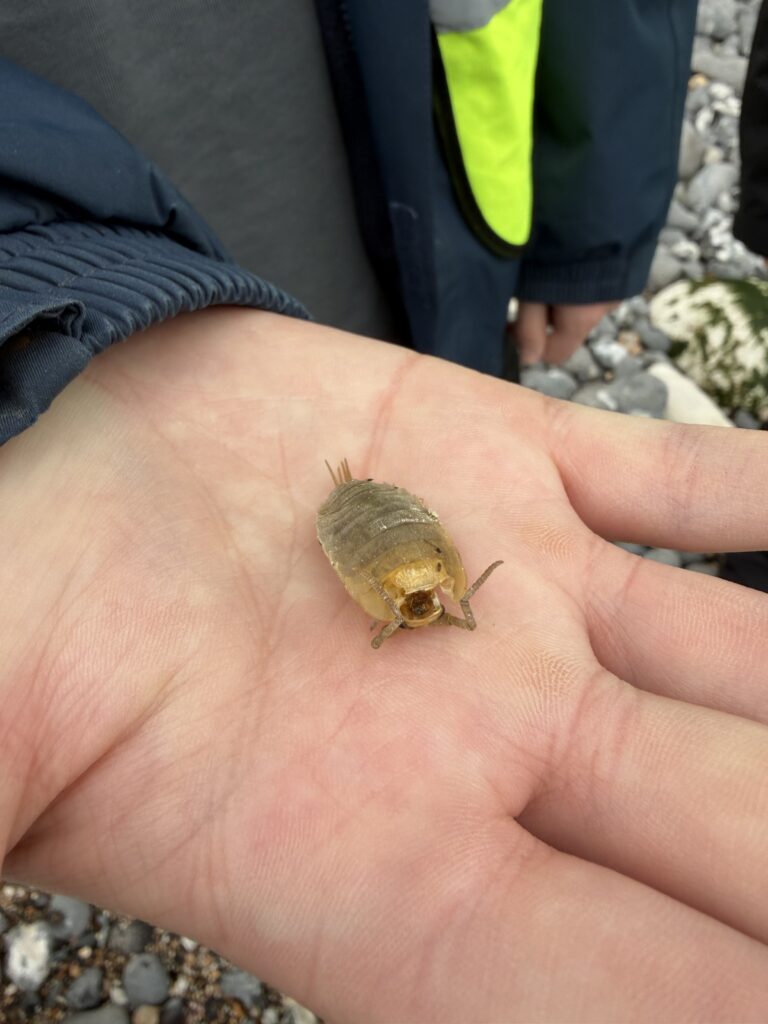
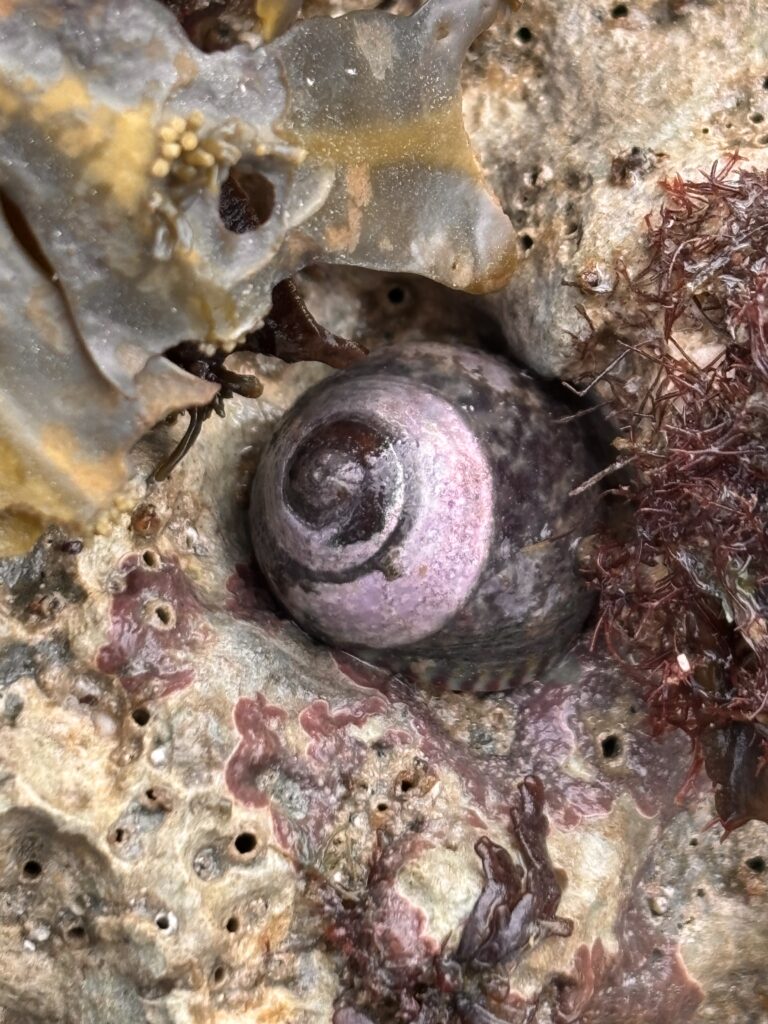
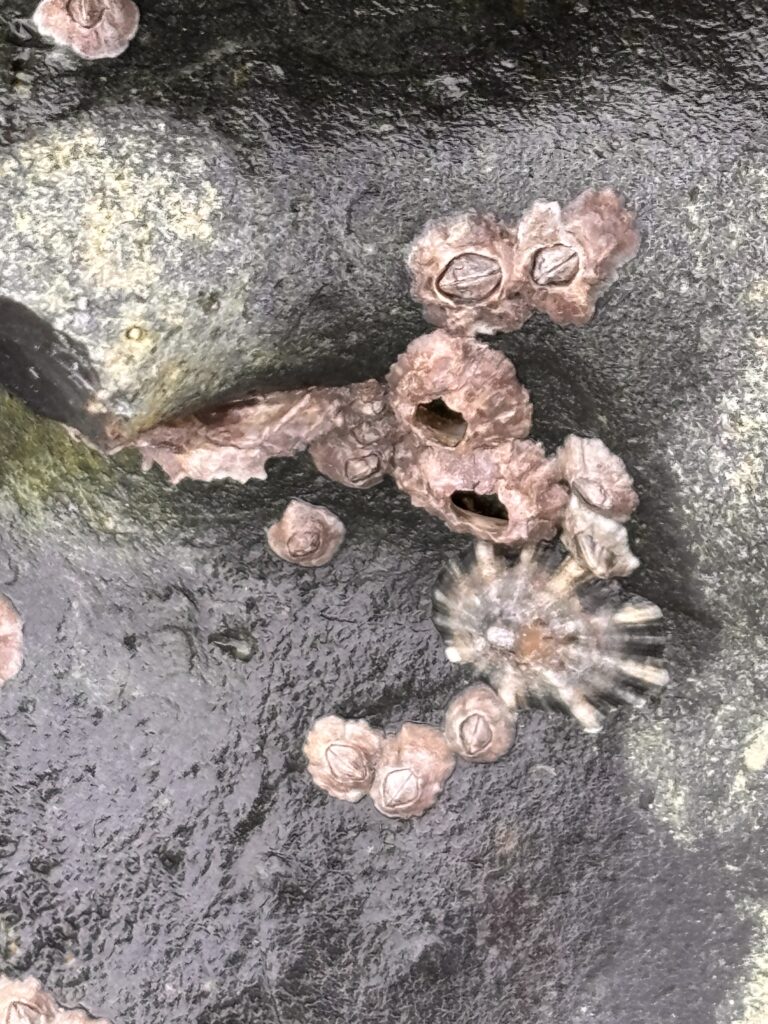
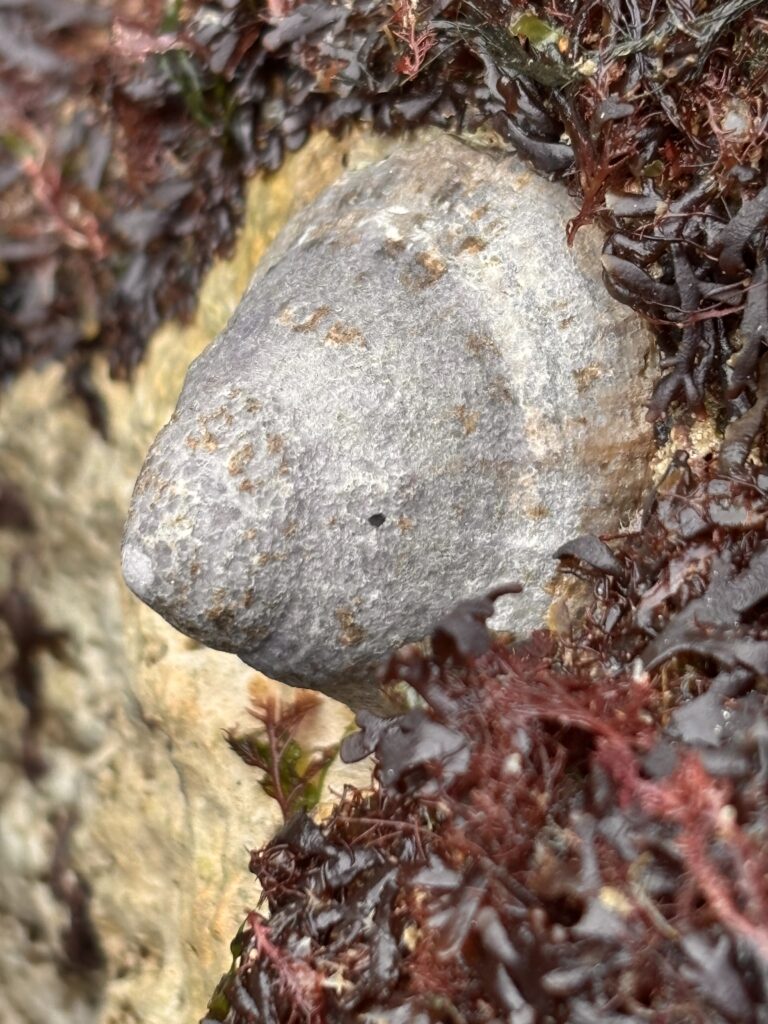
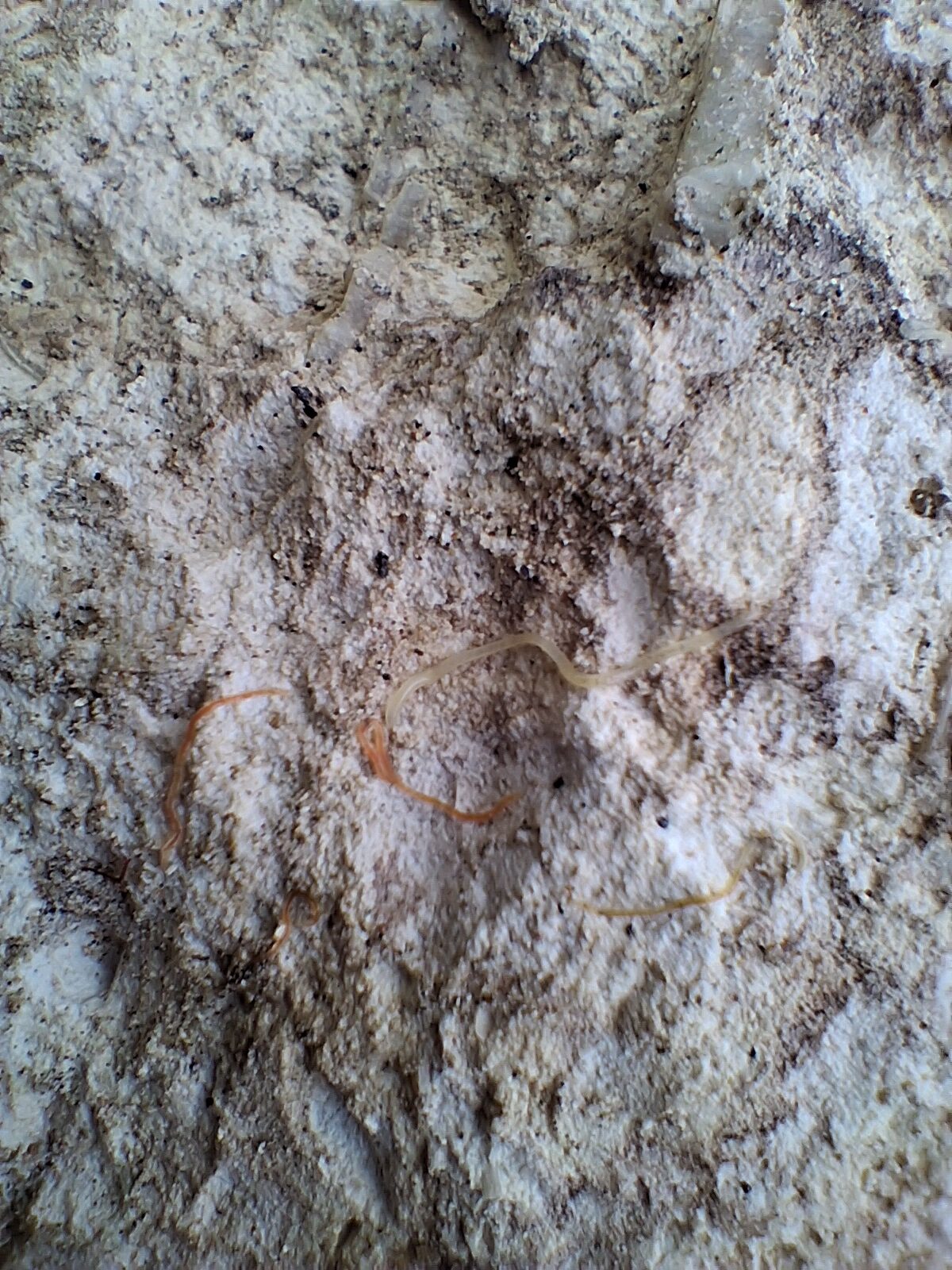
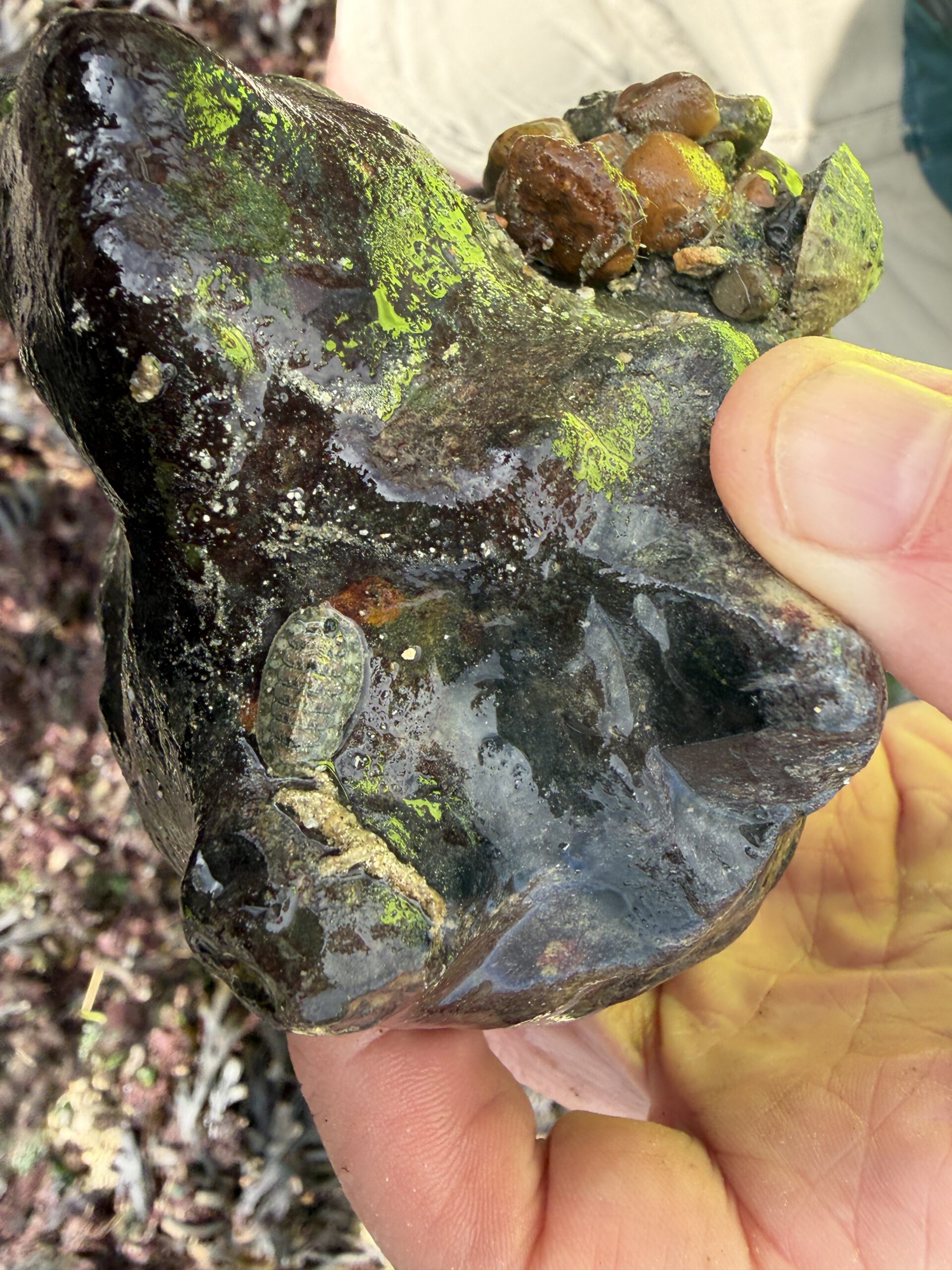
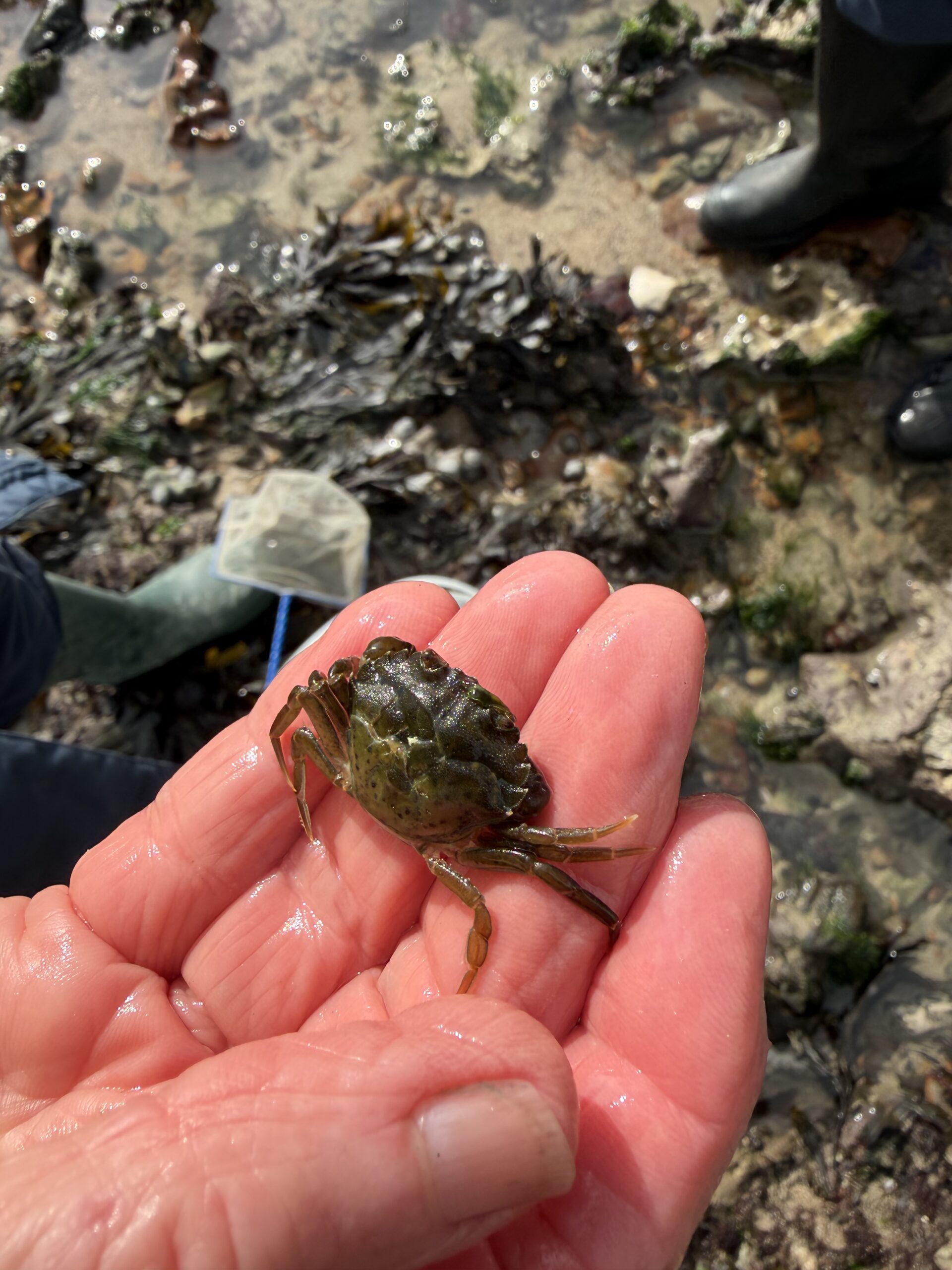
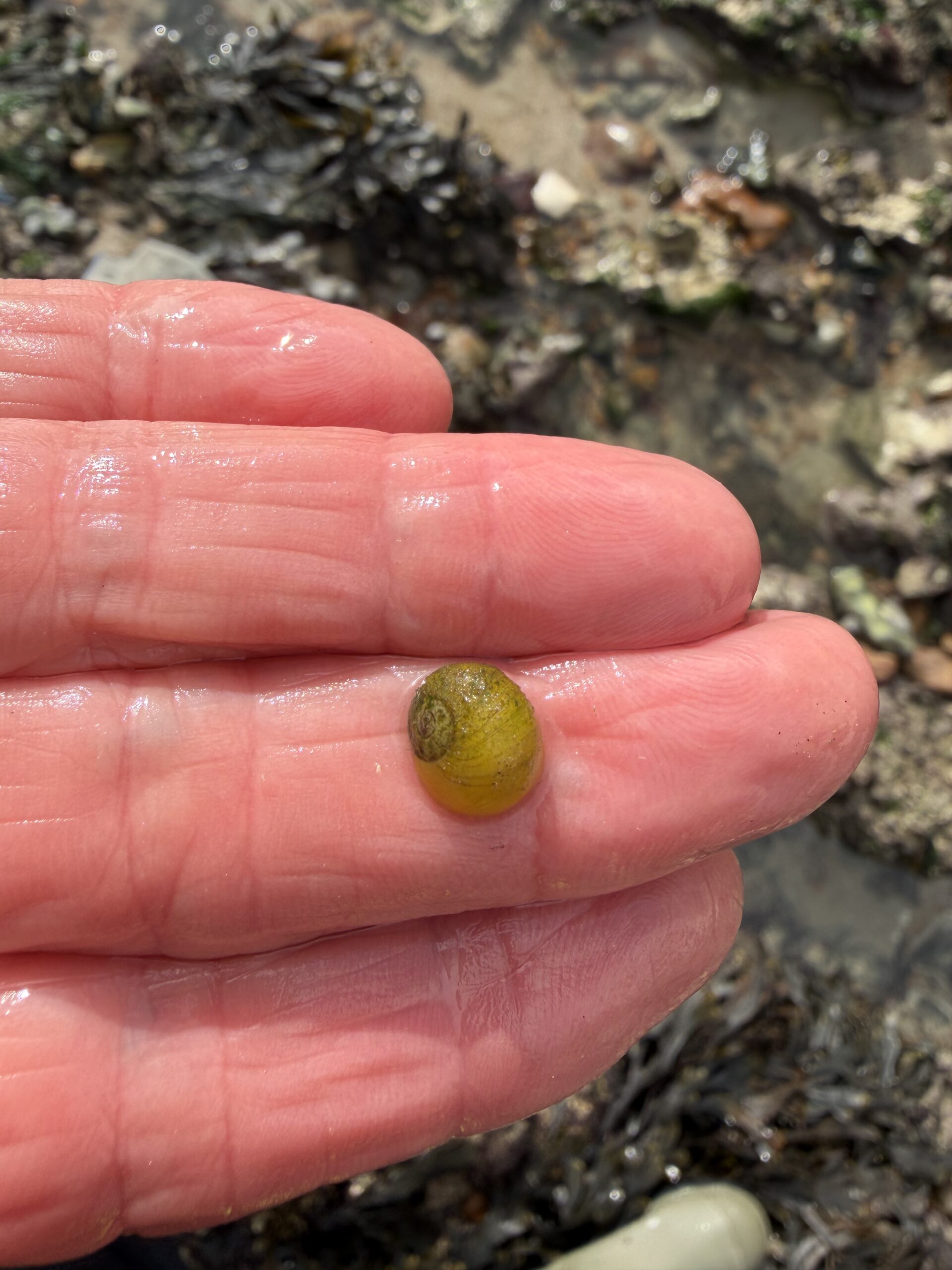
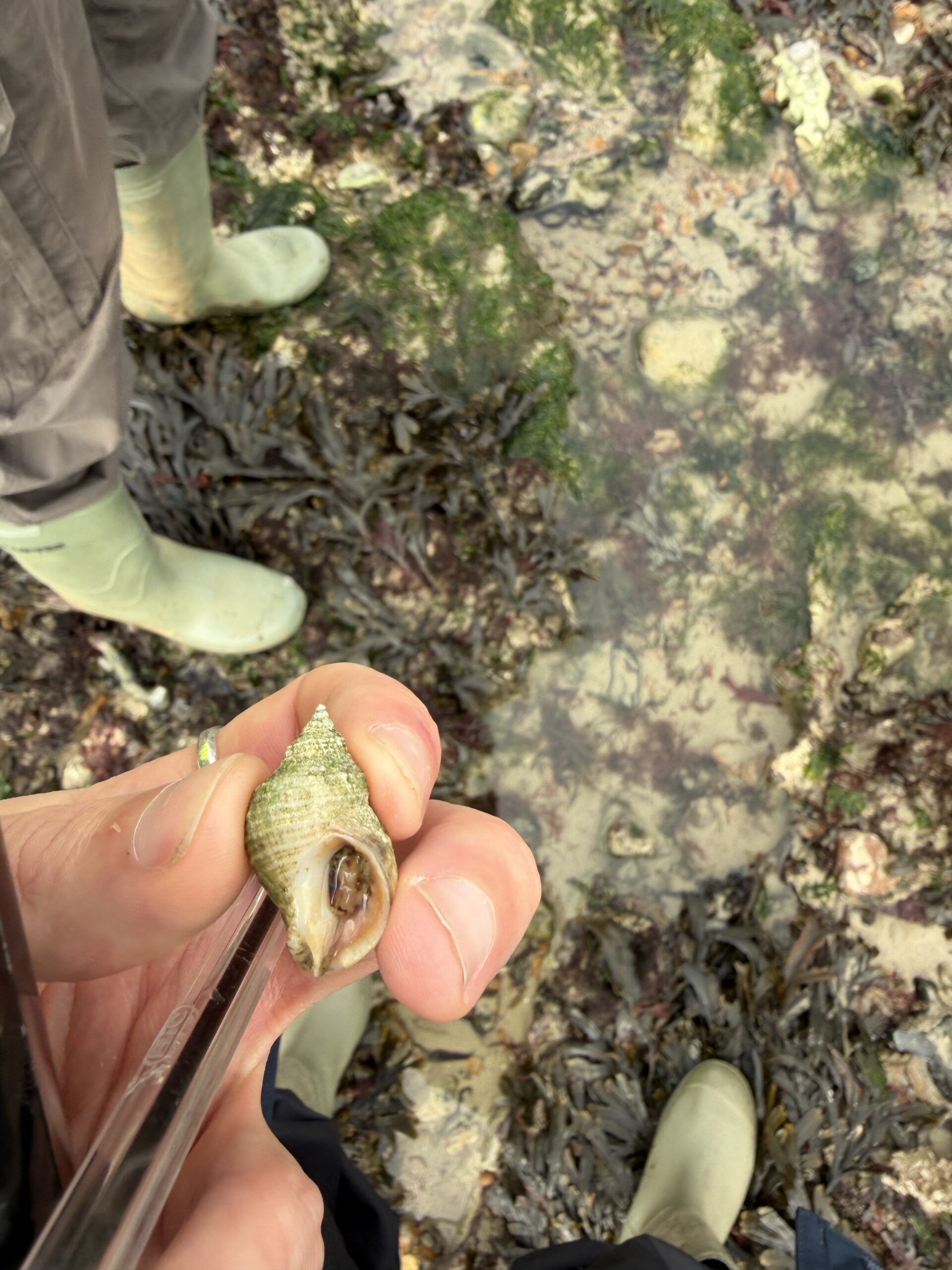
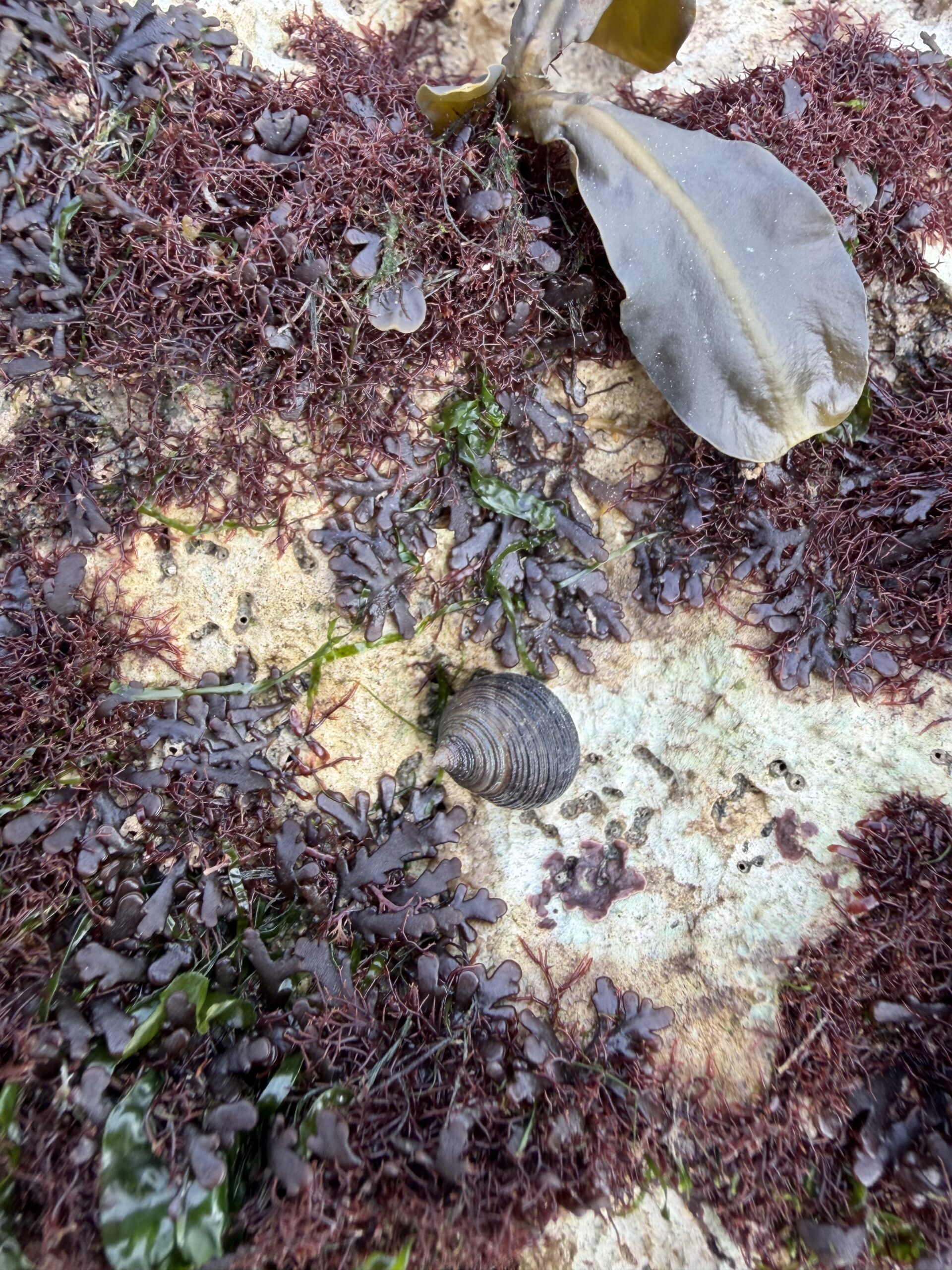
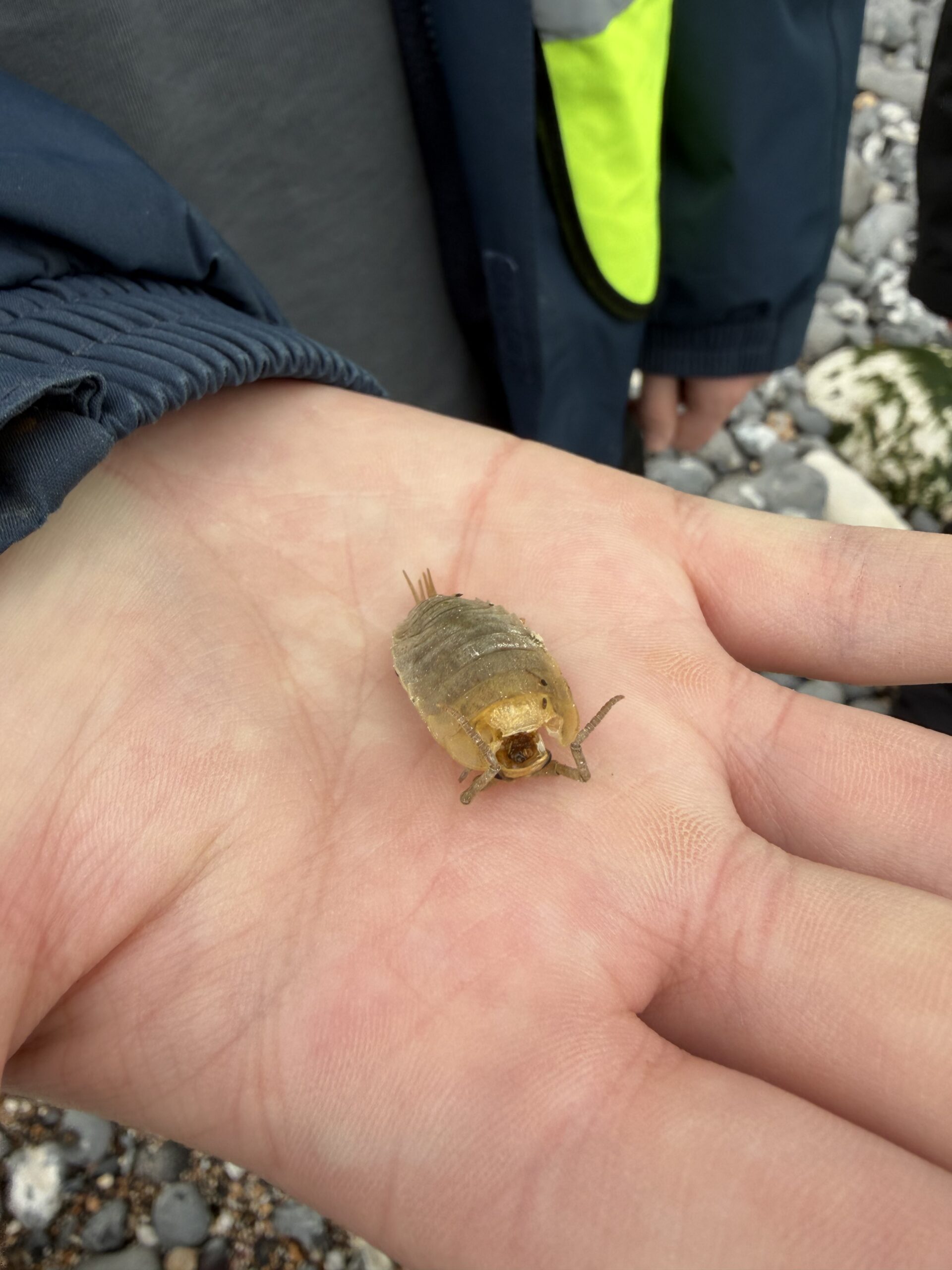
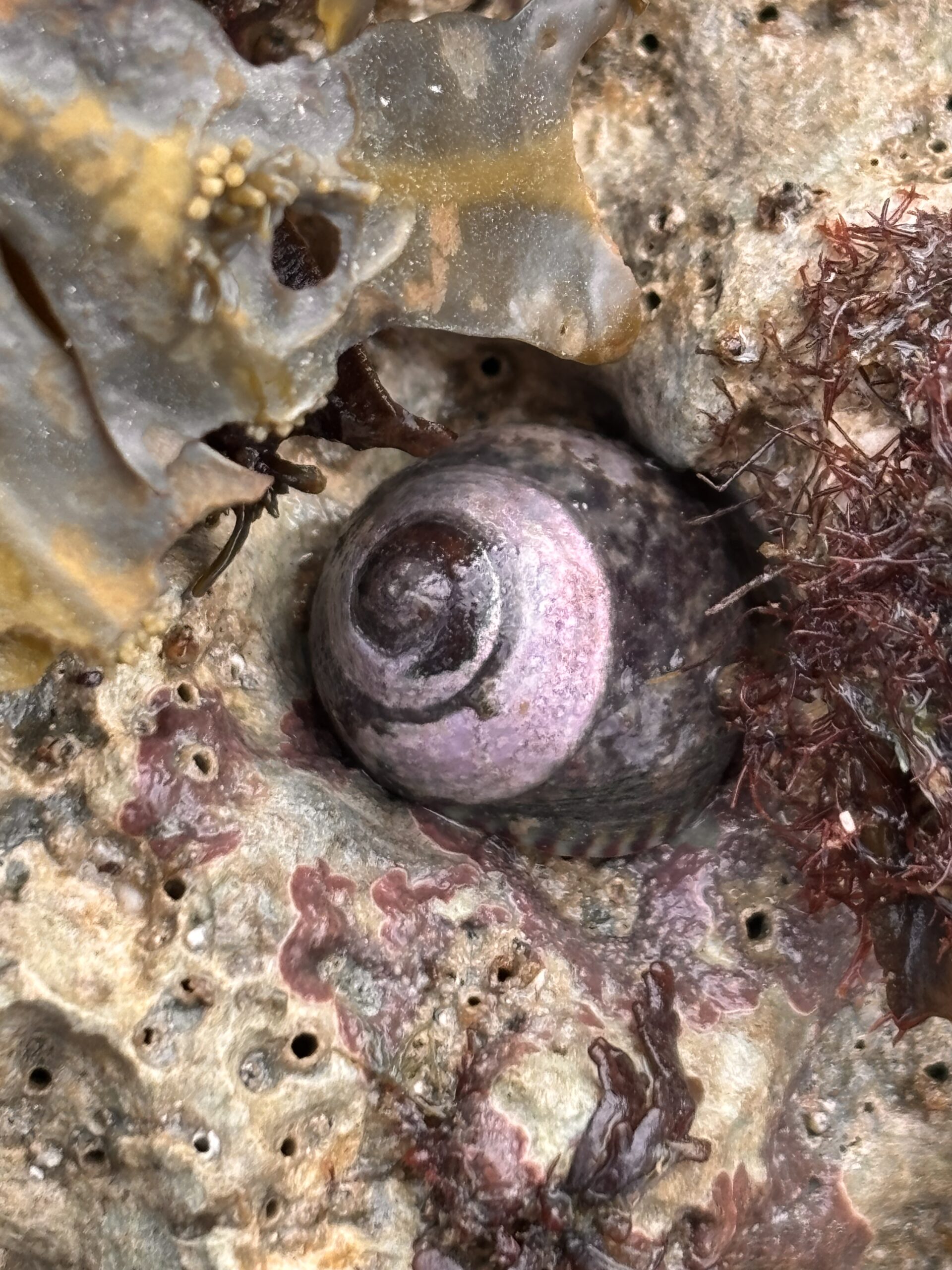
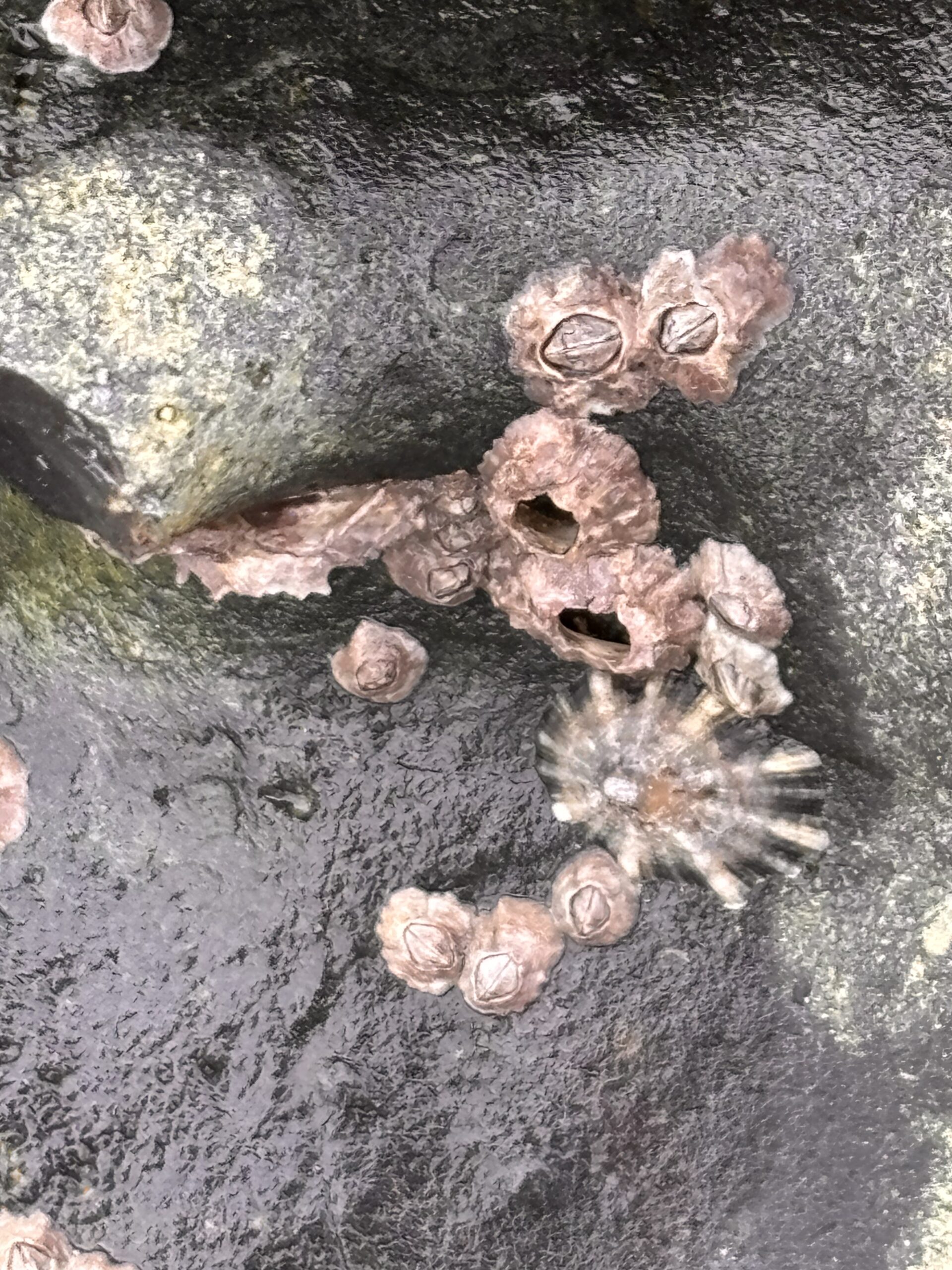
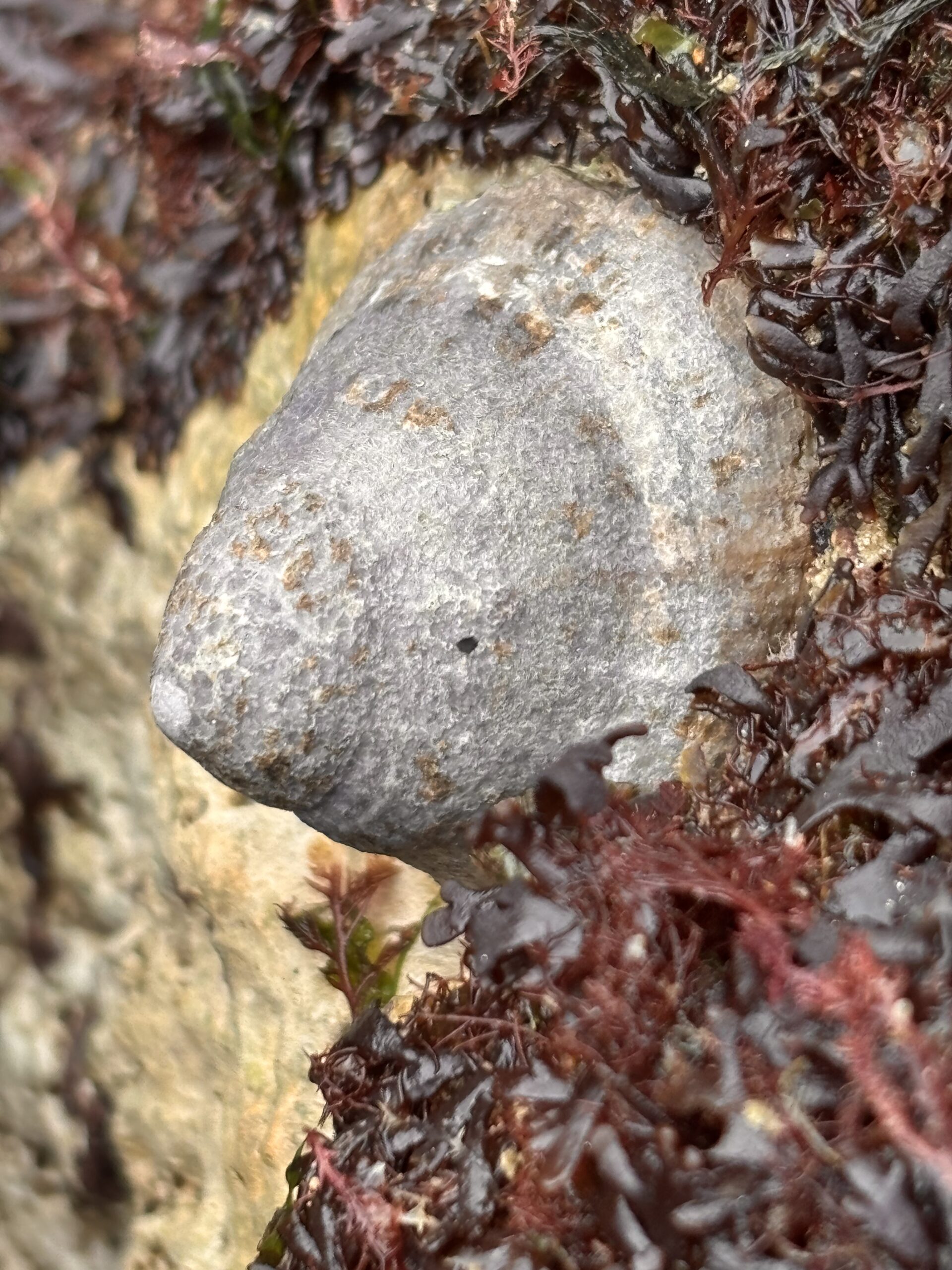
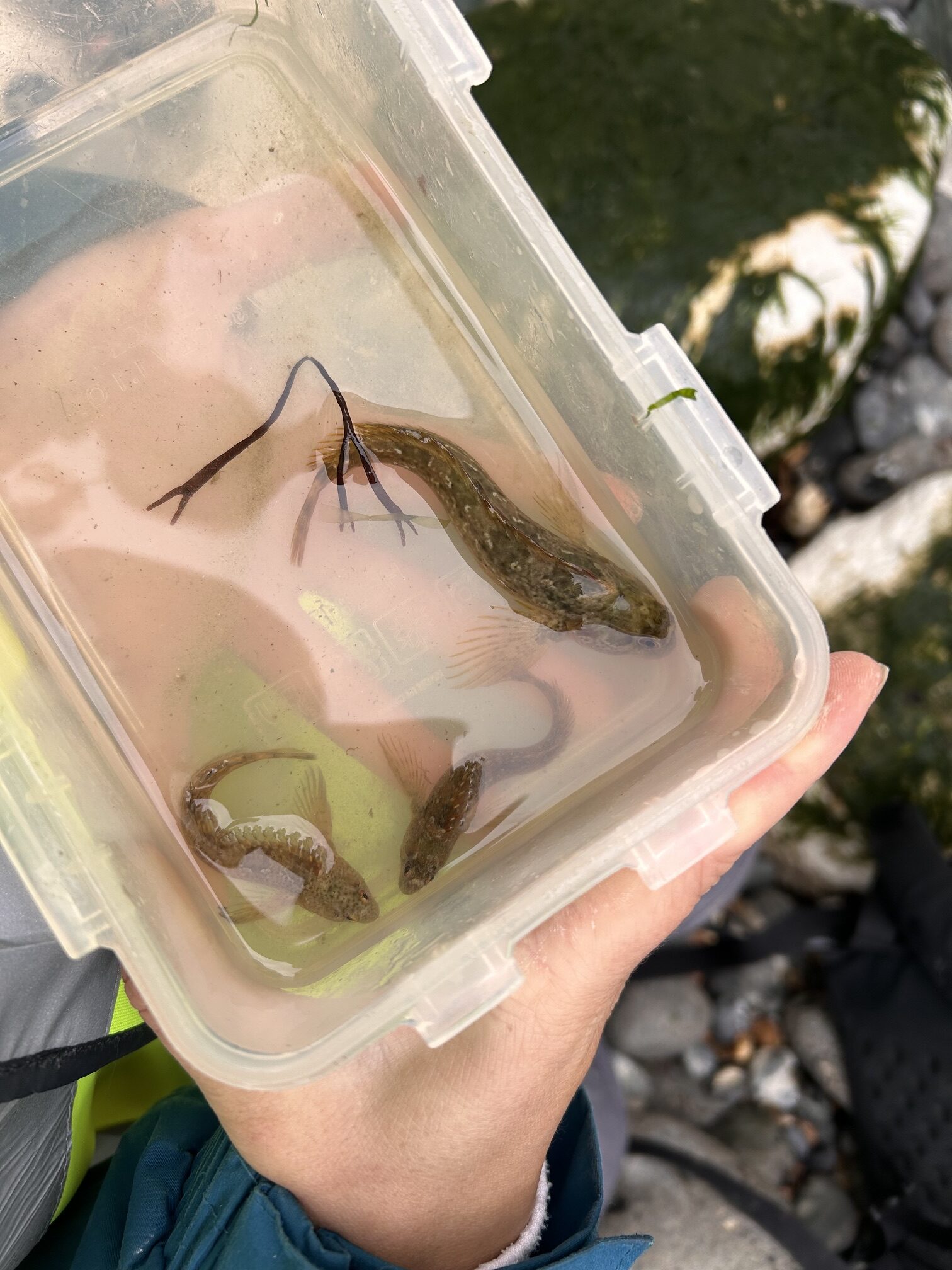
The survey revealed a varied mix of marine life. There were several types of shellfish, including common limpets, periwinkles, topshells and blue mussels, alongside crustaceans such as green shore crabs, Asian shore crabs and broad-clawed porcelain crabs. The team also recorded different types of marine worms, sea anemones and seaweed.
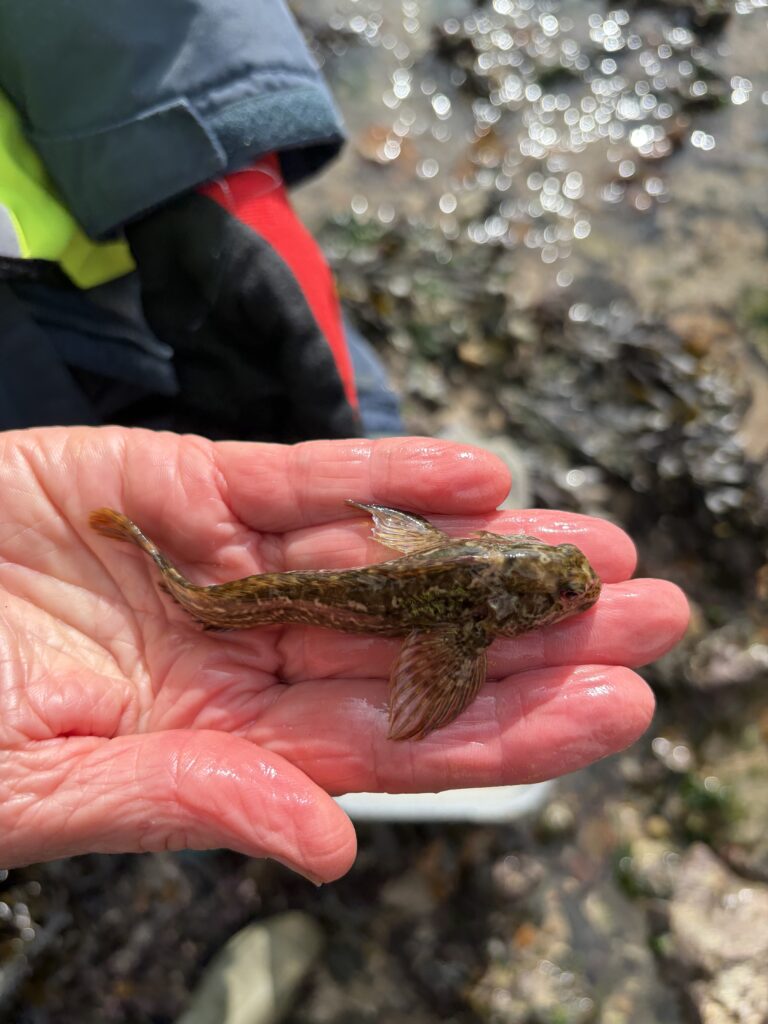
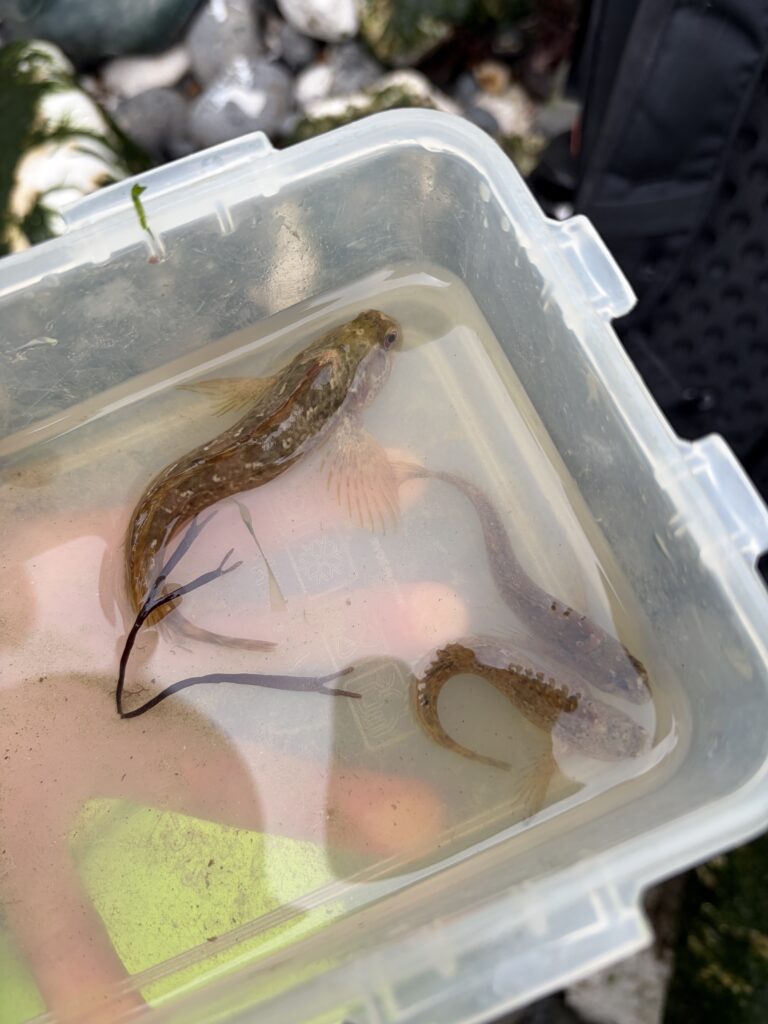
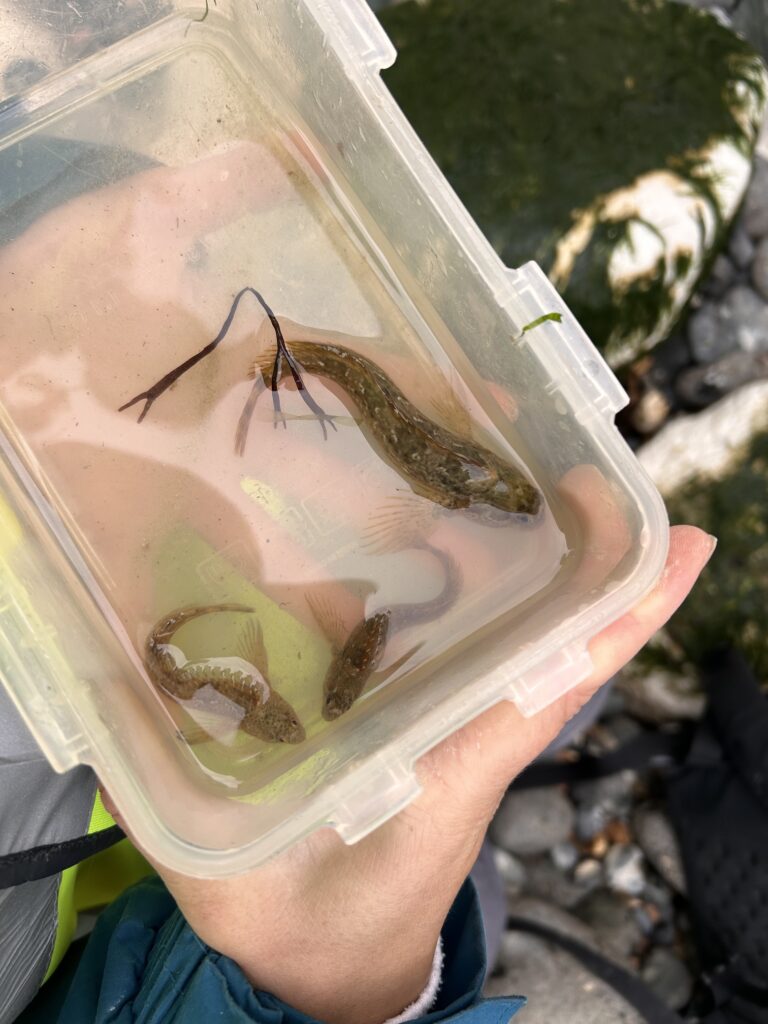
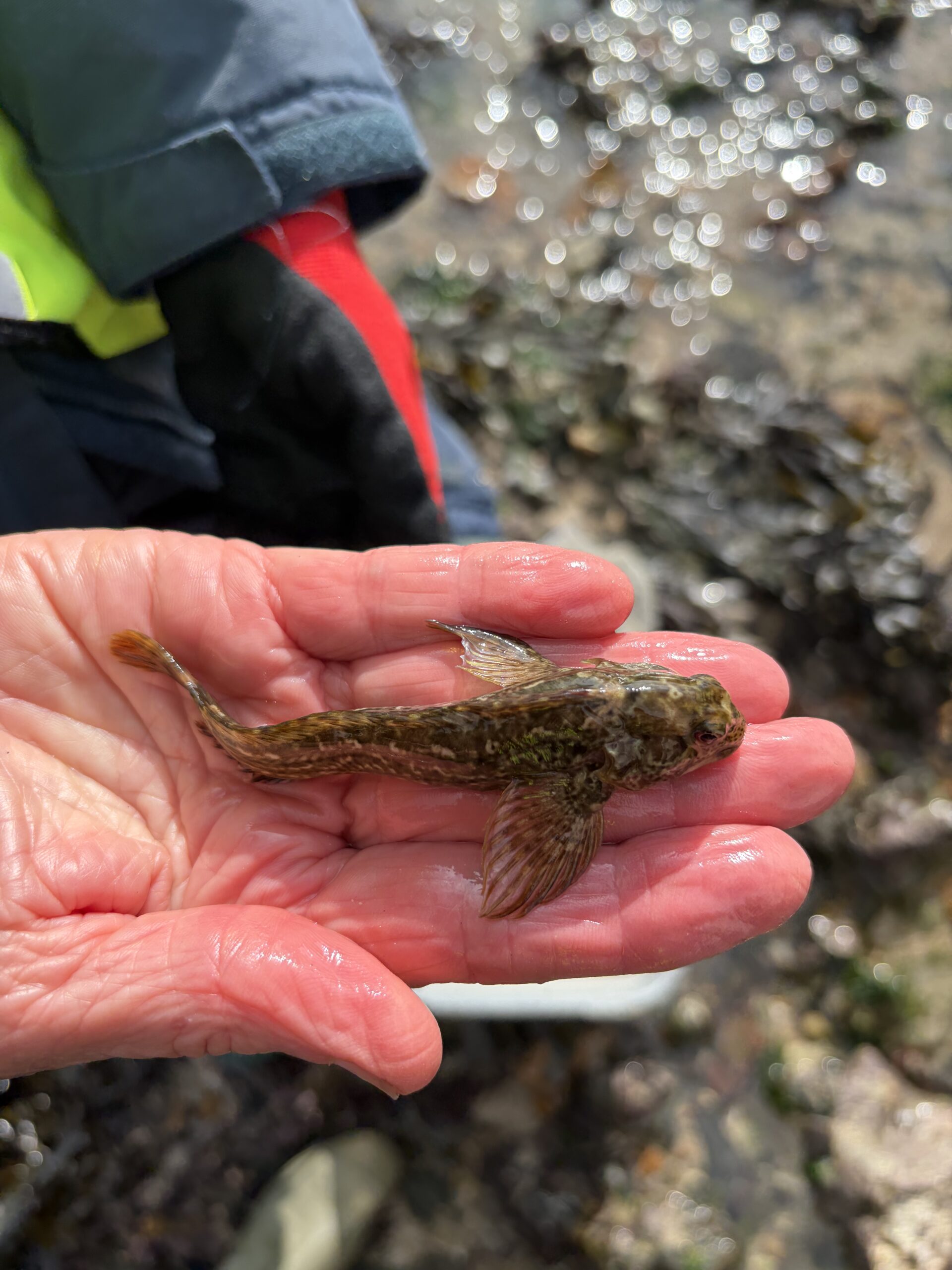
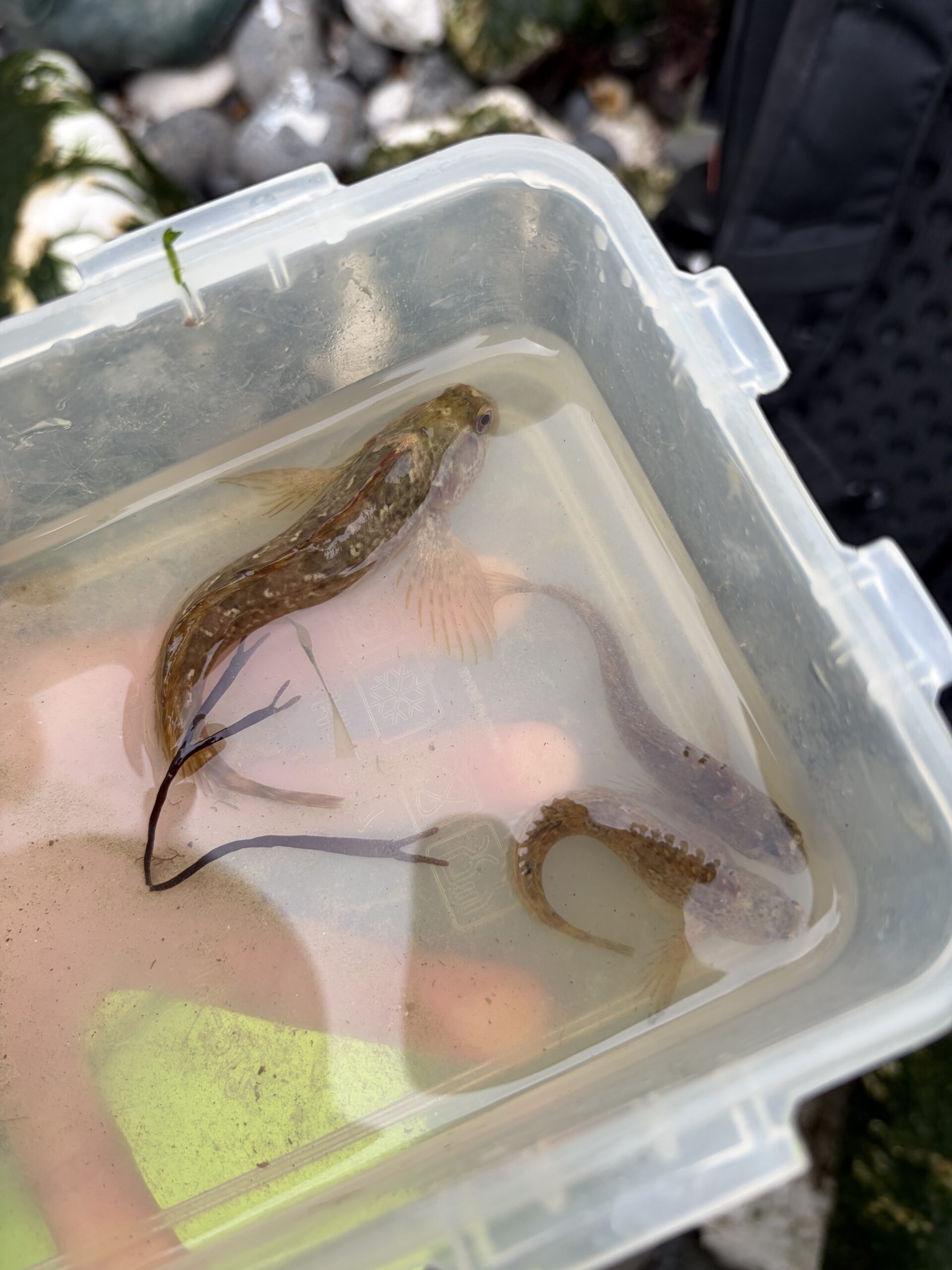
Among the finds was a shanny, a small fish often found sheltering in rocky crevices and pools. The group also spotted plenty of beadlet anemones. These familiar inhabitants of rocky shores attach themselves firmly to the rocks. When covered by the tide, they open out their colourful tentacles to catch food in the water. As the tide retreats, they draw their tentacles in, often looking like little red blobs on the rocks.
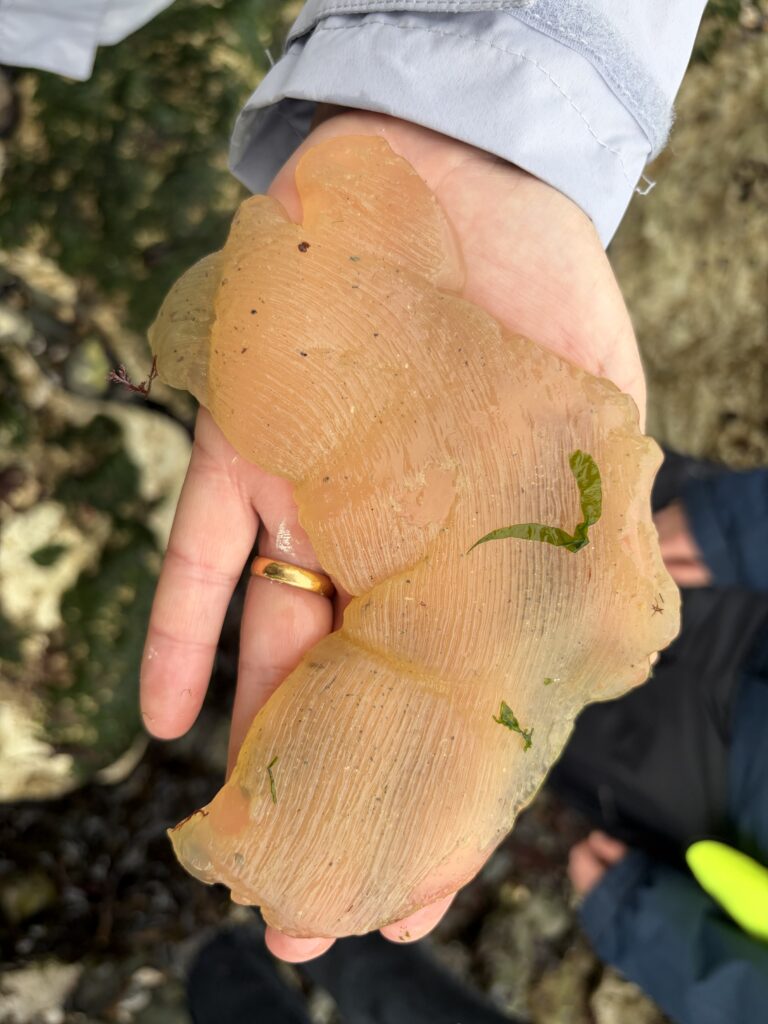
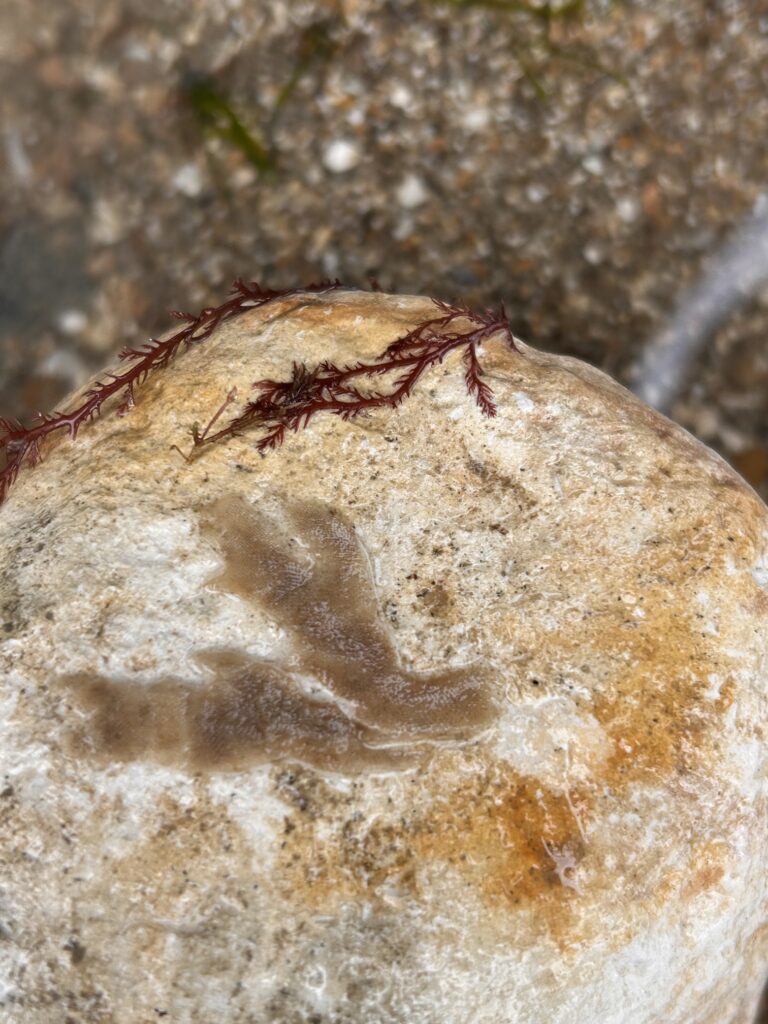
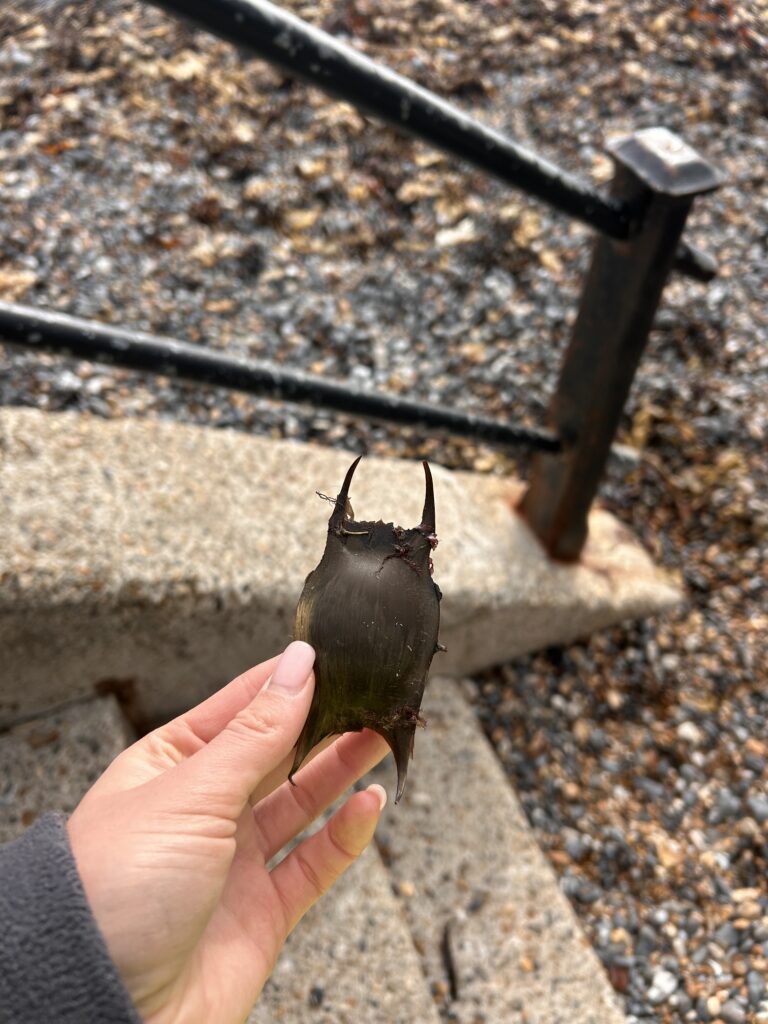
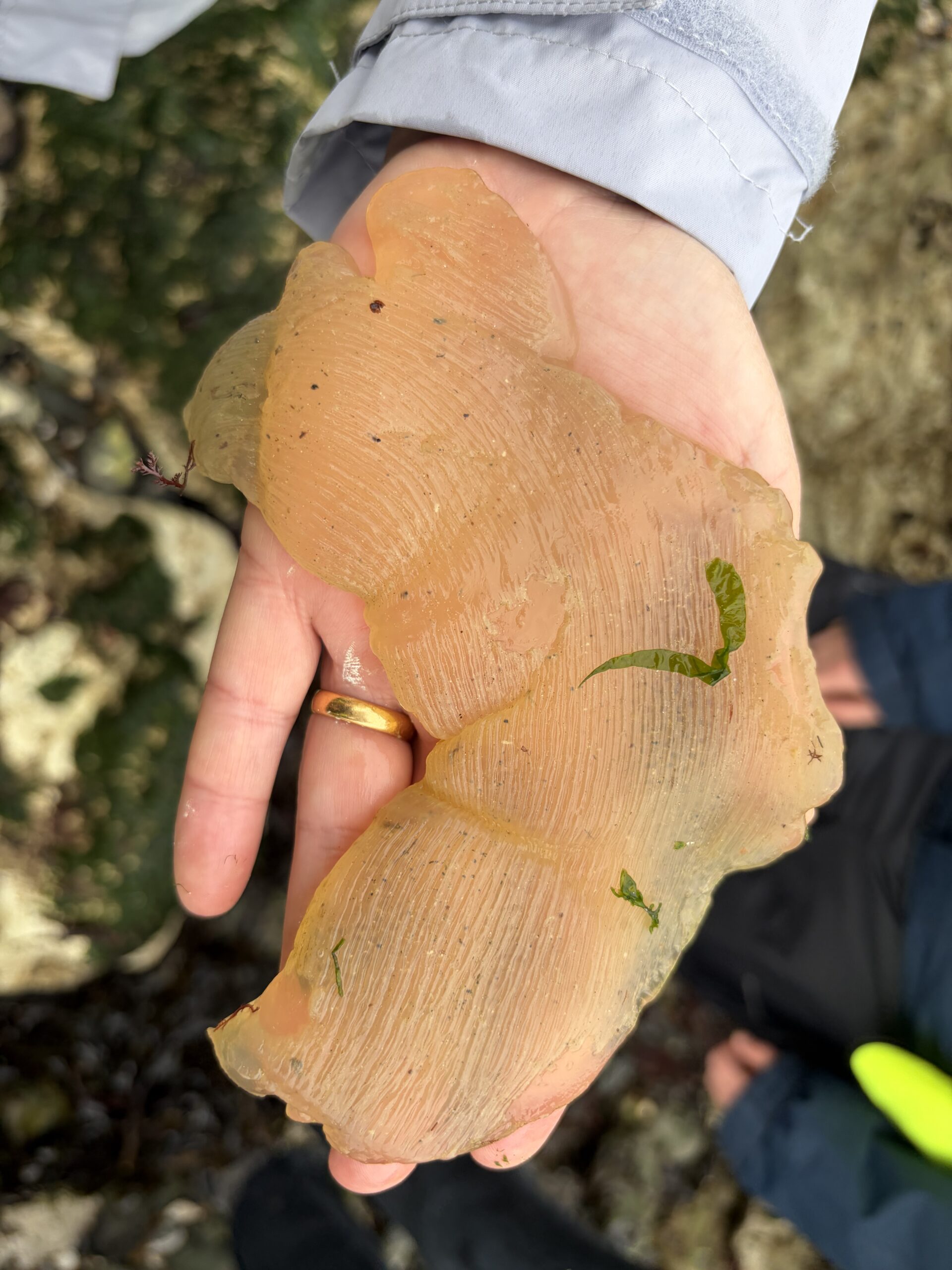
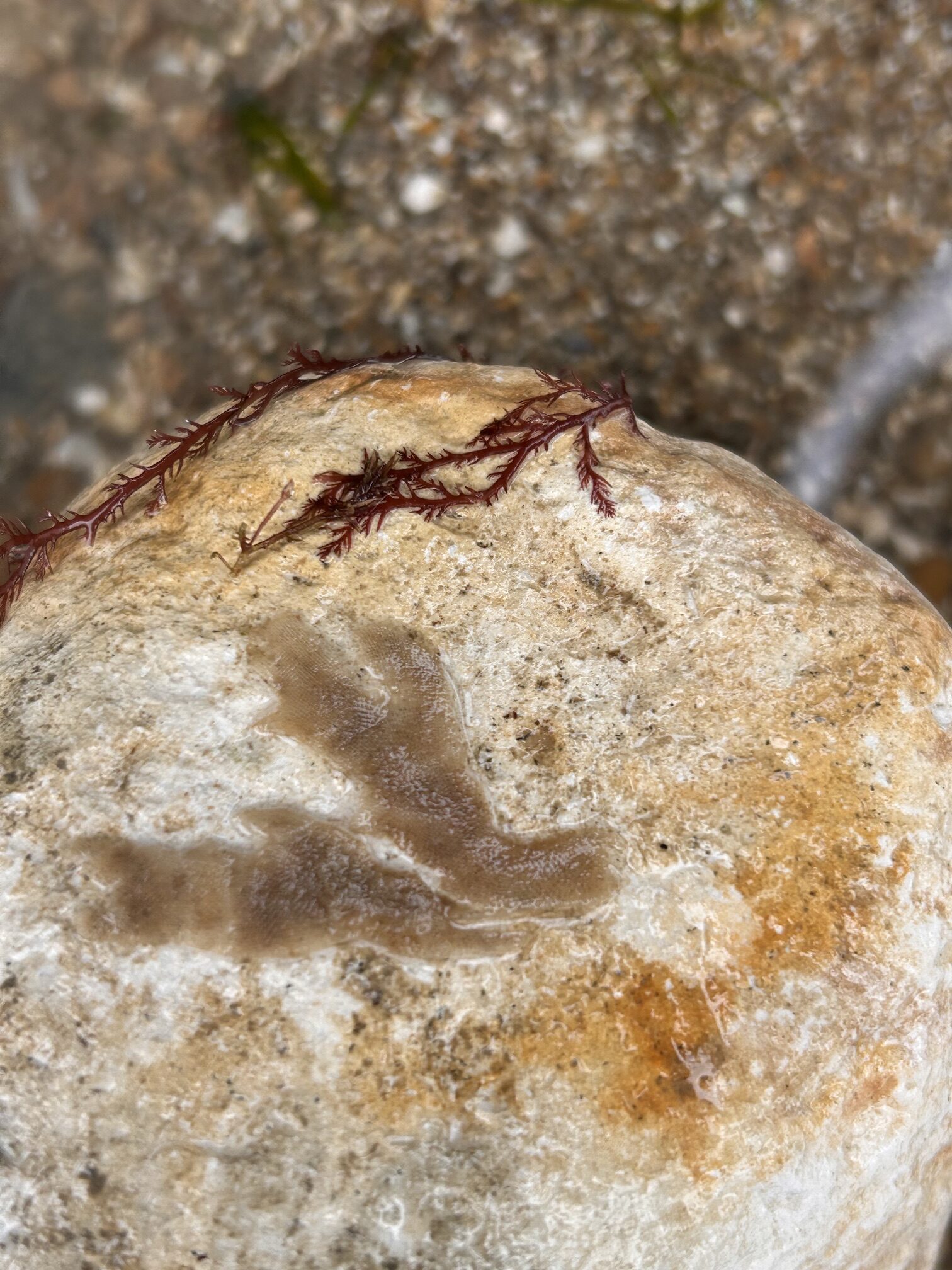
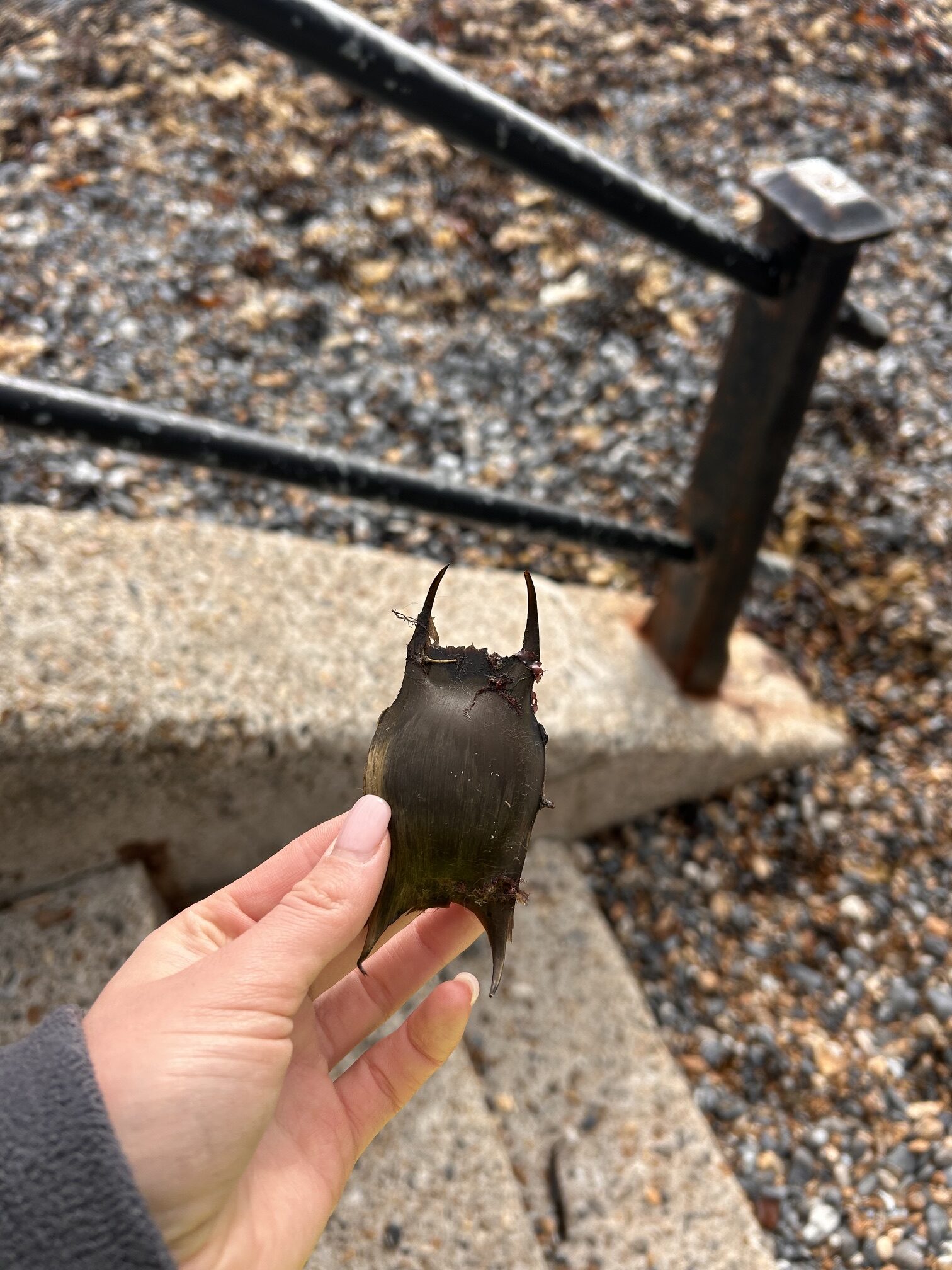
The survey also recorded serrated wrack, gutweed and pom-pom weed, adding to the variety of seaweeds found across the reef. There were some other interesting discoveries too, including eggcases from two species of shark and ray, the small-spotted catshark and thornback ray. Often called mermaid’s purses, these distinctive cases are left behind when the young hatch.
You can explore the full species list from the survey here: View the species recorded at St Margaret’s Bay
A new perspective on the Cross-Channel Geopark Transmanche
For the GeoAmbassadors, this was a first opportunity to explore the marine environment of the Channel together.
The Geopark connects two remarkable landscapes on either side of La Manche, but the sea between them is just as much a part of its natural heritage. Its geology, habitats and marine wildlife all help tell the story of this shared landscape.
We’re now developing a programme of events, activities and research focused on the marine area of the Geopark. Surveys like this help us understand the wildlife and habitats found along our shared coastline, and how they are changing.
Keep an eye out for upcoming opportunities to get involved!
Popular articles
Explore the Cross-Channel Geopark with Our Geotouristic Map
Your guide to the Cross-Channel Geopark: download the free Geotouristic Map and…
The Best Viewpoints in the Cross-Channel Geopark
Discover the most spectacular viewpoints across the Cross-Channel Geopark, from the Kent…
Your guide to exploring the Cross-Channel Geopark with interpretation panels
Explore the Cross-Channel Geopark like never before with new interpretation panels that…