Beneath the surface: UNESCO assessors visit the Cross-Channel Geopark
July 22, 2026
The moment we’ve all been working towards has arrived
After five years of collaboration, commitment and shared ambition, this week marked one of the biggest milestones in the Cross-Channel Geopark Transmanche journey.
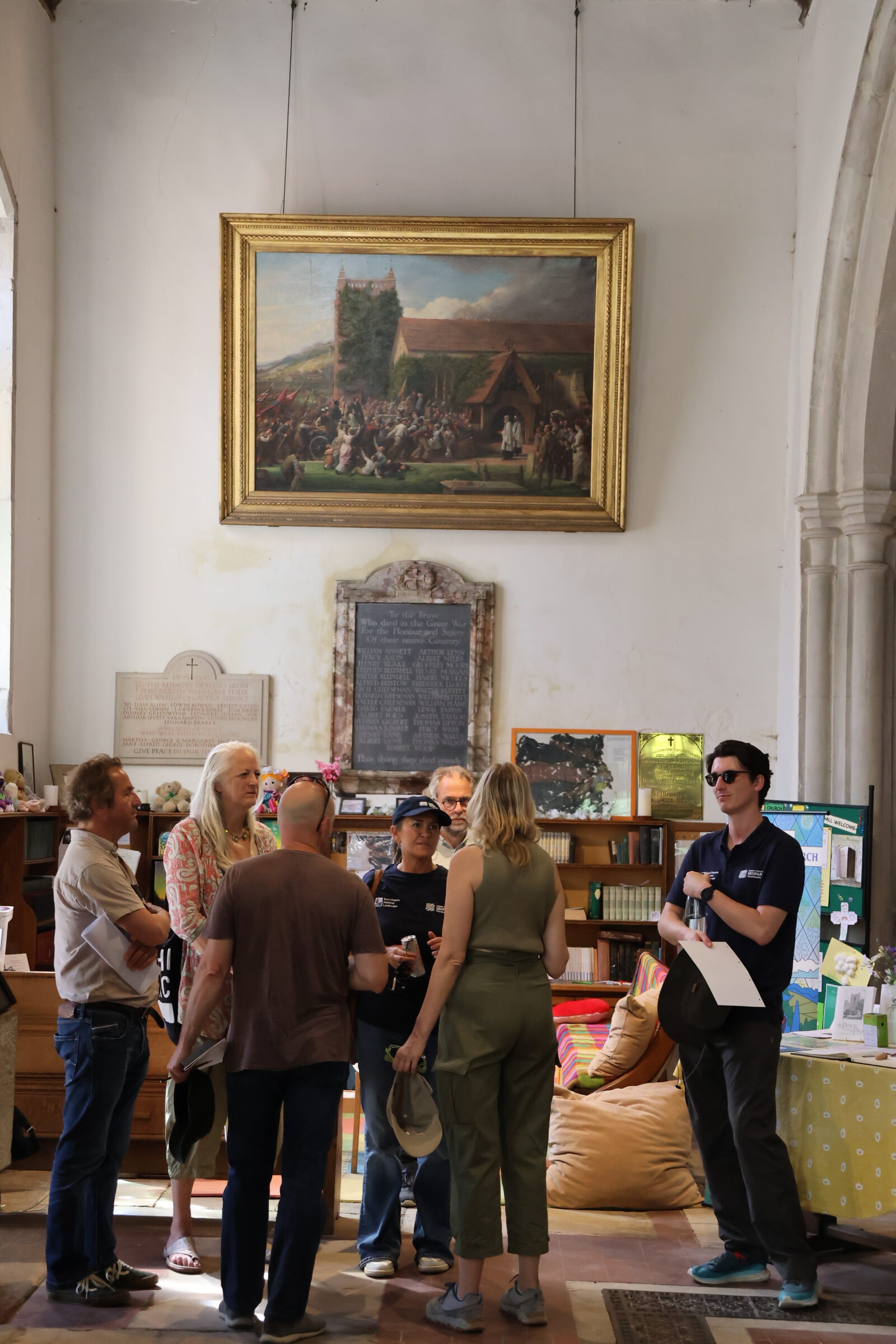
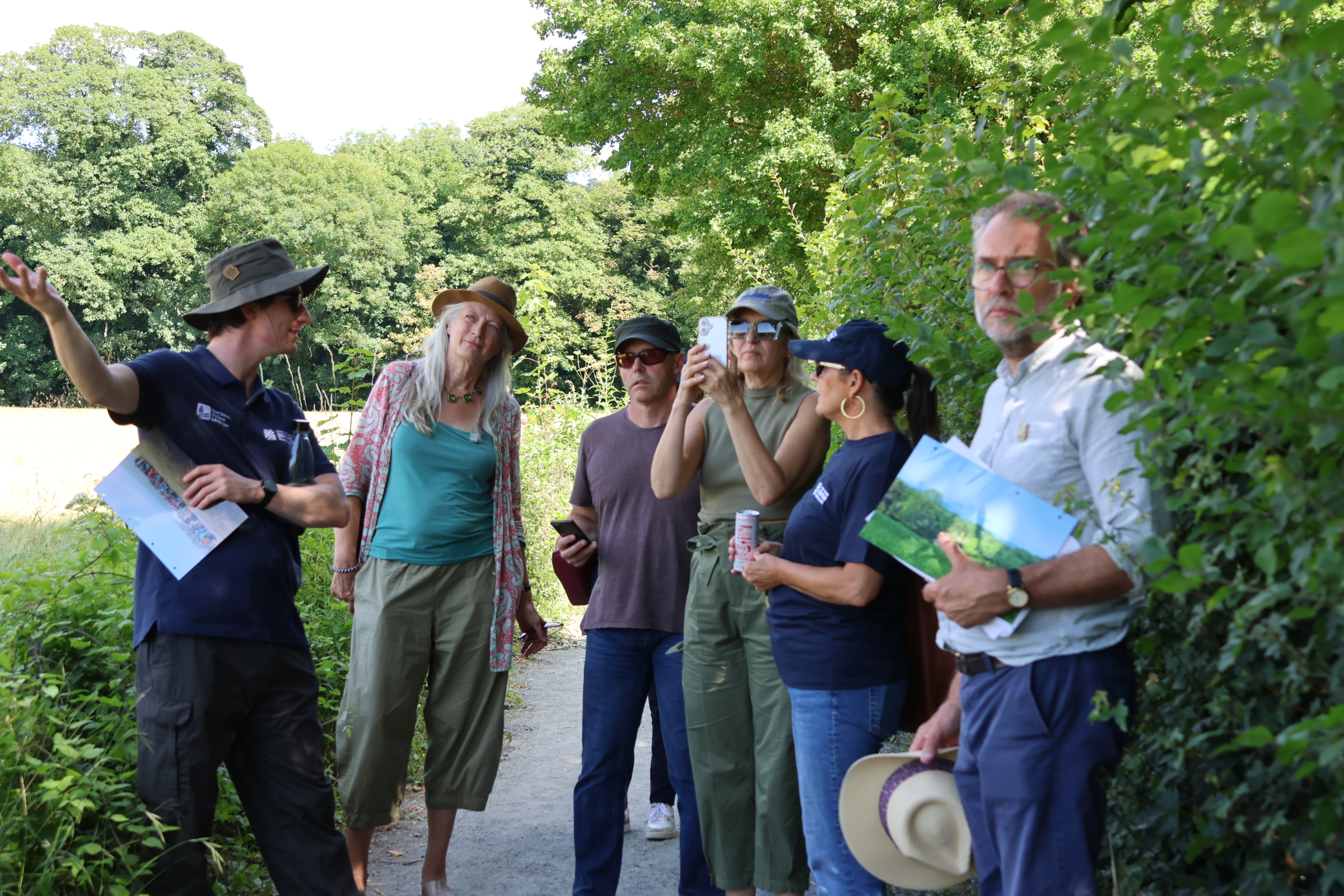
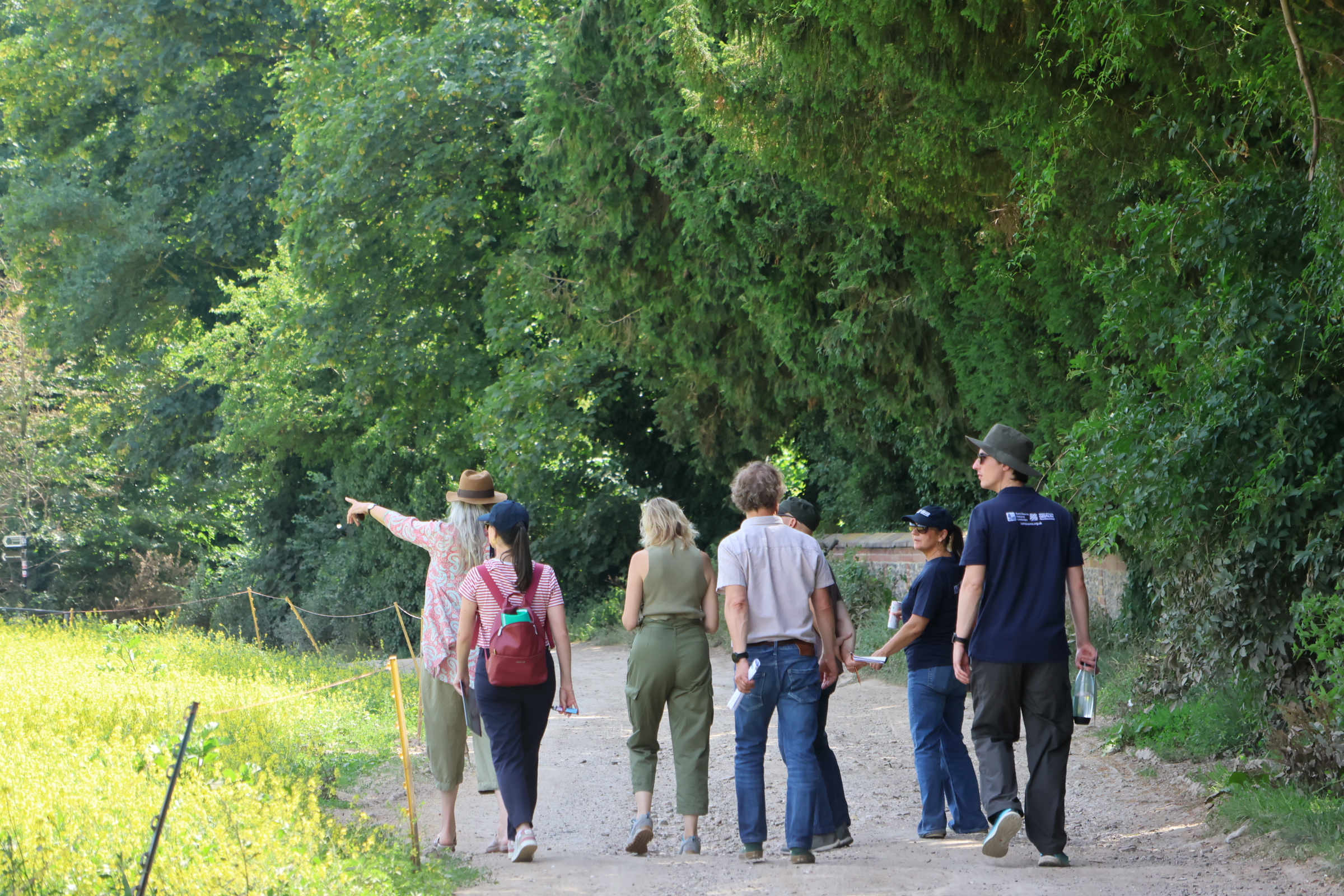
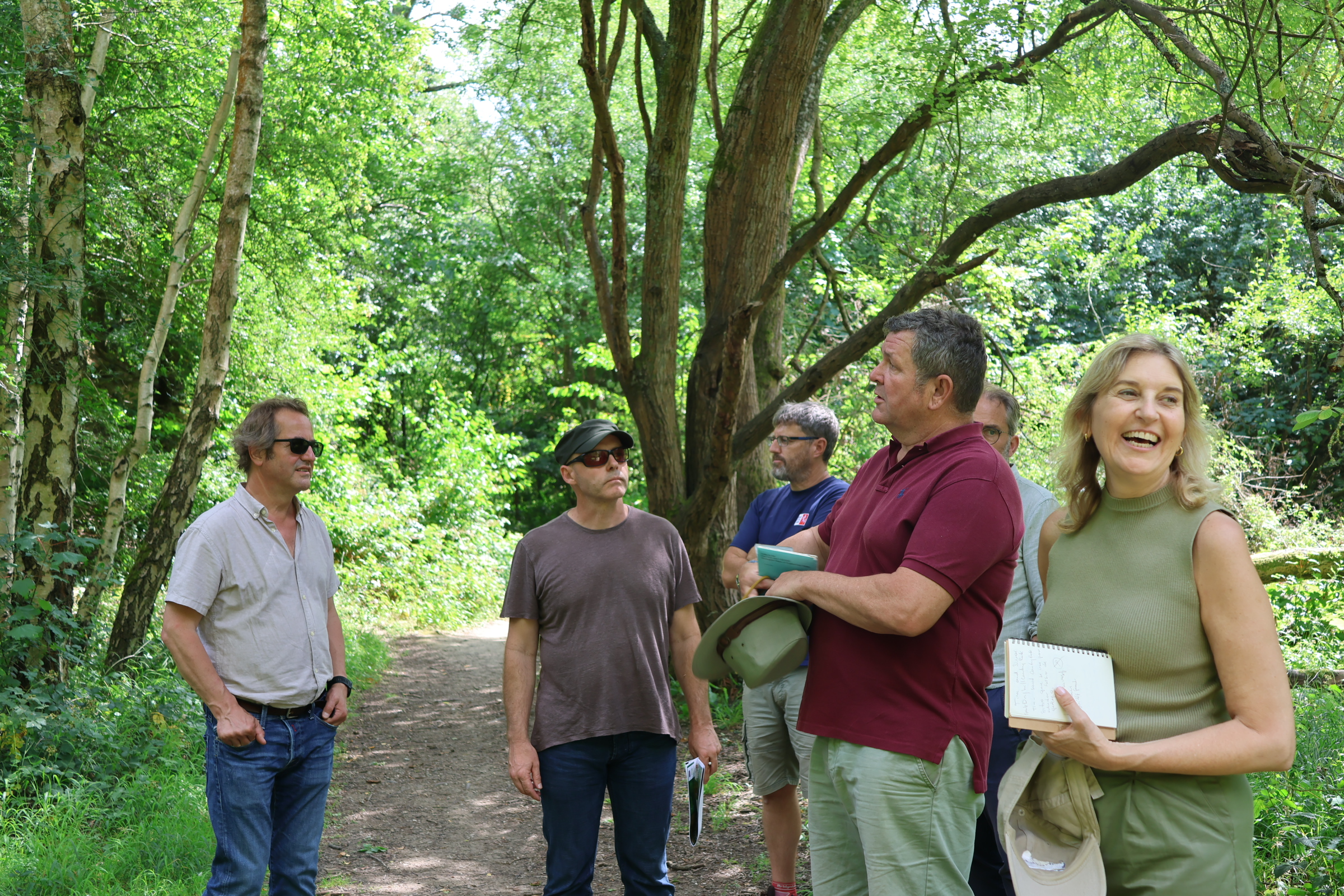
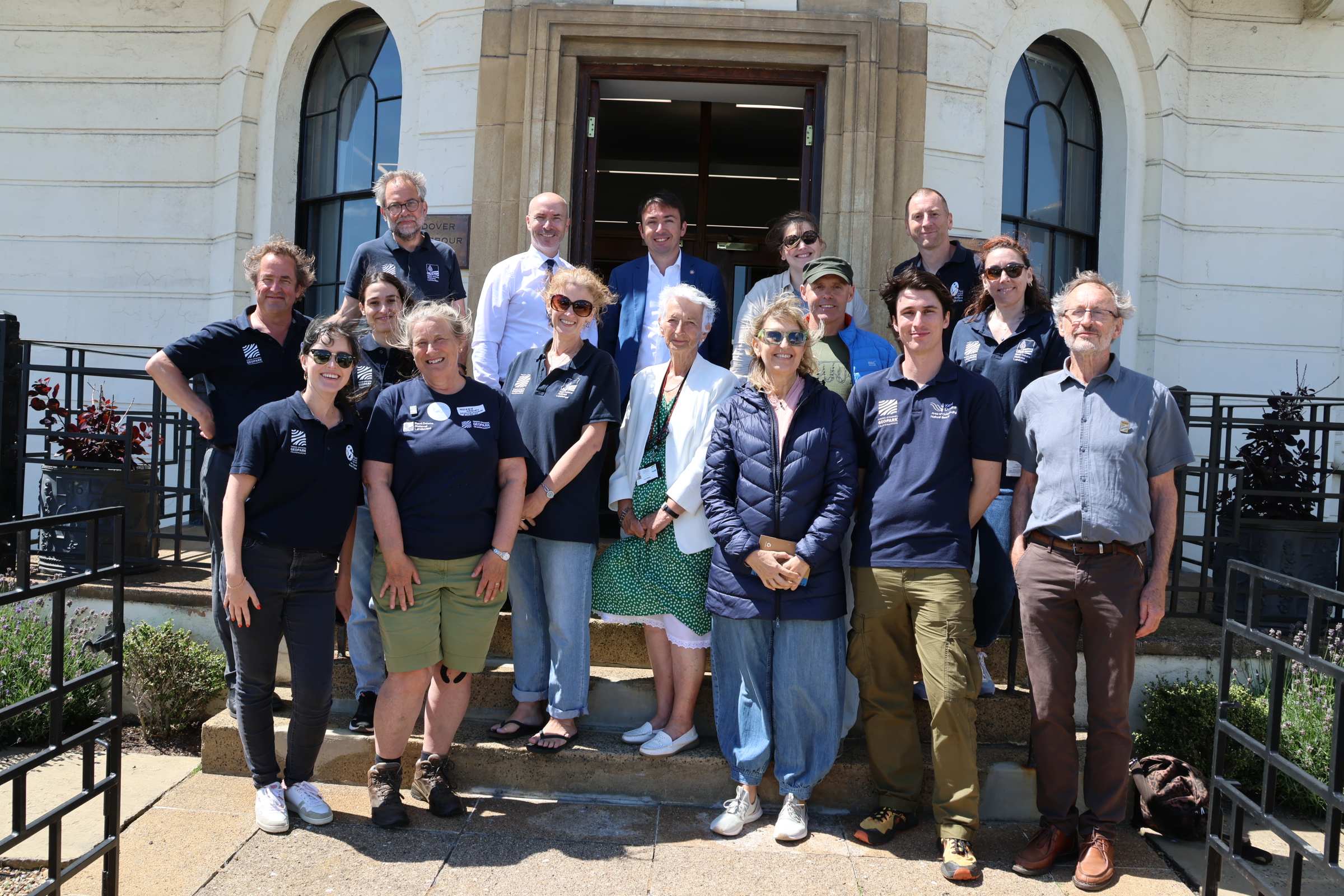
From Saturday 4 to Wednesday 8 July, we welcomed UNESCO assessors, Helga Chulepin and Guillem Puras Castells, to experience our remarkable landscapes, discover our geological heritage and meet the incredible people who are bringing the Cross-Channel Geopark Transmanche vision to life.
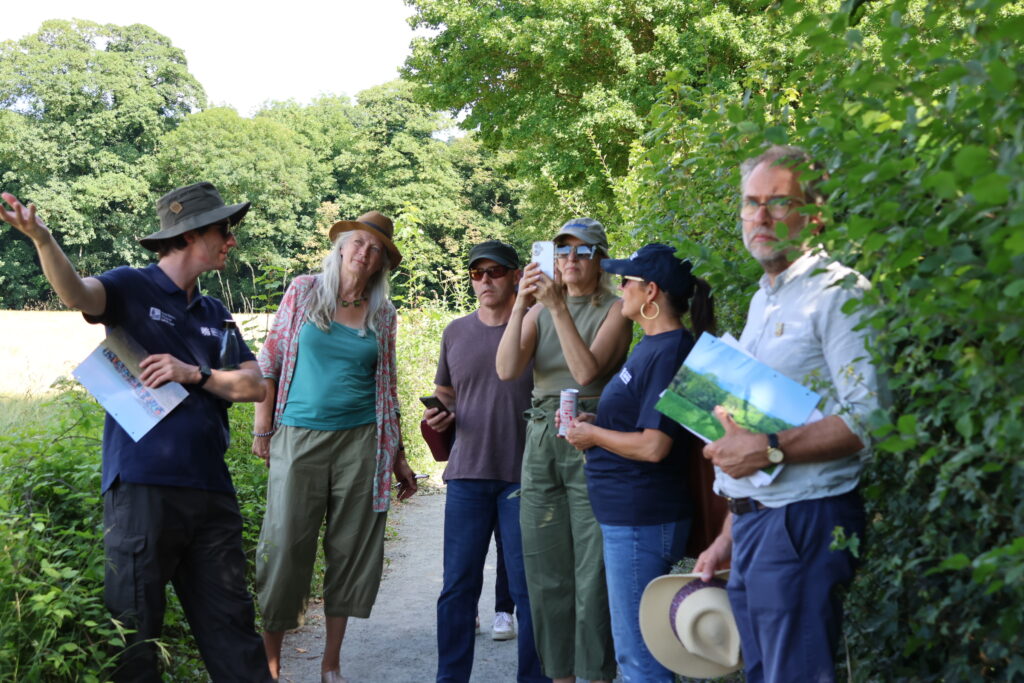
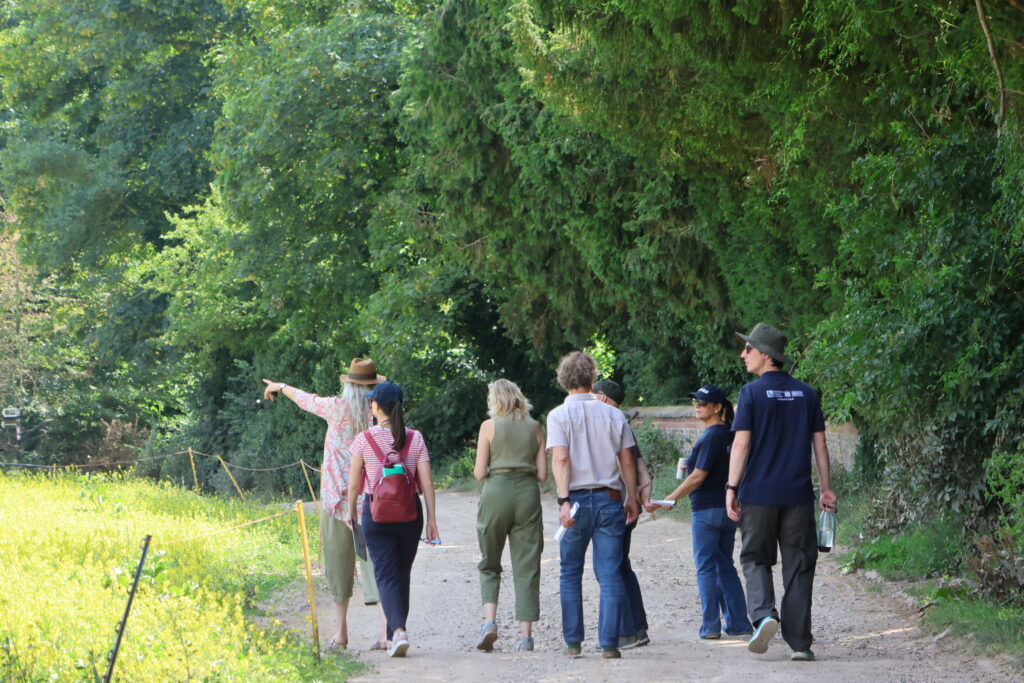
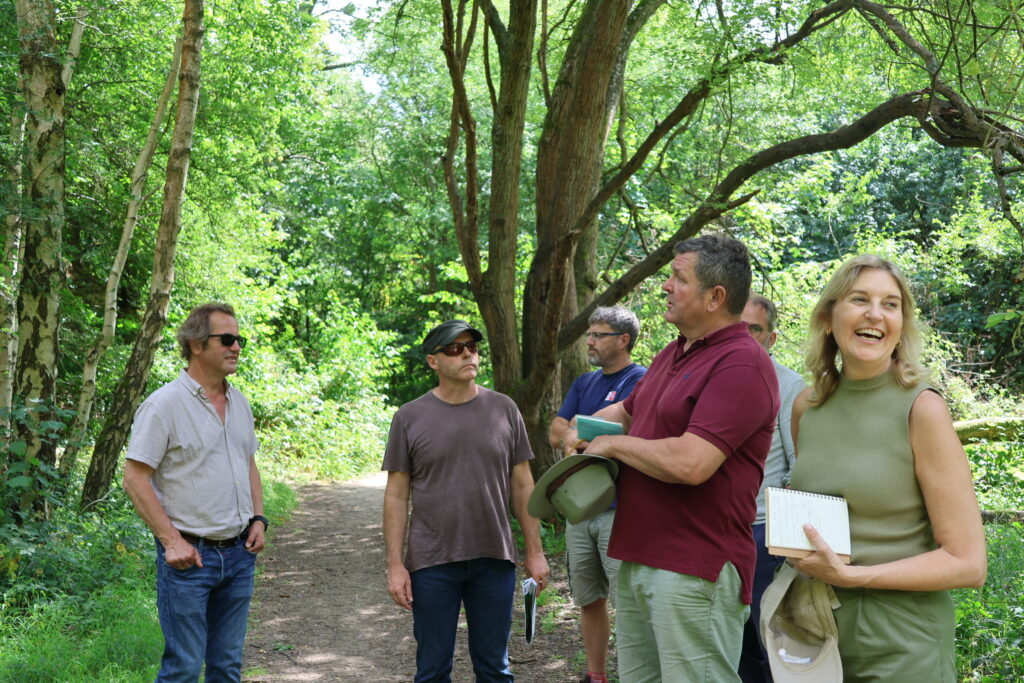
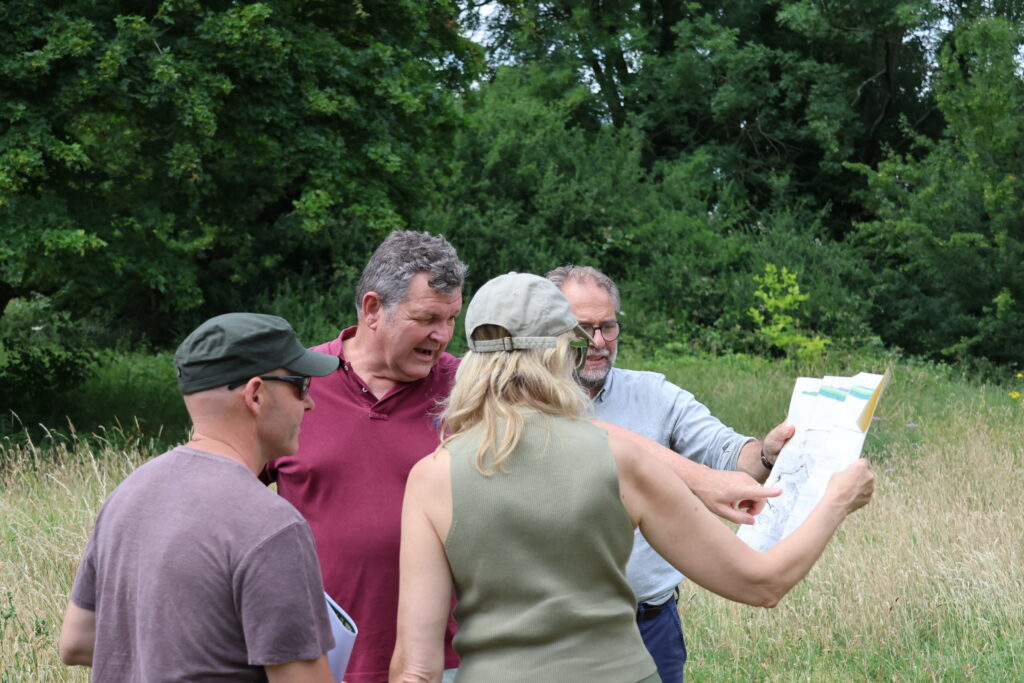
Over five days, the assessors travelled across Kent and Pas-de-Calais, visiting internationally important geosites, meeting partners, exploring projects and hearing first-hand about the passion, knowledge and dedication behind our UNESCO ambition.
A shared story, brought to life by our partners
The Cross-Channel Geopark Transmanche has always been built on partnership.
The UNESCO assessment visit was our opportunity to showcase the incredible breadth of that partnership – from scientists and conservation organisations to tourism businesses, educators, artists, land managers, community groups, volunteers, local authorities and Geopark Ambassadors.
Geopark President Nick Crane said: “The Cross-Channel Geopark Transmanche is a story written in the rocks beneath our feet, but brought to life by the people above them.
This week has been a wonderful opportunity to share that story with UNESCO and to celebrate the extraordinary passion, knowledge and commitment of everyone who has helped create this vision.
A Geopark is about much more than geology. It is about connection – connecting people with landscapes, connecting communities across borders and connecting us all with the incredible story of our planet.
Seeing so many partners come together to share their expertise and enthusiasm has been truly inspiring.”
Five days exploring the Cross-Channel Geopark Transmanche
The UNESCO assessors’ itinerary was carefully designed to showcase the full breadth of the Cross-Channel Geopark Transmanche – from internationally important geology and natural heritage to education, culture, sustainable tourism and community action.
Day 1 – Discovering the eastern gateway: Folkestone, Dover and the Channel coast
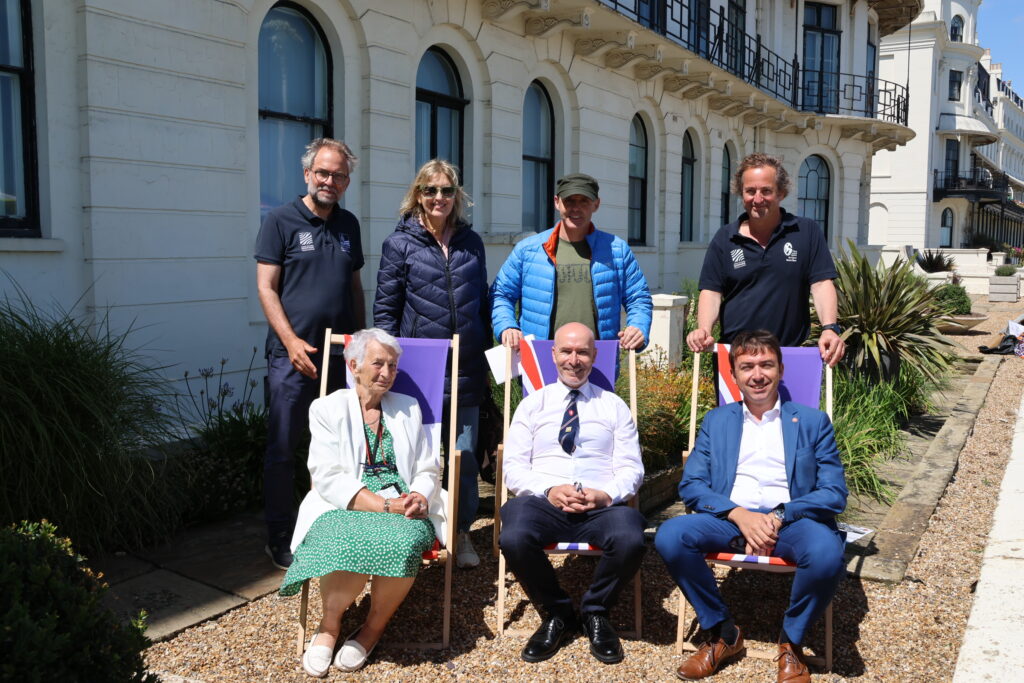
The visit began at Folkestone Warren, one of the most significant geological sites within the Cross-Channel Geopark Transmanche.
Hosted by Kent Downs National Landscape, Folkestone & Hythe District Council, Geopark partners and Ambassadors, the assessors explored the story of this remarkable landscape – from the geology beneath their feet and the impacts of coastal change, to biodiversity, archaeology, arts, education and community involvement.
They heard from:
- Kate Wilson, Chair of Kent Downs National Landscape, who welcomed the assessors and shared the importance of the Geopark partnership.
- Jim Martin, Local Councillor, Folkestone & Hythe District Council, sharing local connections and community ambition.
- Louella Ward and Martin Verhoeven, Geopark Animators, who guided the visit and brought together the many stories of Folkestone Warren.
- Lindsay Banfield, Canterbury Archaeological Trust, sharing the archaeological discoveries at the Warren, including quern stones, Roman heritage and the story of Cross-Channel connections.
- Mel Wrigley, Geopark Ambassador, sharing the landscape, biodiversity and community stories of the site.
- Sarah Godwin and several young Geopark Ambassadors spoke about their experiences of the Schools Climate Exchanges programme.
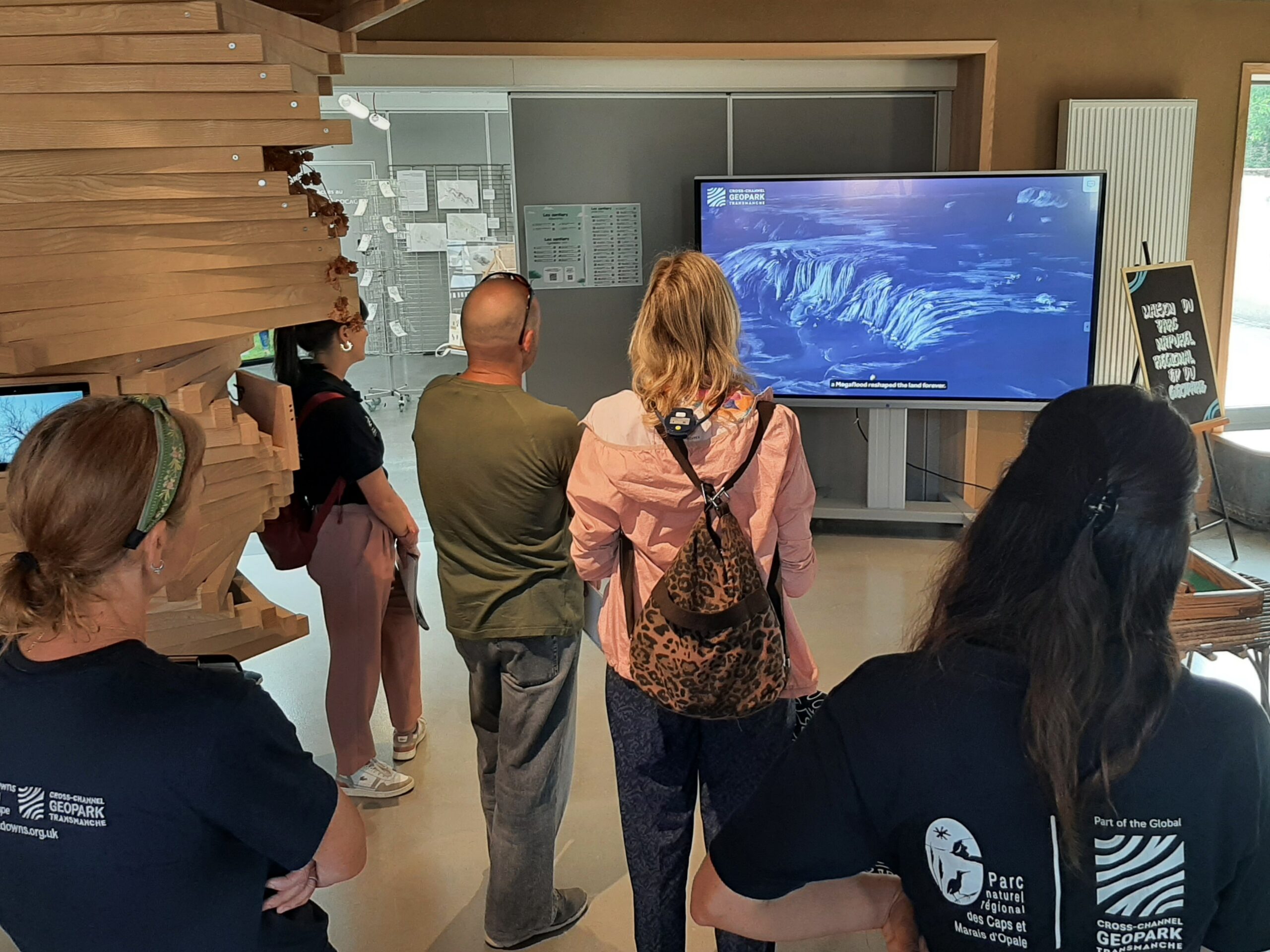
The assessors explored the Cross-Channel Megaflood story, discovering how this extraordinary geological event shaped the landscape we see today, and how the Geopark is helping people understand its significance.
The visit continued at Folkestone Museum, where Cory Clover, Curator, and Steve Friedrich, Geopark Ambassador and fossil expert, shared the importance of the museum’s geological collections, dinosaur footprints, local heritage and visitor engagement.
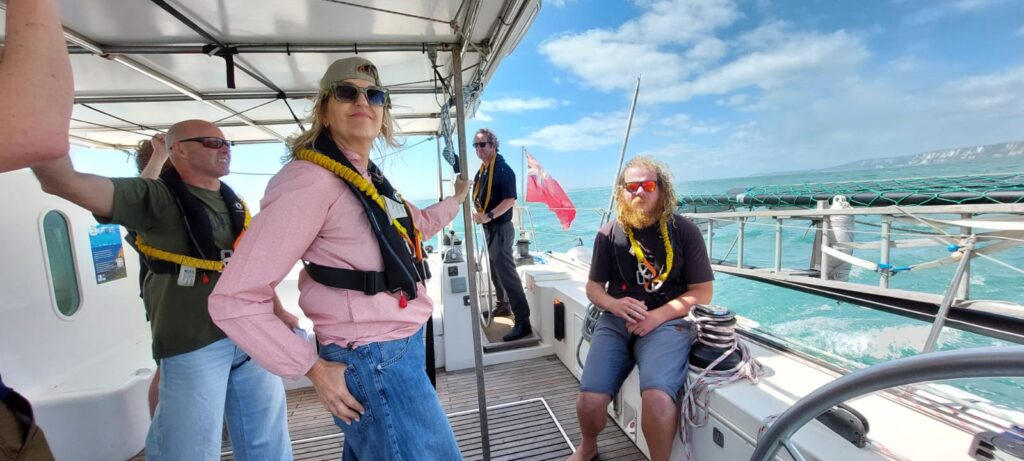
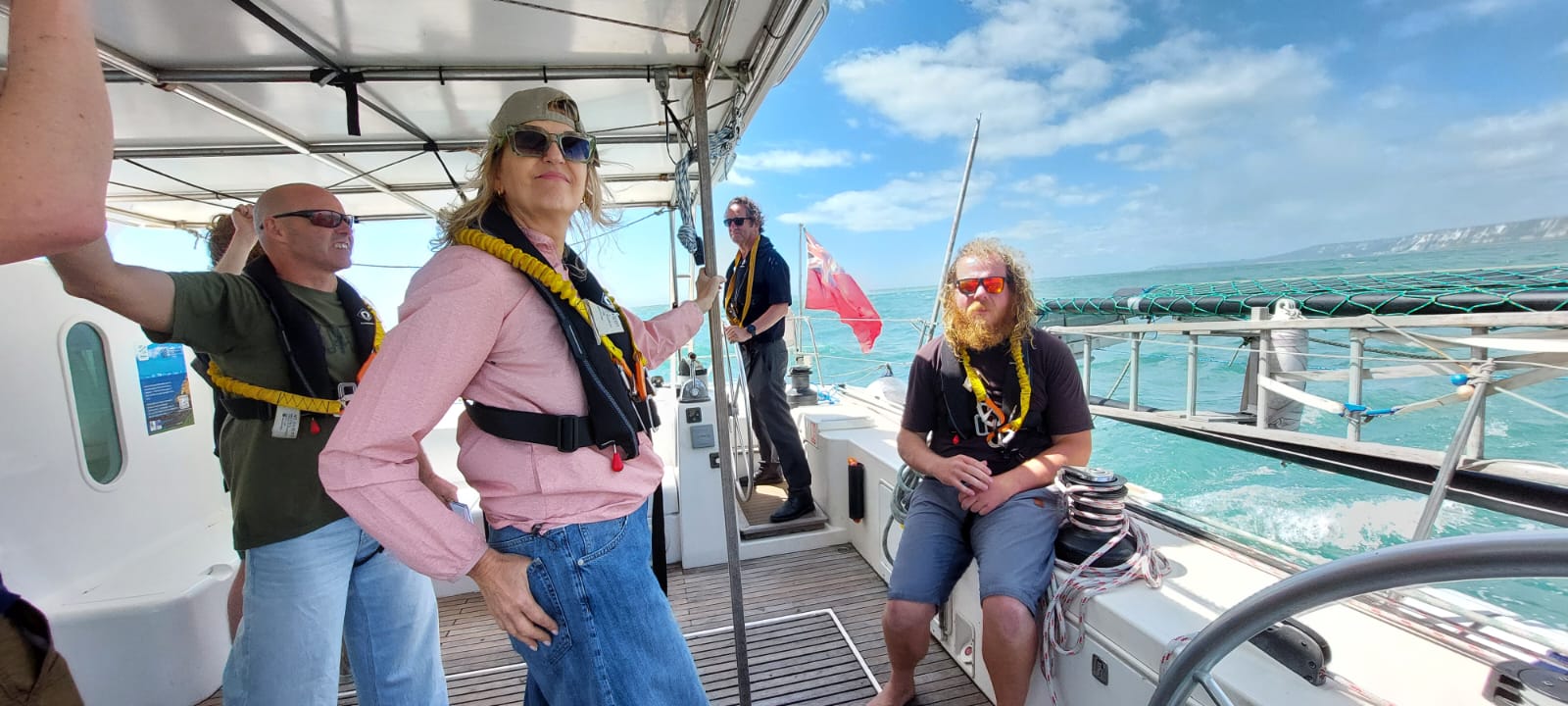
The afternoon brought a different perspective on the Geopark with a Saillink boat trip.
Hosted by Andrew Simons and the Saillink team and accompanied by Ben Long, Coastal and Marine Ecologist at Adonis Blue, the assessors explored the marine environment, seascape, shipping routes, underwater heritage, protected areas and the shared chalk landscapes visible across the Channel.
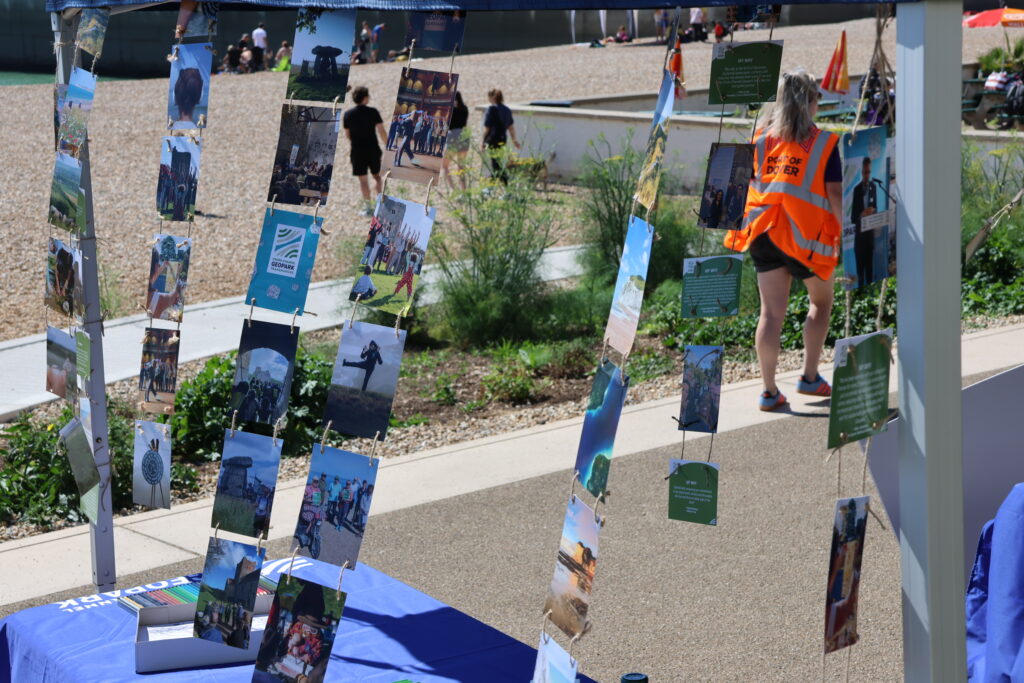
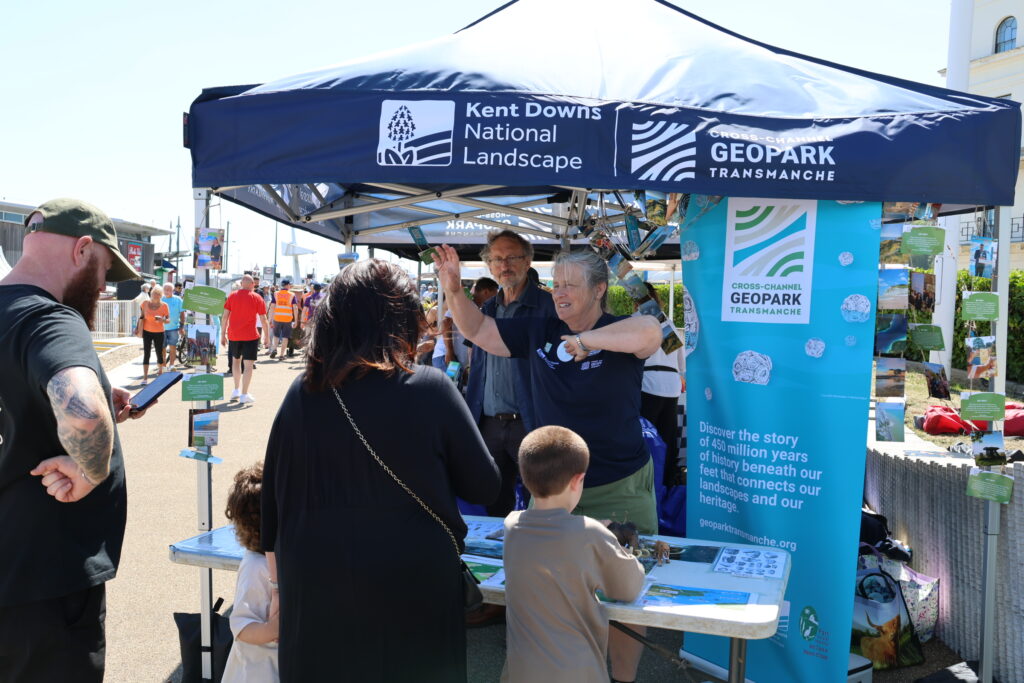
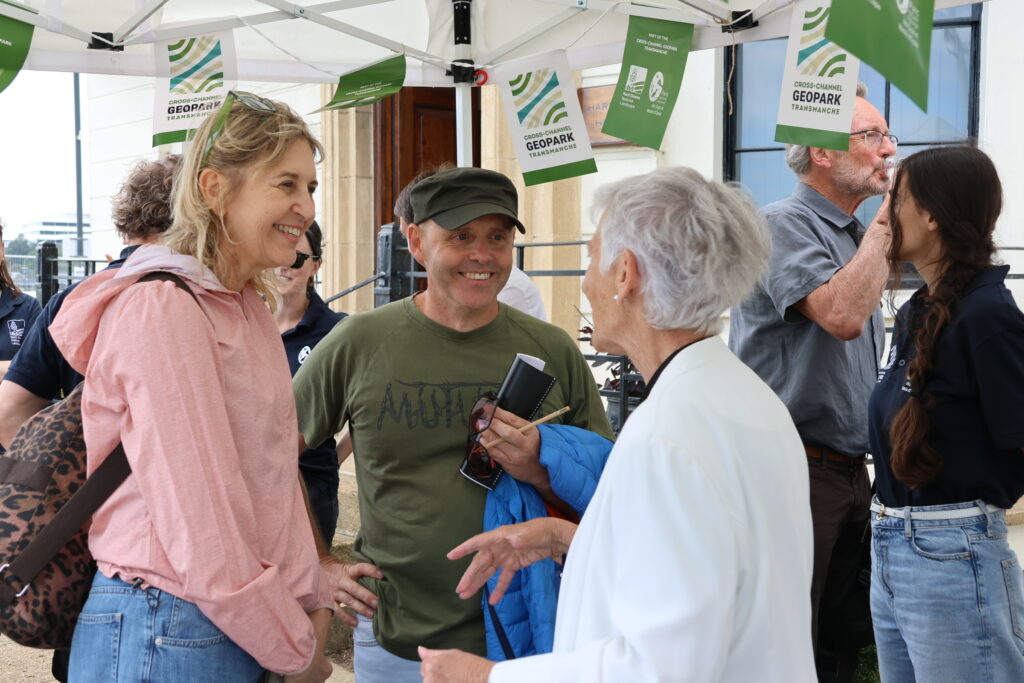
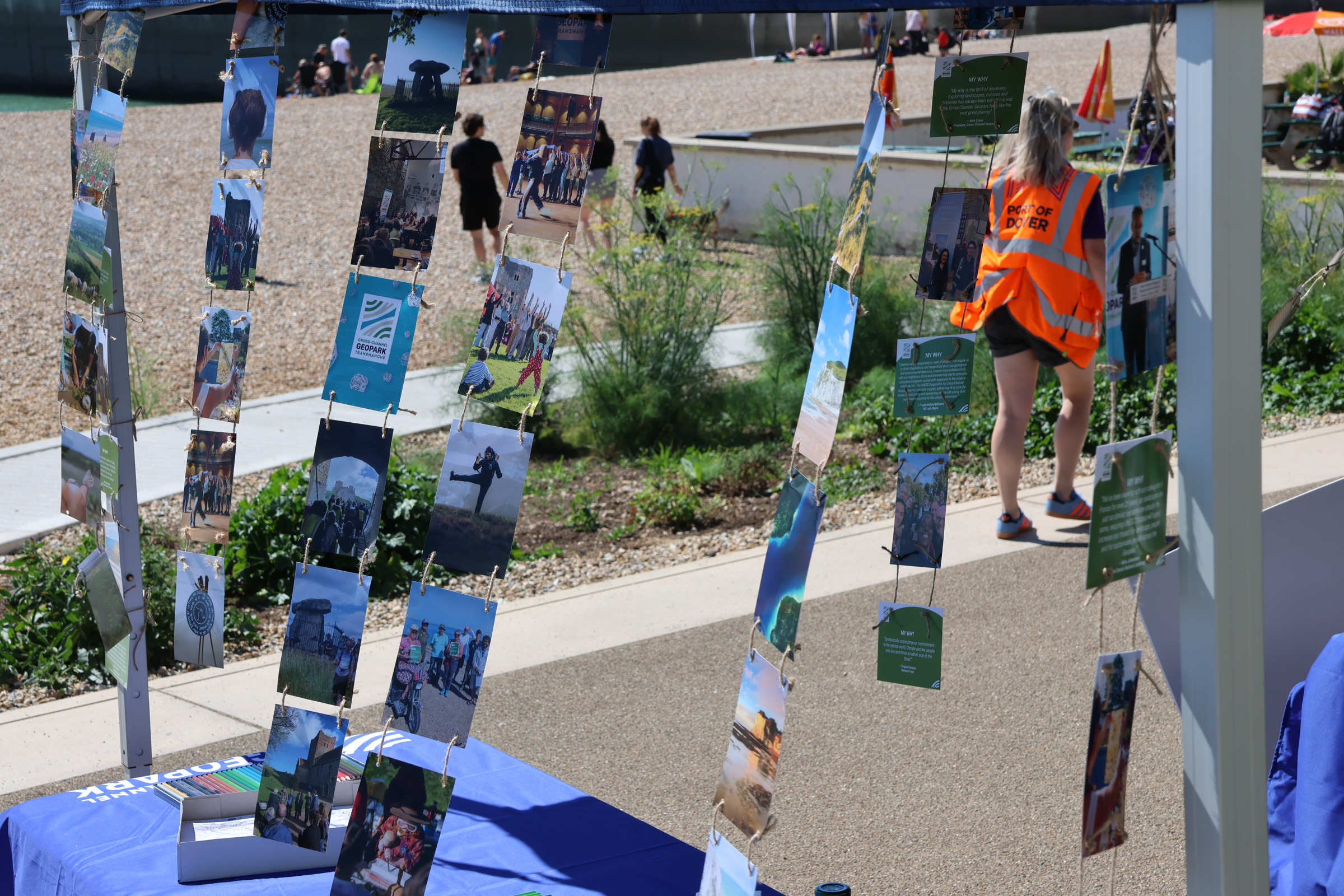
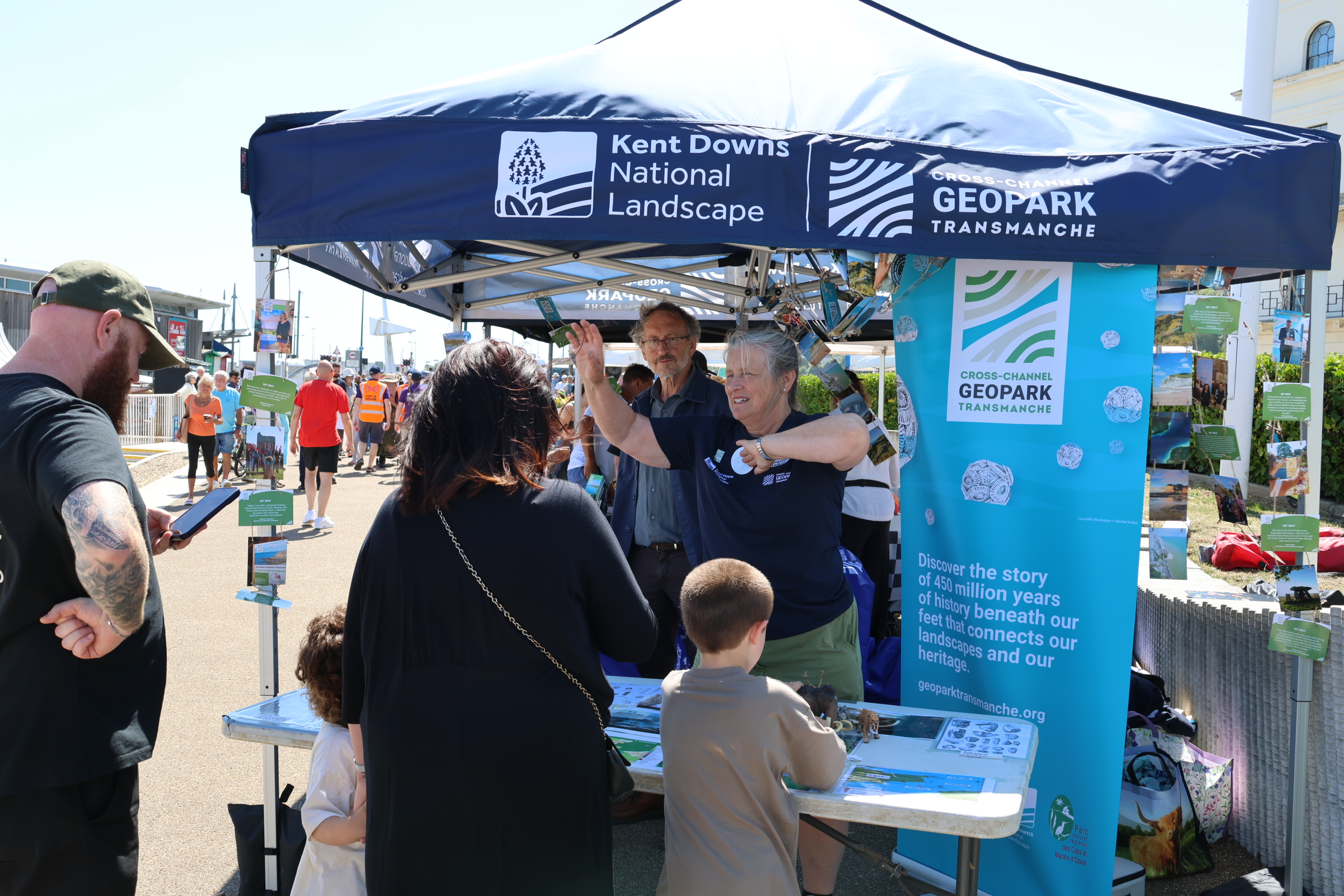
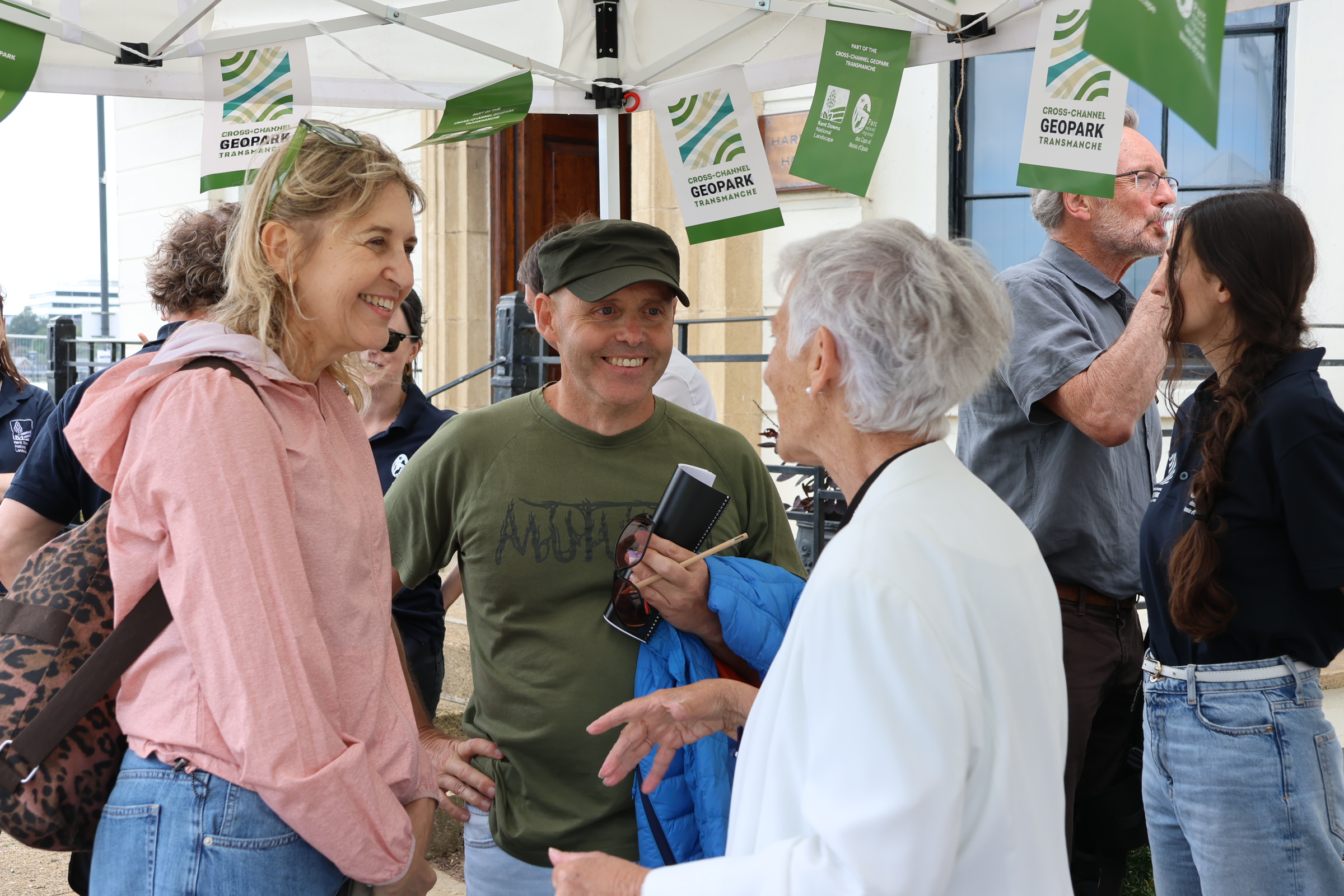
The visit continued at Dover Harbour Festival, showcasing the strength of community partnerships and the many organisations helping bring the Geopark story to life.
The assessors met representatives from:
- Port of Dover Marine Science
The day concluded at Samphire Hoe, where White Cliffs Countryside Partnership, Wild With Wheels and Geopark Ambassador Helen Nattrass shared the story of this unique landscape created from material excavated during the Channel Tunnel construction.
The visit explored access and inclusion, nature conservation, education, interpretation and the ways partnerships are opening opportunities for more people to experience the Geopark.
With thanks to:
Richard Haynes, Lewis Smith, Gini Mitchell, Helen Nattrass and all partners who helped showcase Samphire Hoe.
Day 2 – Chalk landscapes, rivers and communities of the Kent Downs
The second day of the UNESCO assessment journey explored the landscapes of the Kent Downs – a landscape shaped by chalk, water, farming, wildlife and generations of people who have lived and worked here.
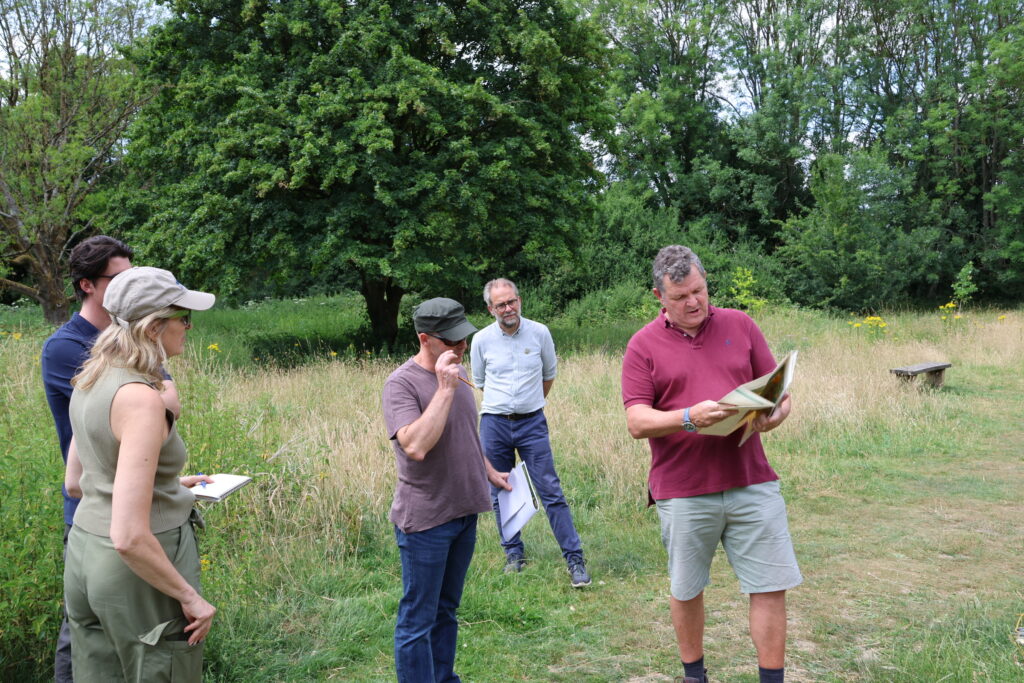
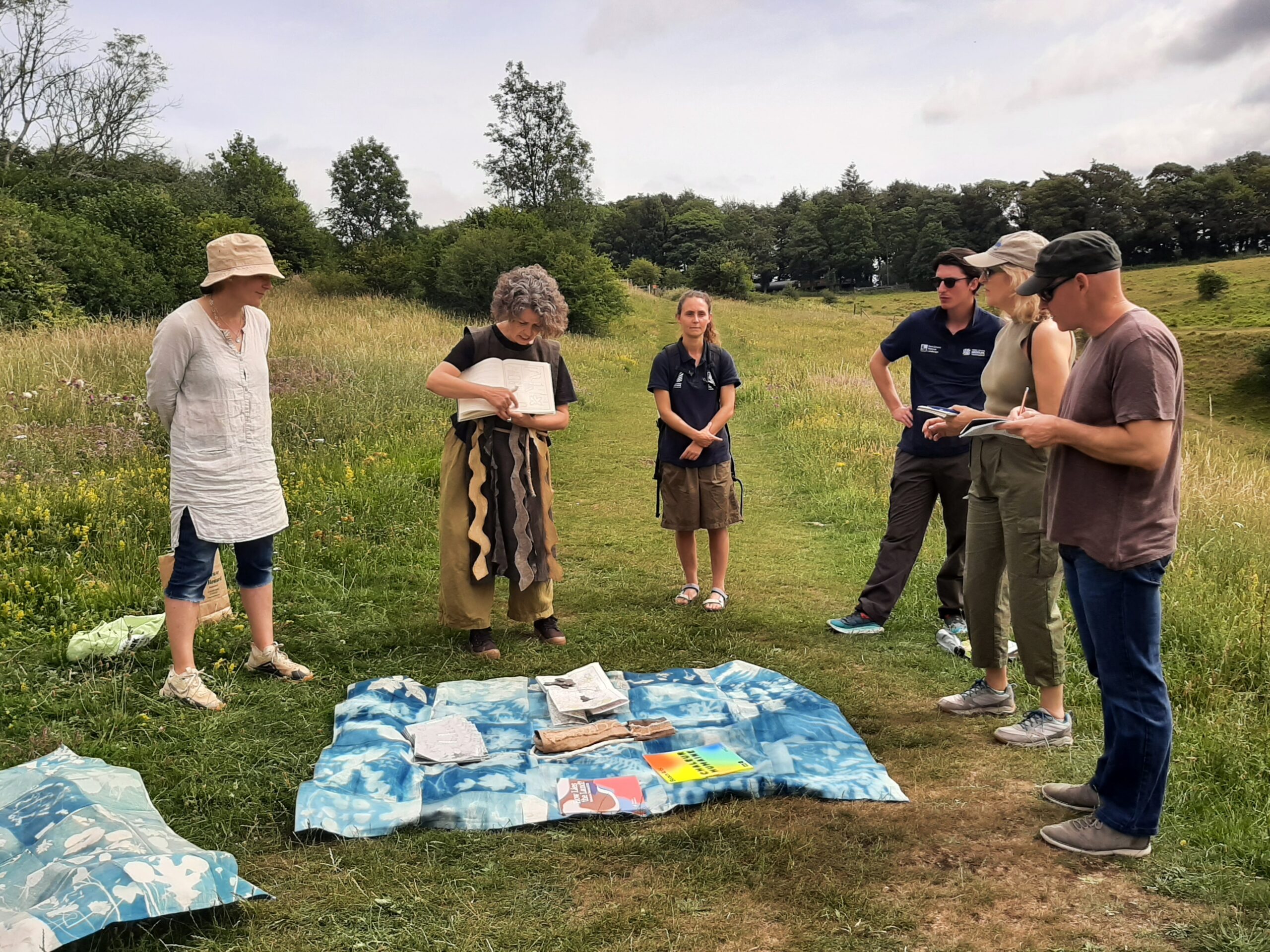
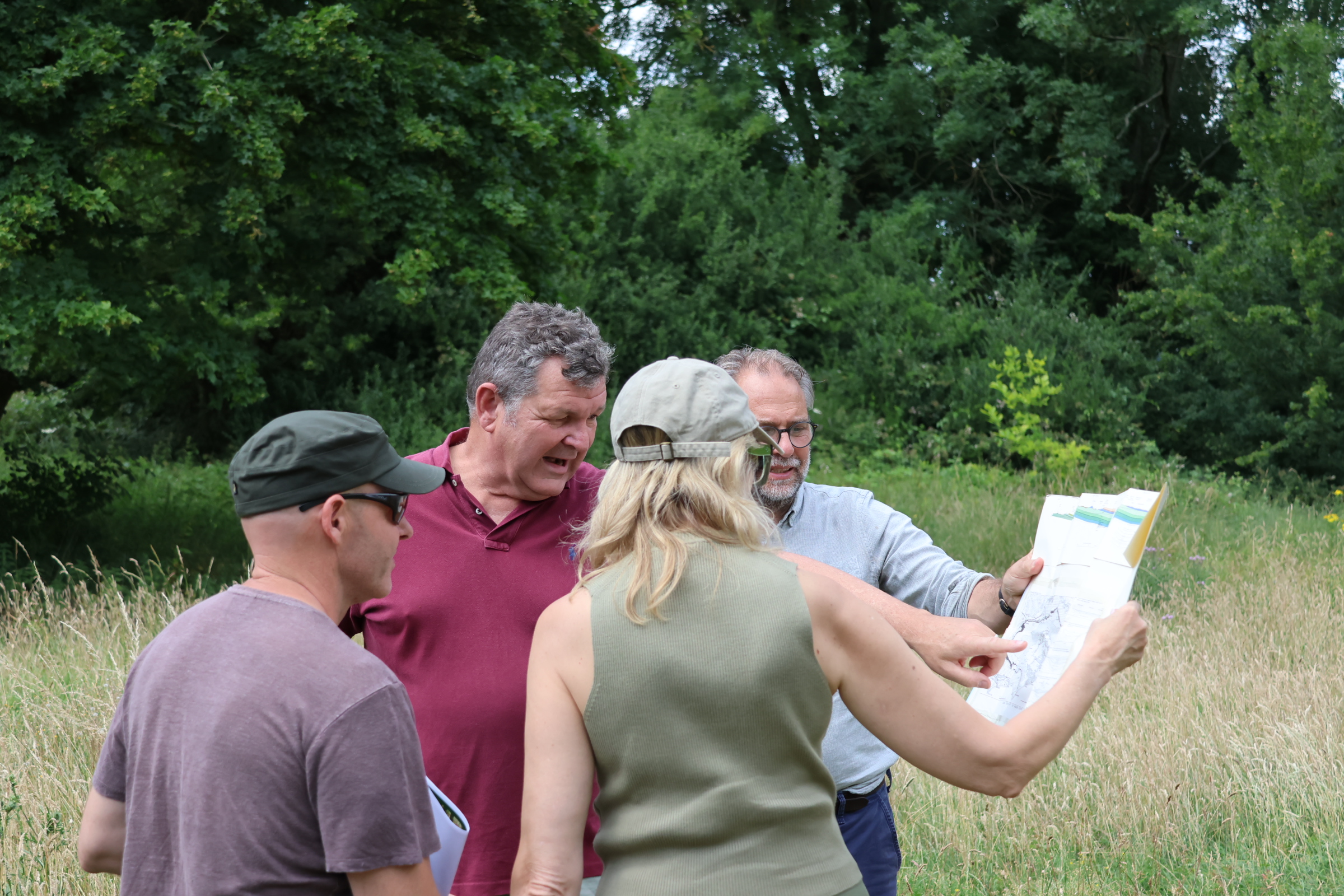
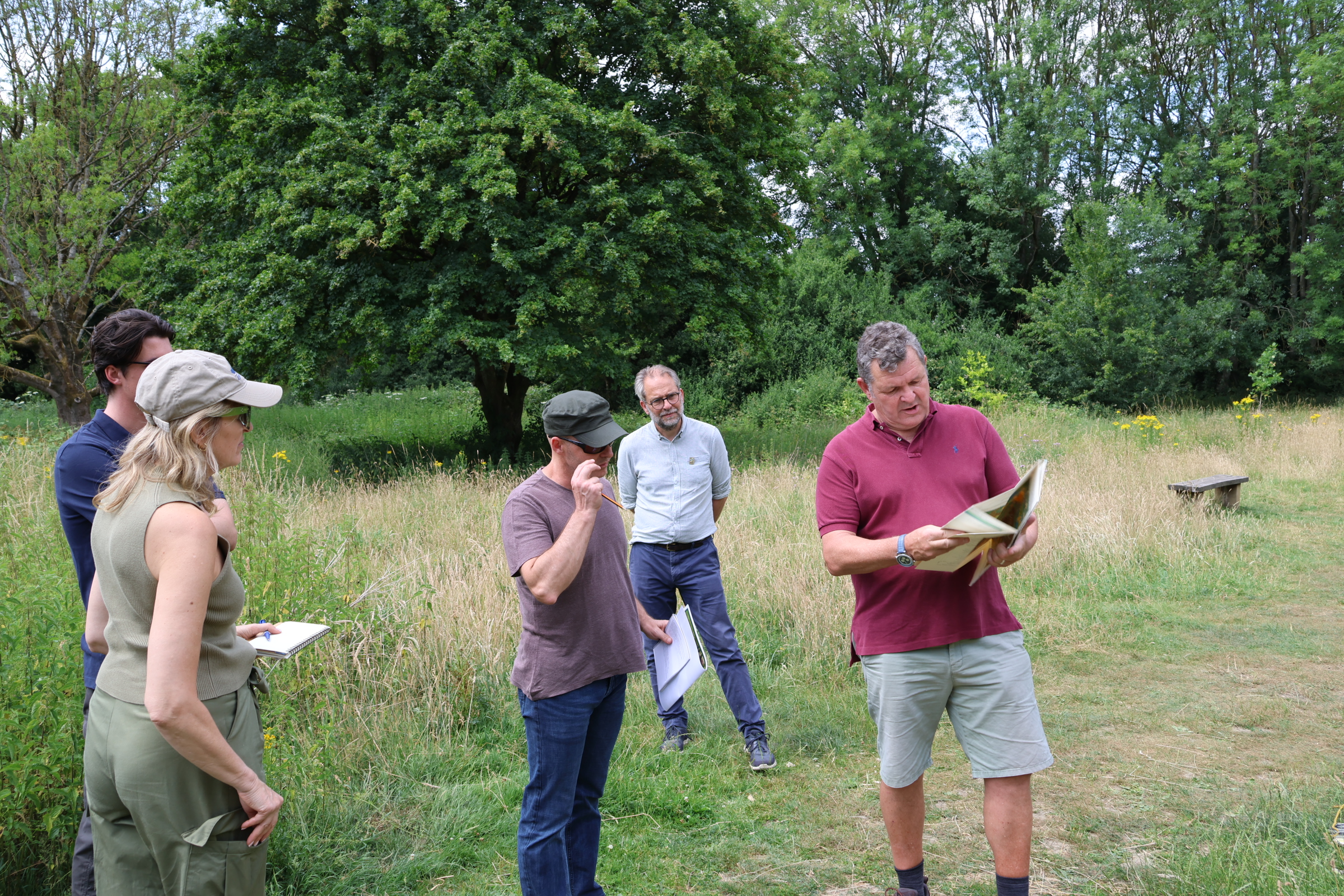
The day began at the Devil’s Kneading Trough, where the assessors discovered the importance of Kent’s chalk grasslands and the partnerships working to protect and celebrate them.
Hosted by Natural England, the visit brought together partners from across the Geopark to share the connections between geology, biodiversity, landscape management, creativity and community.
The assessors heard from:
- Rob Carver and Piers Griffin, Natural England Site Managers, who shared the story of the National Nature Reserve, chalk grassland management and the importance of protecting these internationally important habitats.
- Aline Keusterman, Geosite manager from the French chalk grassland symposium partnership, who shared the value of Cross-Channel knowledge exchange and collaboration.
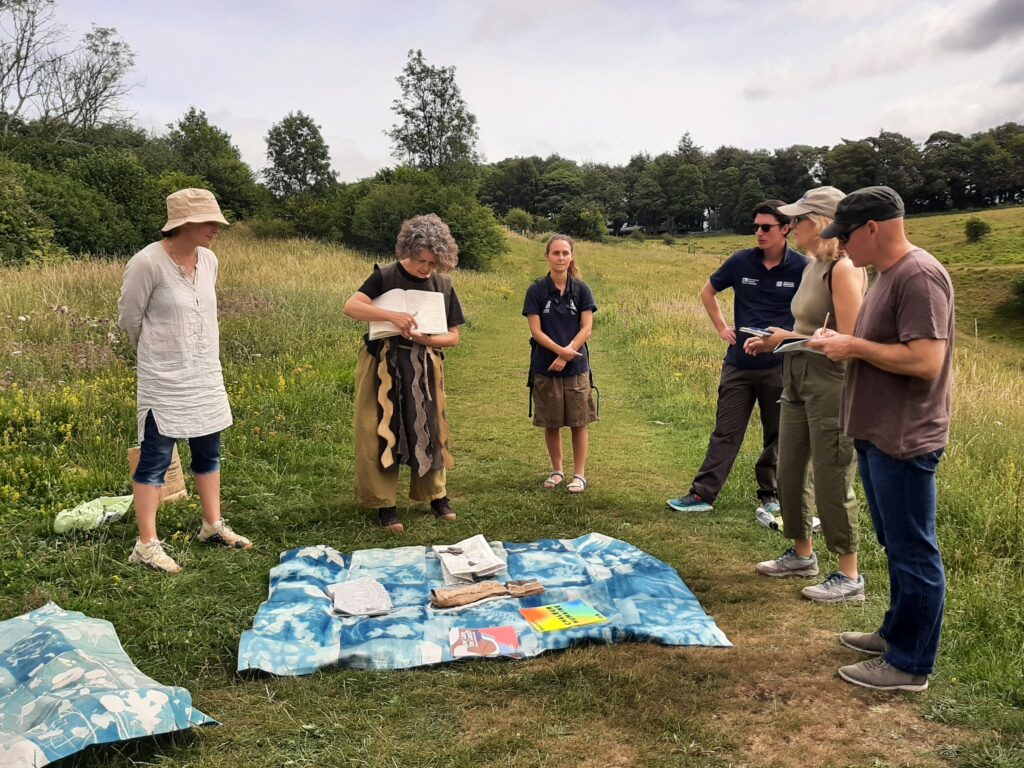
- Diane Dever, Folkestone Fringe and SALT+EARTH, who shared how arts and creativity are helping people connect with the landscapes of the Geopark.
- Sara Trillo and Jess Potter, artists and Geopark Ambassadors, who showcased their work exploring landscape, place and the connections between people and nature.
The visit highlighted how the Geopark creates opportunities to bring together science, conservation, creativity and communities – encouraging people to experience landscapes in new and inspiring ways.
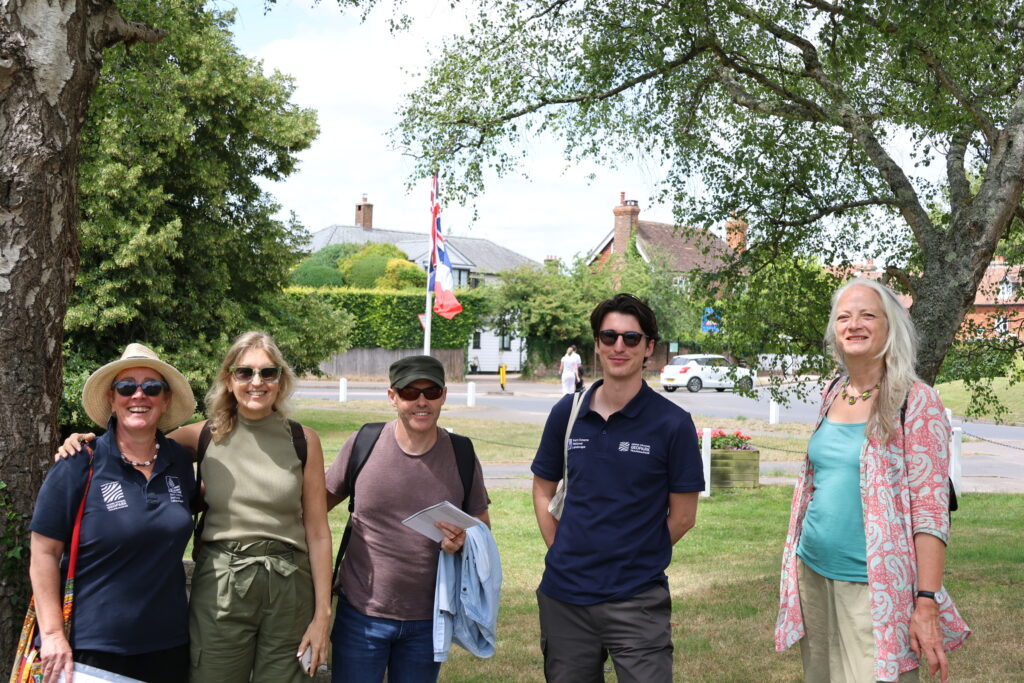
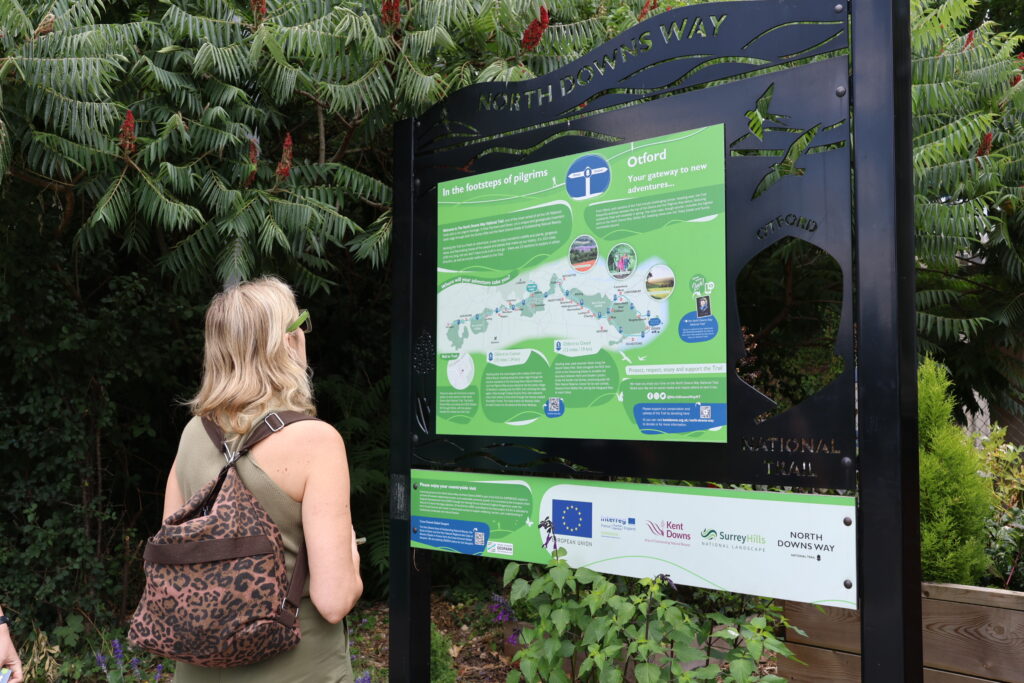
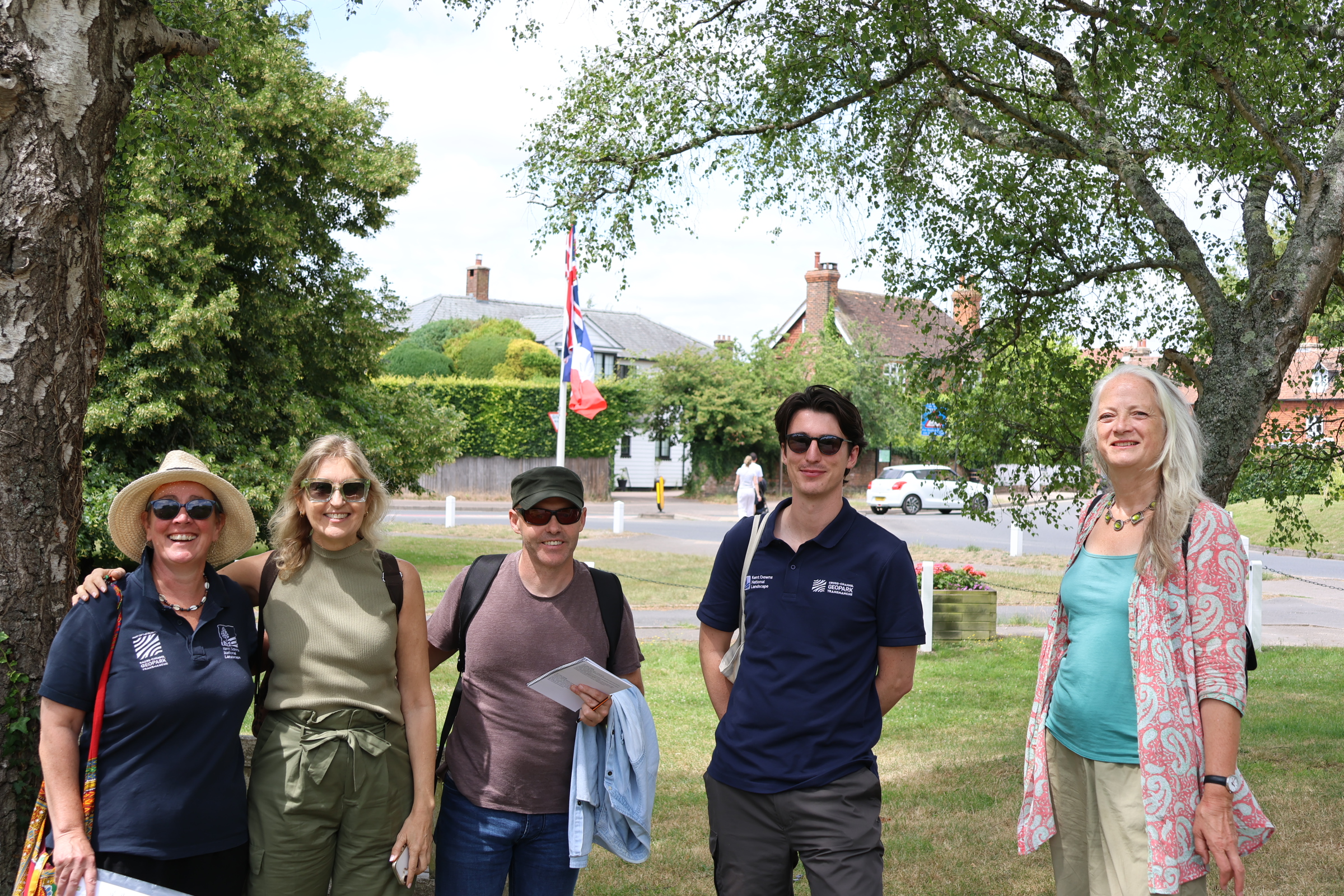
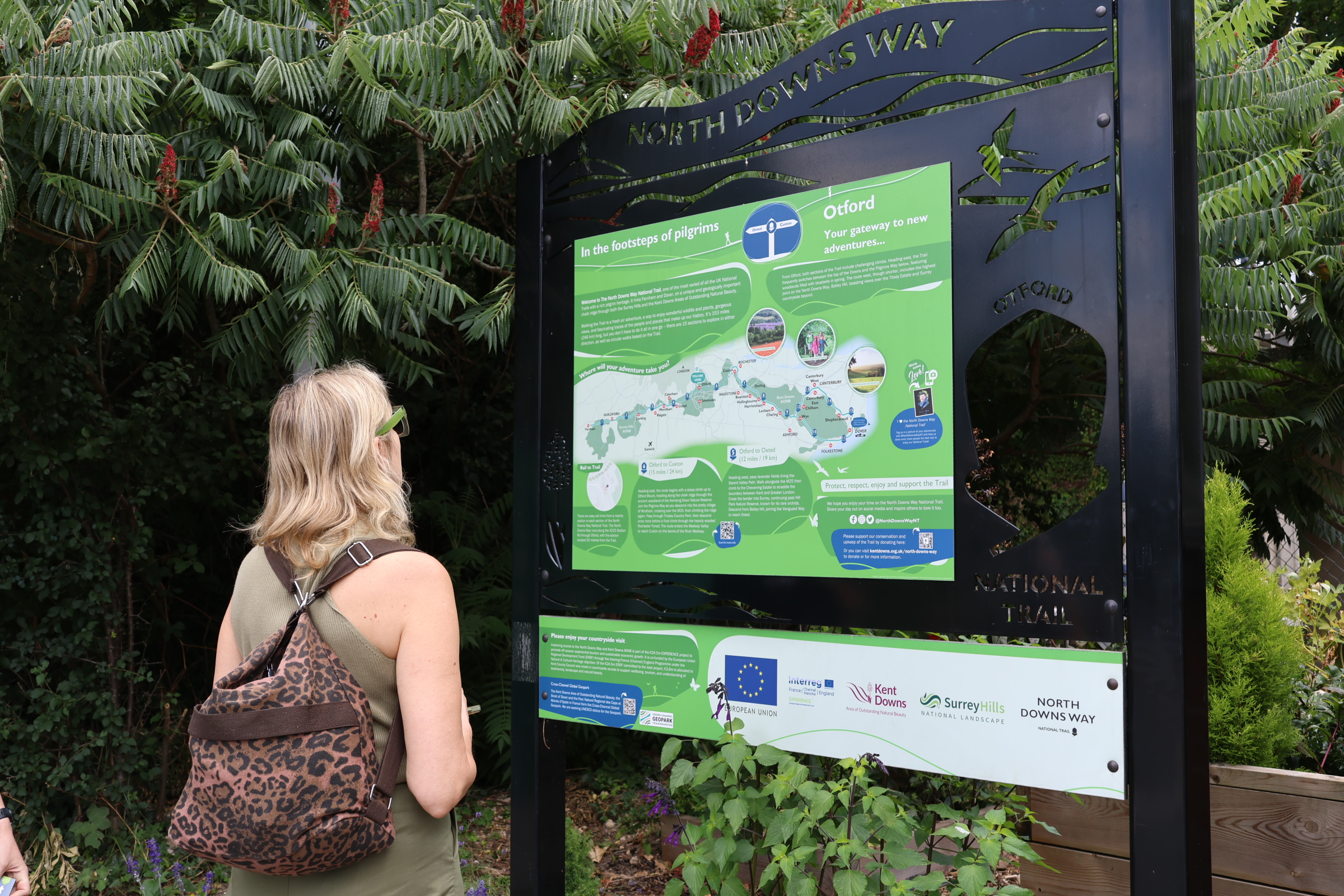
The journey continued by rail to Otford, showcasing sustainable travel, community connections and the importance of accessible ways to explore the Geopark.
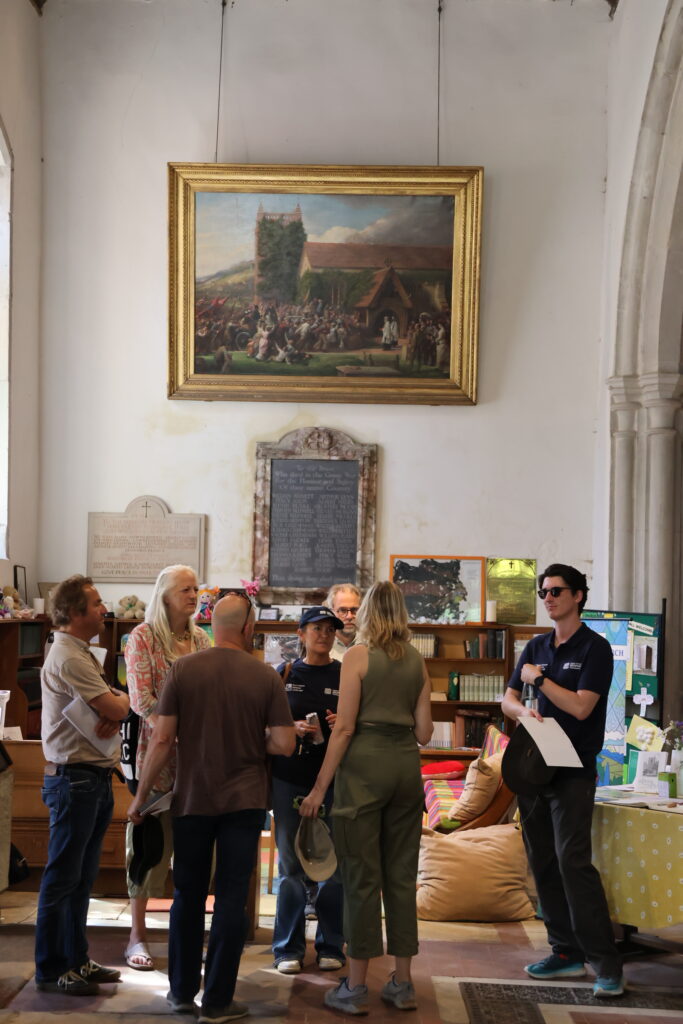
At Otford Station, the assessors were welcomed by Sarah Newman, Geopark Ambassador and Community Rail Partnerships representative, who shared the story of rail trails, local connections and the role of sustainable transport in helping people discover the landscape.
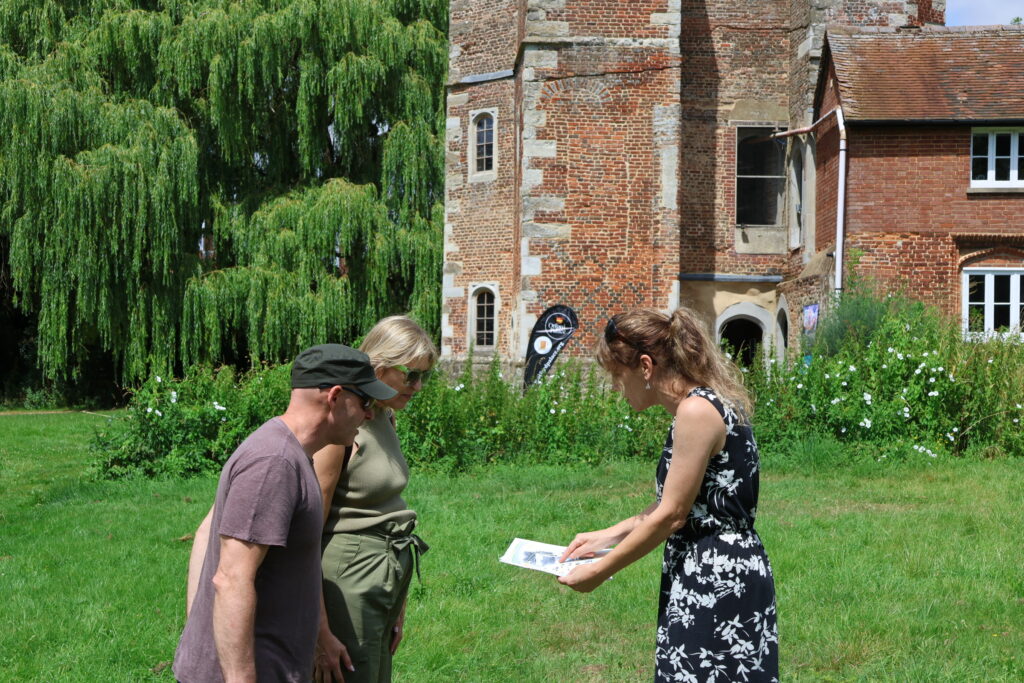
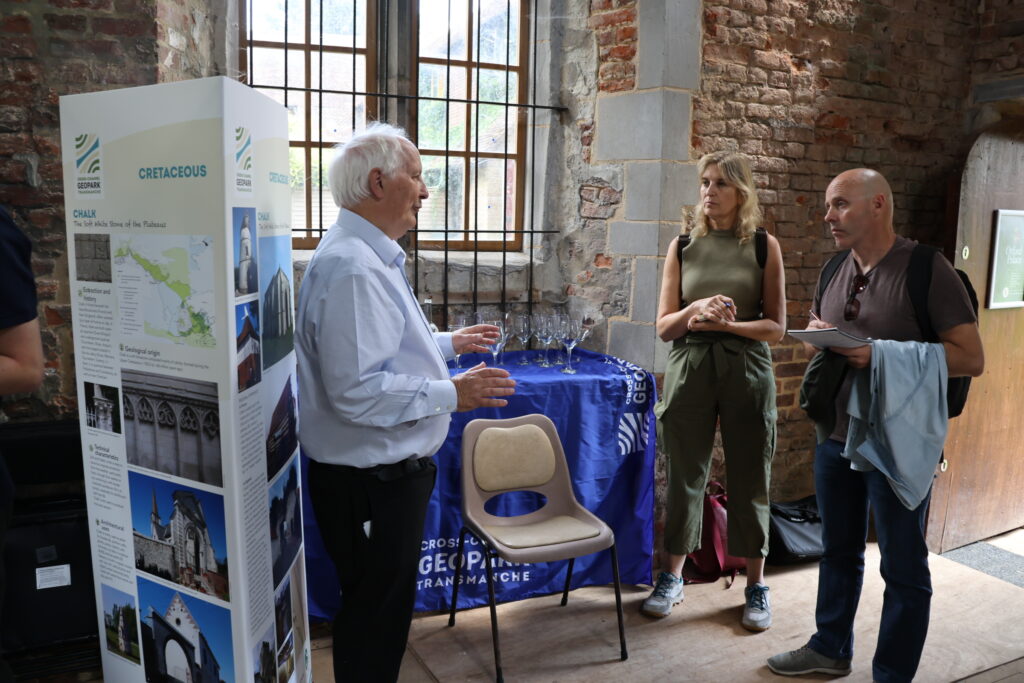
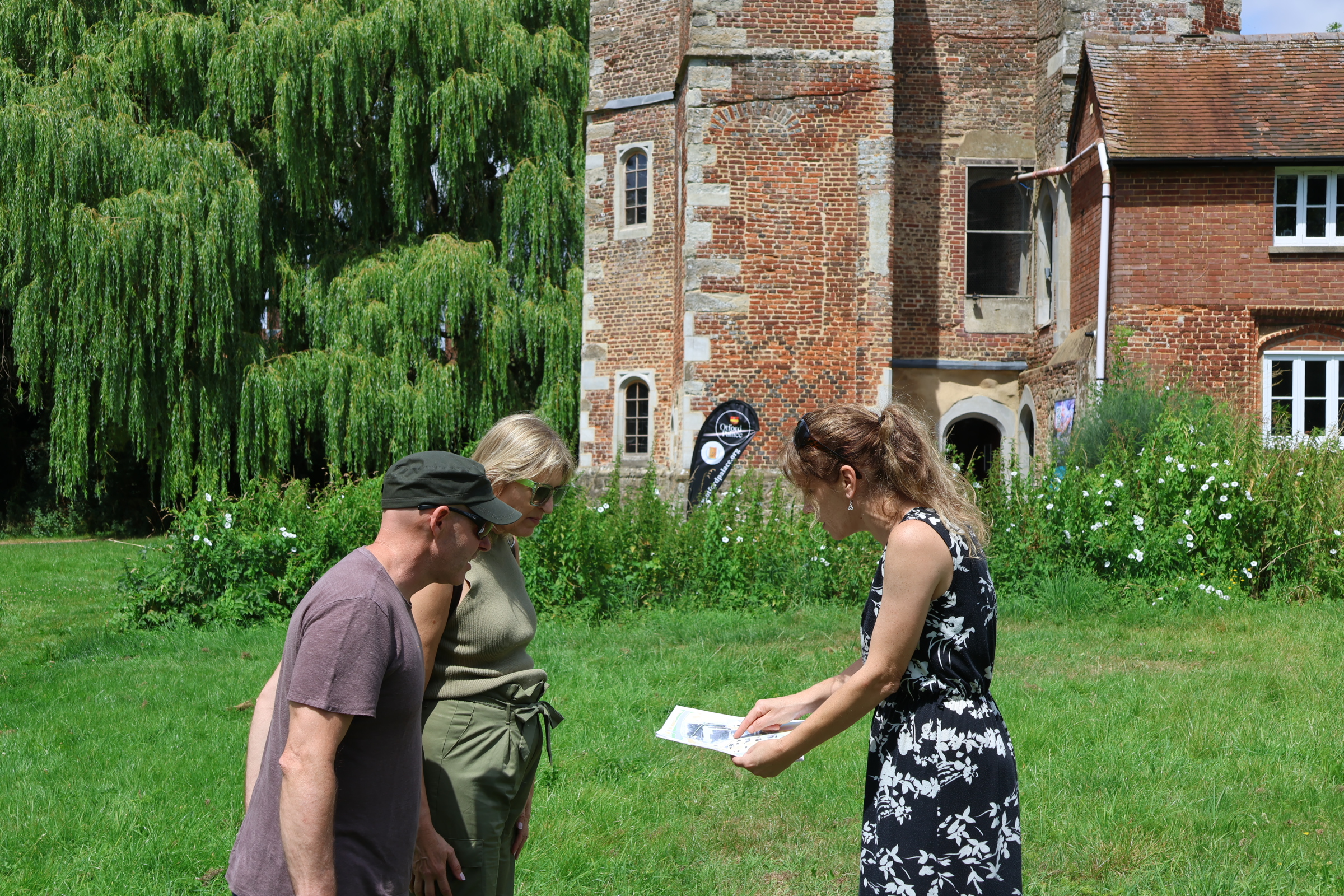
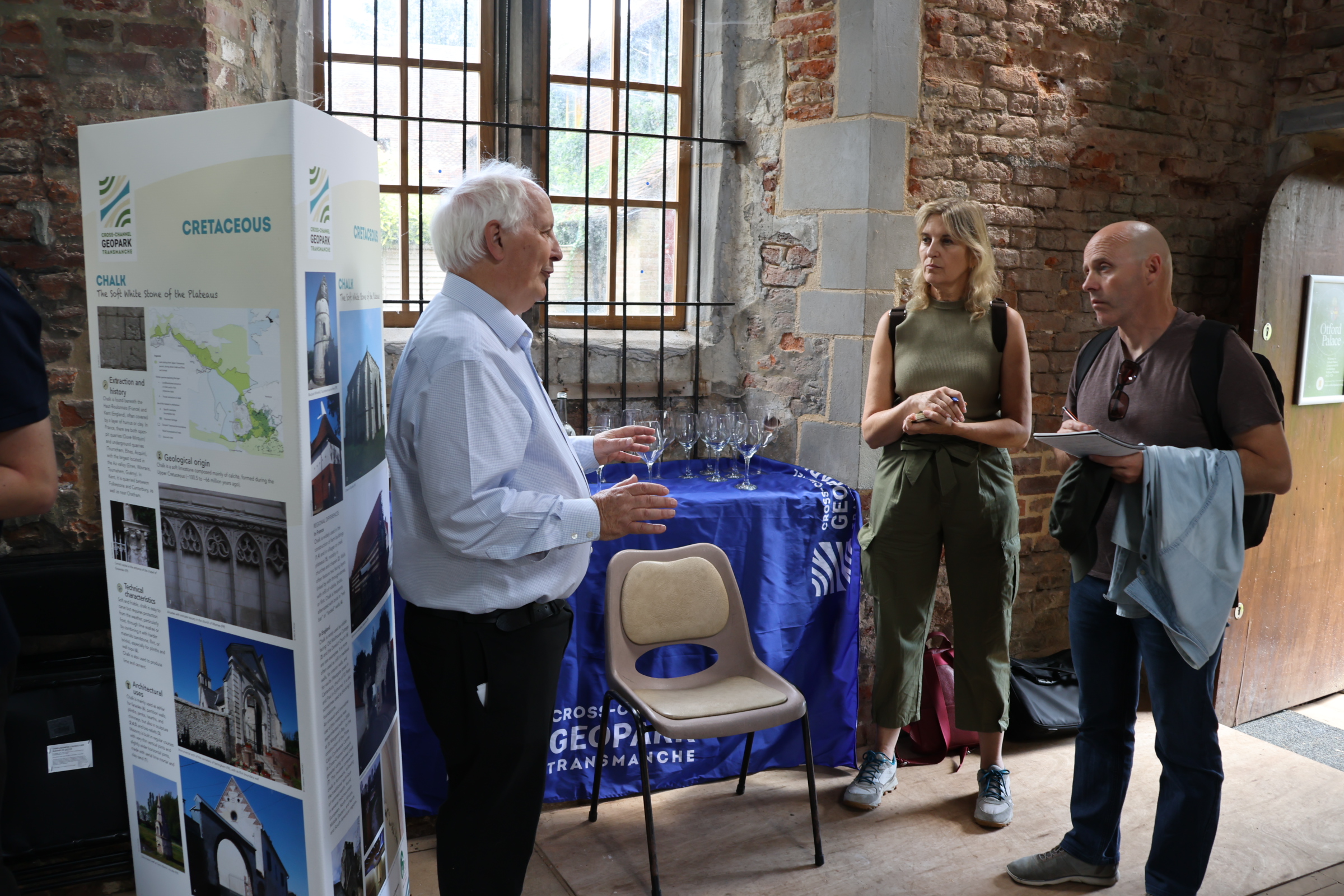
A visit to Otford Palace followed, hosted by Nick Rushby, Geopark Ambassador, where partners explored the connections between heritage, tourism, local produce and landscape.
The assessors heard from Anne Sassin, Kent Downs National Landscape Archaeologist, about the Heritage at Risk project and the importance of protecting and understanding the historic environment.
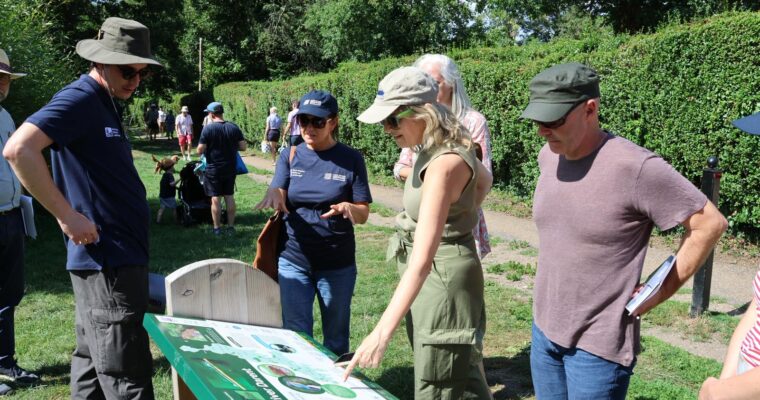
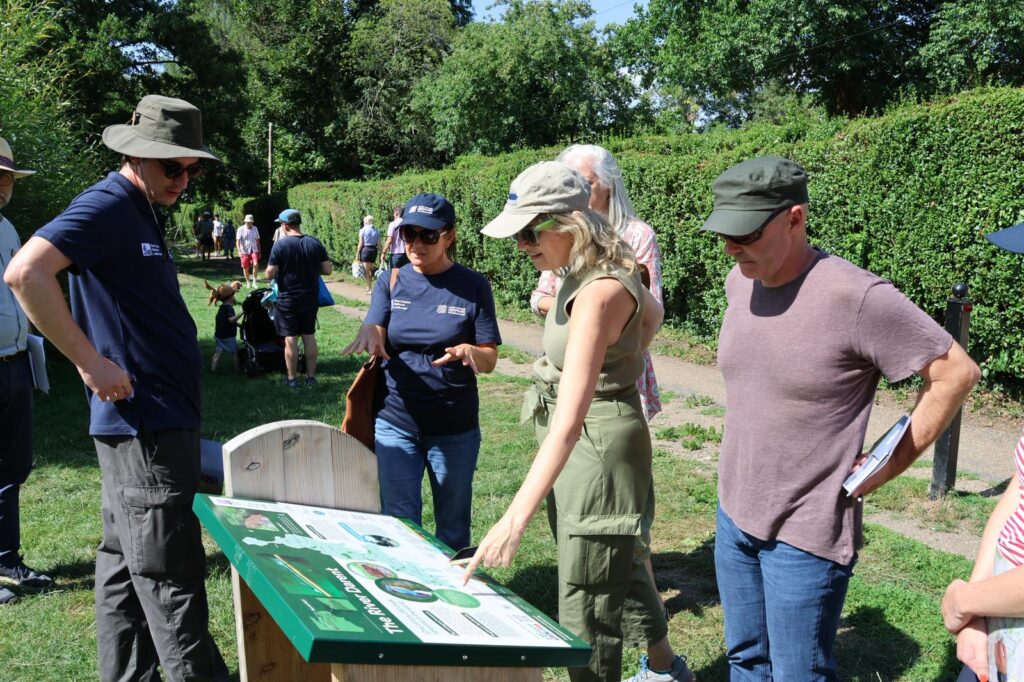
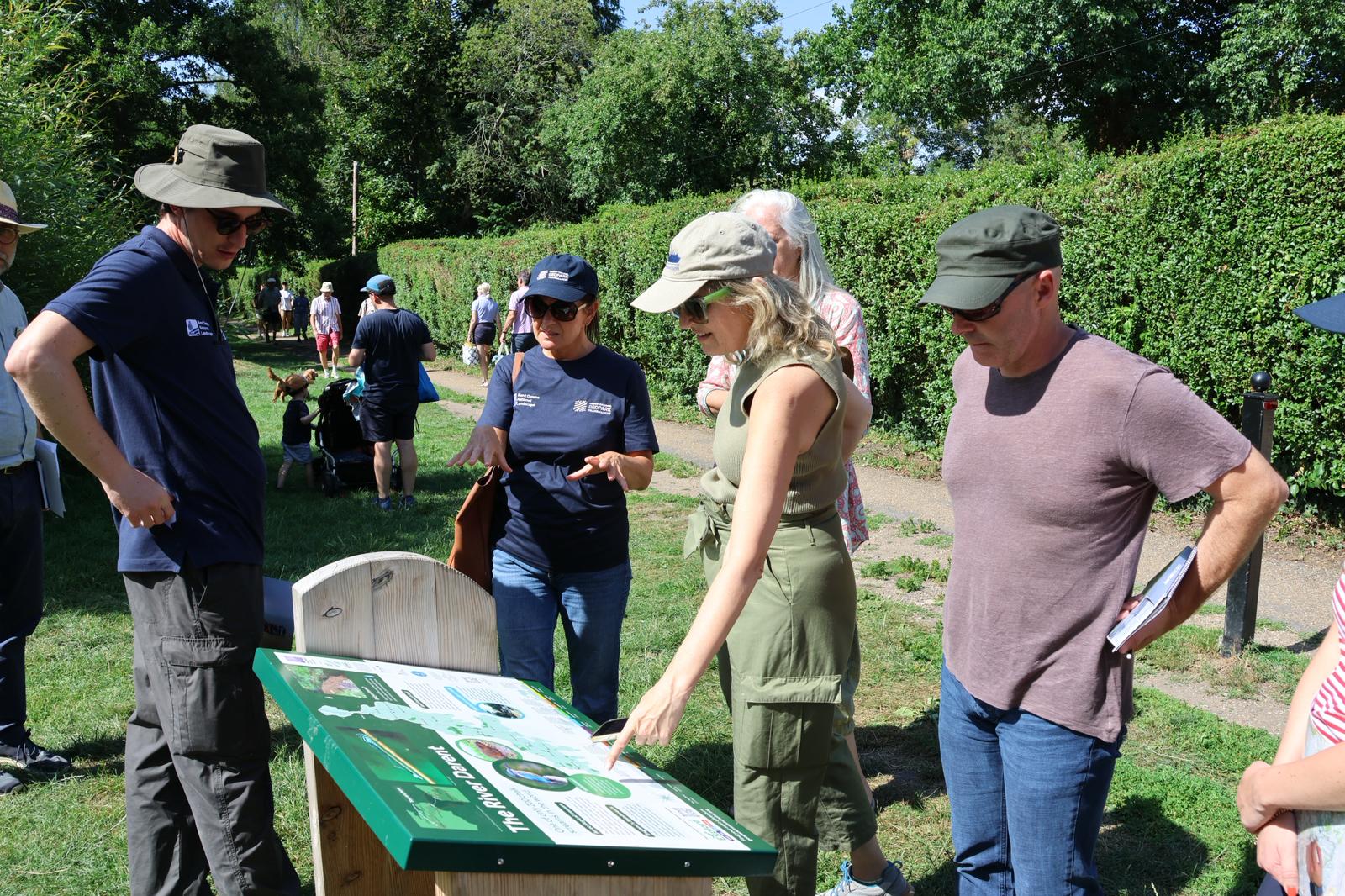
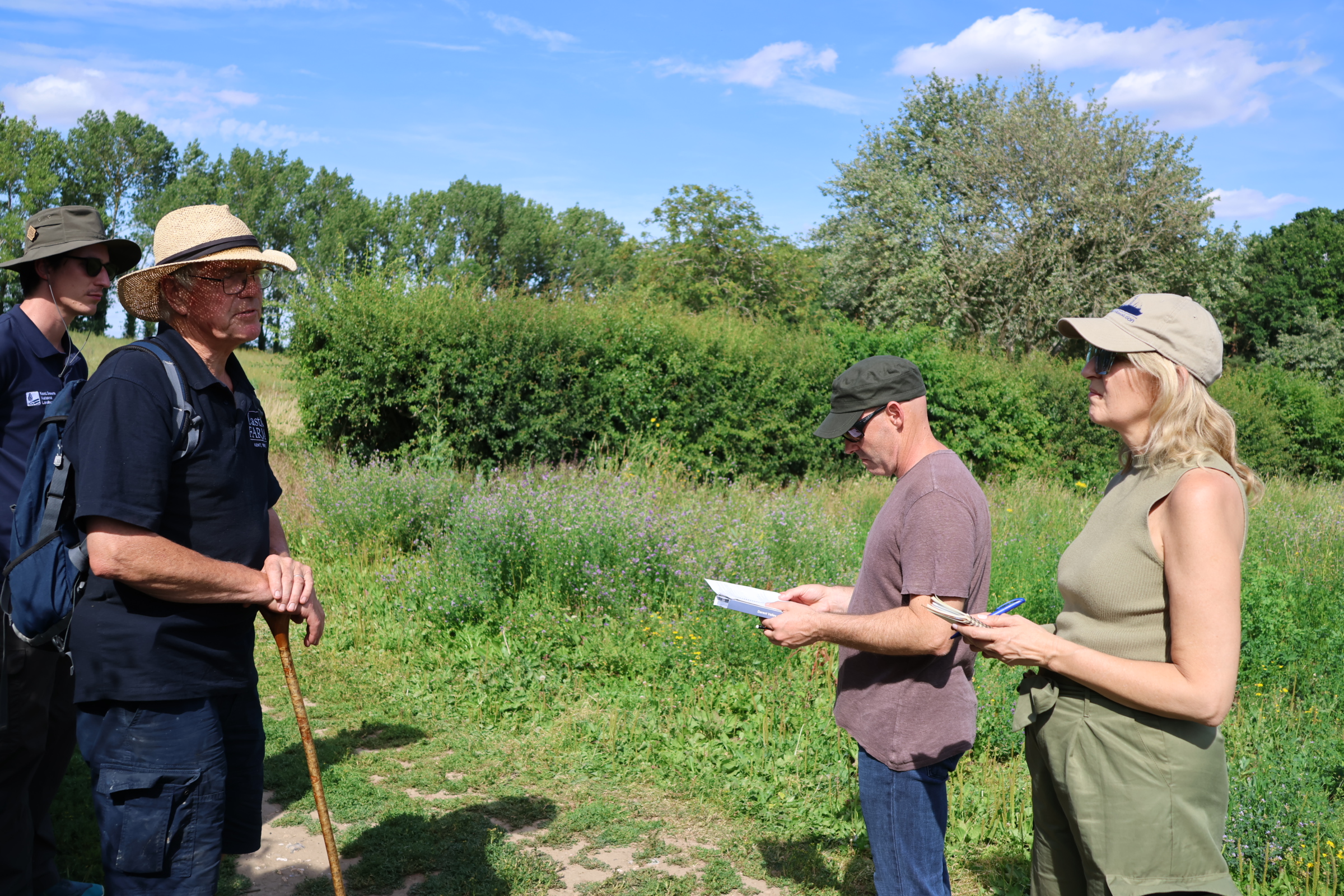
The afternoon brought the assessors into the heart of the Darent Valley, walking sections of the Darent Valley Path and discovering the many partnerships working to celebrate this special chalk landscape.
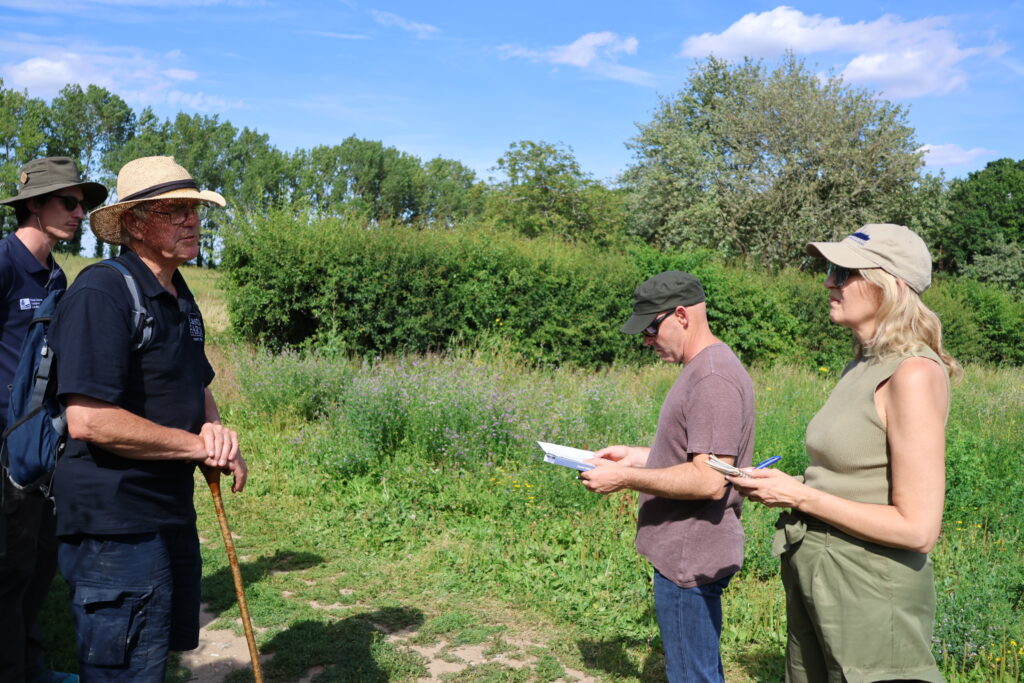
At the River Darent, Mark Gallant, Senior Partnership Officer at North West Kent Countryside Partnership, shared the story of the volunteer work that goes into protecting and enhancing the Darent.
Along the route, partners shared stories of:
- access and inclusion;
- community engagement;
- heritage and local stories;
- chalk streams and nature recovery;
- sustainable farming and rural businesses.
The walk was supported by:
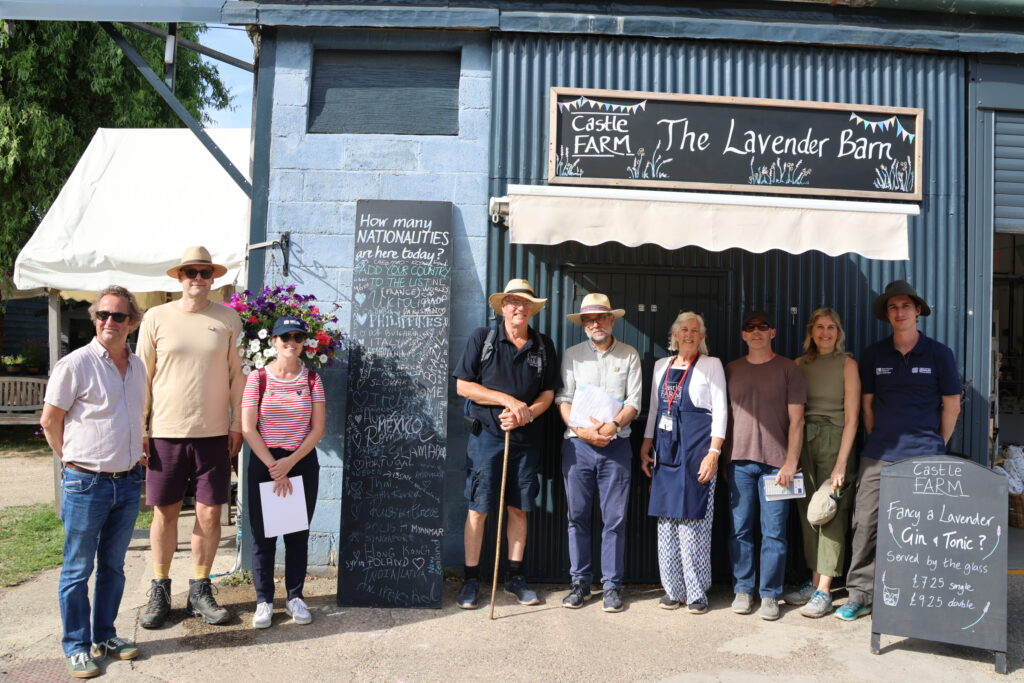
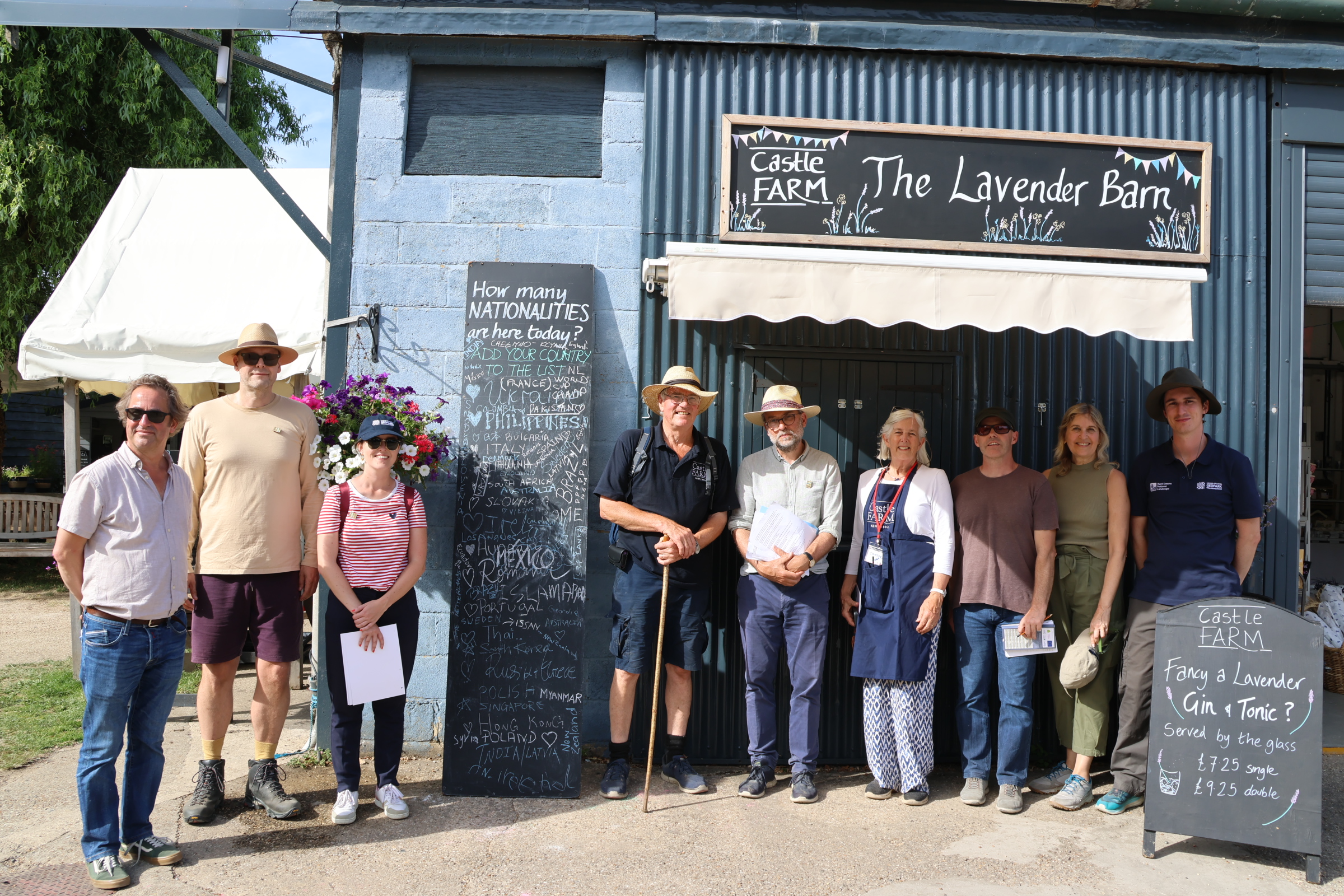
At Castle Farm, the assessors discovered how a working farm can become a place where nature, heritage, food production and sustainable tourism come together.
Hosted by William Alexander and the Castle Farm team, the visit explored river enhancement and natural flood management work along the River Darent, as well as the story of the farm’s development, local produce, visitor experiences and rural jobs.
The day concluded at Dryhill, where Tim Bell from Kent Country Parks and Geopark Ambassador Simon Drake shared the geological importance of the site, its role in education and opportunities to improve interpretation and visitor experiences.
A final evening at The Mount Vineyard celebrated the cultural connections of the landscape, including the legacy of Samuel Palmer and the Valley of Vision project, shared by Sarah Newman and Sarah Moon.
Day 3 – One landscape, two countries: connecting the Channel story
Day three celebrated one of the defining features of the Cross-Channel Geopark Transmanche: a shared landscape connected across the Channel.
The day began at the iconic White Cliffs of Dover, where partners showcased one of the world’s most recognisable chalk landscapes and a site of huge geological significance.
Hosted by the National Trust, the visit brought together conservation, science, education and community partners.
The assessors heard from:
- Nick Crane, Geopark President, who shared the wider vision and shared story of the Geopark.
- Gareth Wiltshire, Ginny Portman and Jim Wright, National Trust, who shared the management of this internationally recognised landscape, visitor experience and partnership working.
- Jonathan Larwood, Natural England and UK Geoparks Committee, who explored the history of geological research and the importance of the cliffs to understanding Earth’s history.
- Sanjeev Gupta and Alain Trentesaux, members of the Cross-Channel Geopark Transmanche Science Committee, who shared their scientific expertise and cross-Channel research connections.
The assessors then travelled through the Channel Tunnel with Eurotunnel, experiencing one of the most powerful examples of how geology, engineering, people and nations are connected.
Hosted by:
- John Keefe
- Sanjeev Gupta
- Alain Trentesaux
- Jonathan Larwood
the visit explored the geological story beneath the Channel, the creation of the tunnel and the remarkable landscapes visible on both sides of the water.
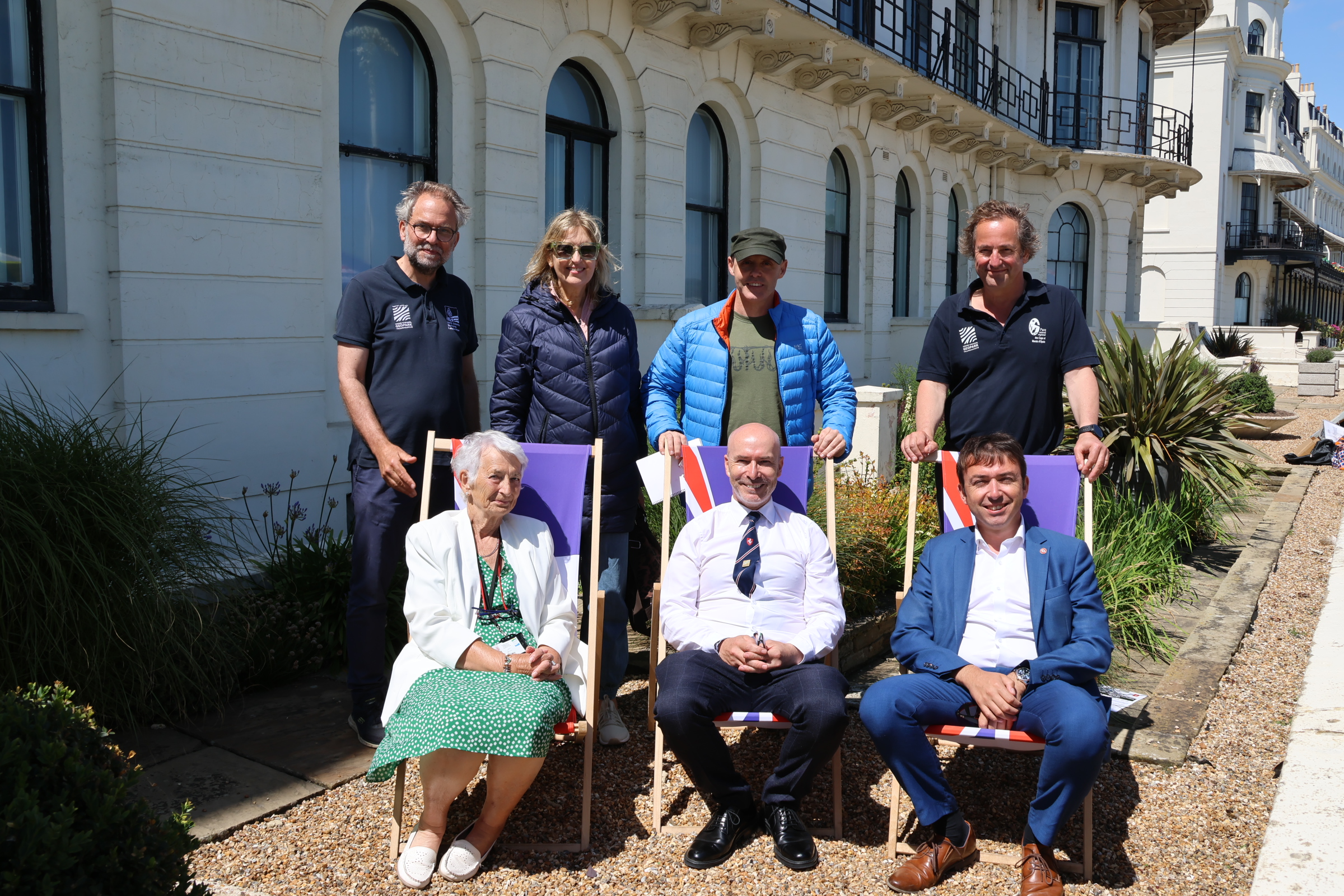
Upon arriving in France, the assessors continued their visit at Cap Blanc-Nez, a flagship site of the Geopark of international significance, where the monumental cliffs, the richness of the geological formations and the power of the landscape reflect the exceptional identity of the territory, while also echoing the shared geological history with the White Cliffs of Dover.
Hosted by the Grand Site des Deux Caps, the visit showcased:
- geological heritage;
- landscape protection;
- interpretation;
- sustainable tourism;
- climate change;
- education and visitor engagement.
Partners welcoming the assessors included:
- Mireille Hingrez-Cérèda, Vice-President of the Pas-de-Calais Departmental Council, responsible for maritime and coastal affairs, European and cross-border relations, and President of the Strait Committee, who highlighted the importance of cooperation across the Channel, the strong links between the two shores and the commitment of local authorities to fostering shared projects and sustainable development within the Geopark territory.
- Eric Boutroy, Mayor of Escalles, who welcomed the assessors to this iconic village of the Grand Site des Deux-Caps and shared the local commitment to preserving the exceptional landscapes, supporting sustainable tourism and maintaining a strong connection between the community and its natural heritage.
- Vincent Bastien, Manager of the Grand Site des Deux-Caps, who presented the challenges of sustainable tourism management along the coast, the remarkable creation of the Grand Site approach to regulate visitor flows while preserving the landscape, and the initiatives implemented at the Cap Blanc-Nez viewpoint to raise awareness of climate change and showcase the Geopark interpretation panels.
- Séverine Bastien and Laure Crépin, from the Maison de Site du Grand Site des Deux-Caps, who highlighted visitor engagement and educational activities designed to raise public awareness of the territory’s natural and cultural heritage.
- Alison Neighbour, artist and Geopark partner, who introduced the “Chalk Path” audio walk, an invitation to disconnect from everyday life and reconnect with deep time through the landscape.
- Caroline Geneau, Geopark Ambassador, who presented the biodiversity challenges of the site and her role in promoting the Geopark as a GeoAmbassador.
- Stéphanie Le Niniven and Mathilde Delporte, from the Parc naturel régional des Caps et Marais d’Opale, who presented the Valeurs Parc brand and highlighted its role in supporting local products, sustainable development and the identity of the landscape.
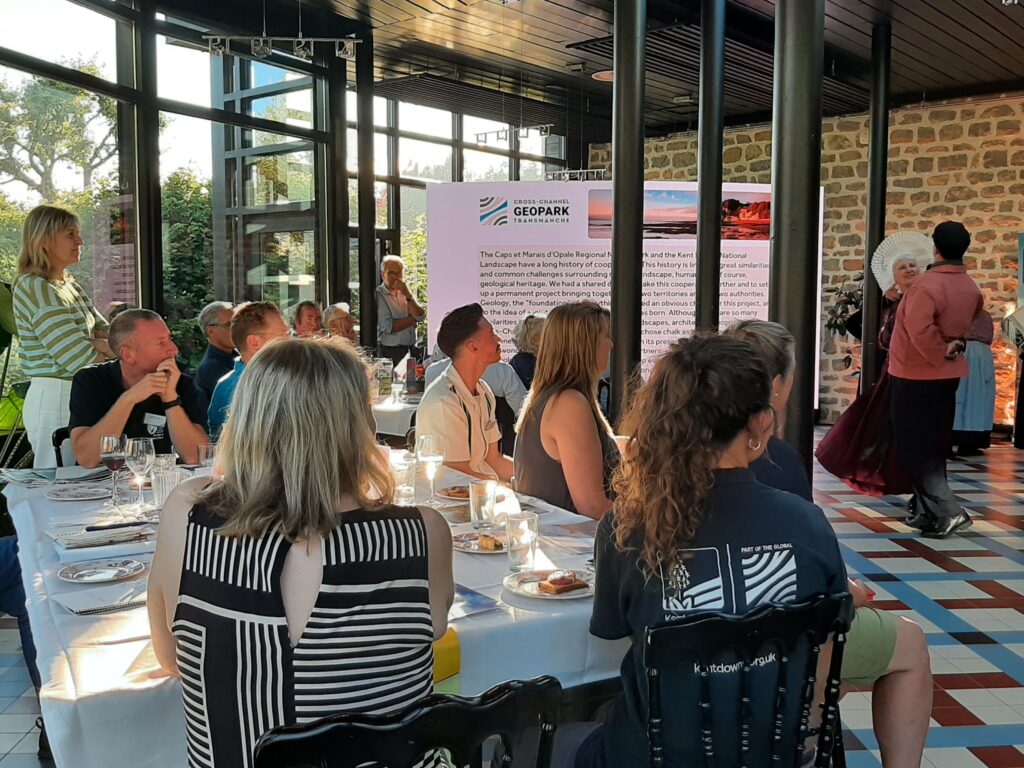
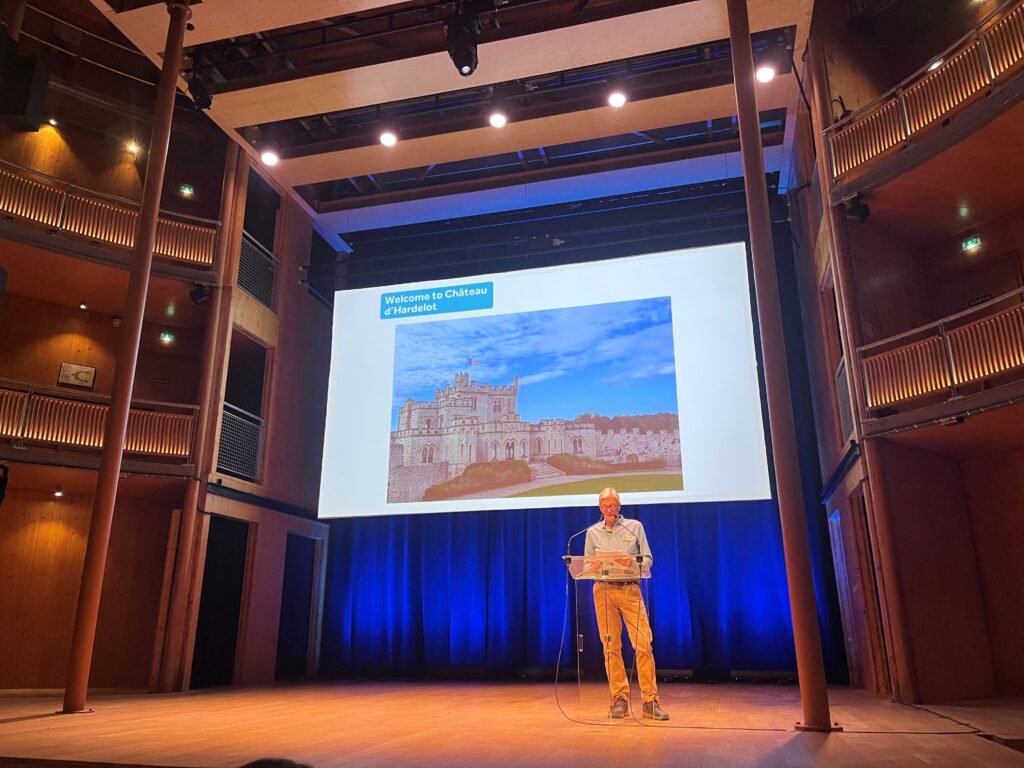
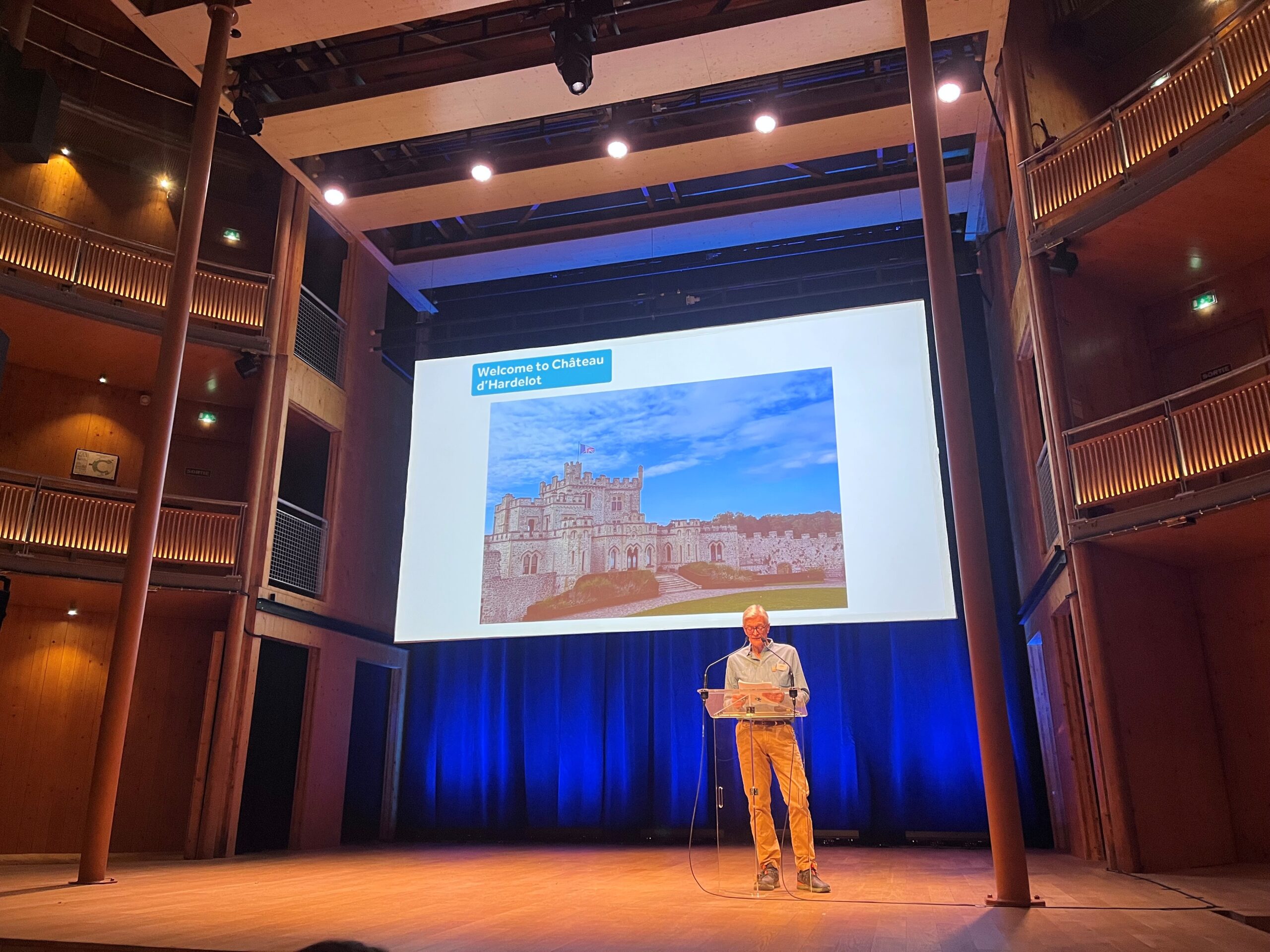
The day ended at Château d’Hardelot, celebrating the cultural connections that run through the Geopark.
Hosted by:
-
Sébastien Chochois, departmental councillor;
-
Coline Cailliau, Château d’Hardelot;
-
Jennifer Chilaud, Geopark Ambassador.
Together, they presented the château as a symbol of the Entente Cordiale between France and England, reflecting the friendship and shared heritage that unite both sides of the Channel.
The evening explored built heritage, education, events, community partnerships and the role of culture in connecting people with place.
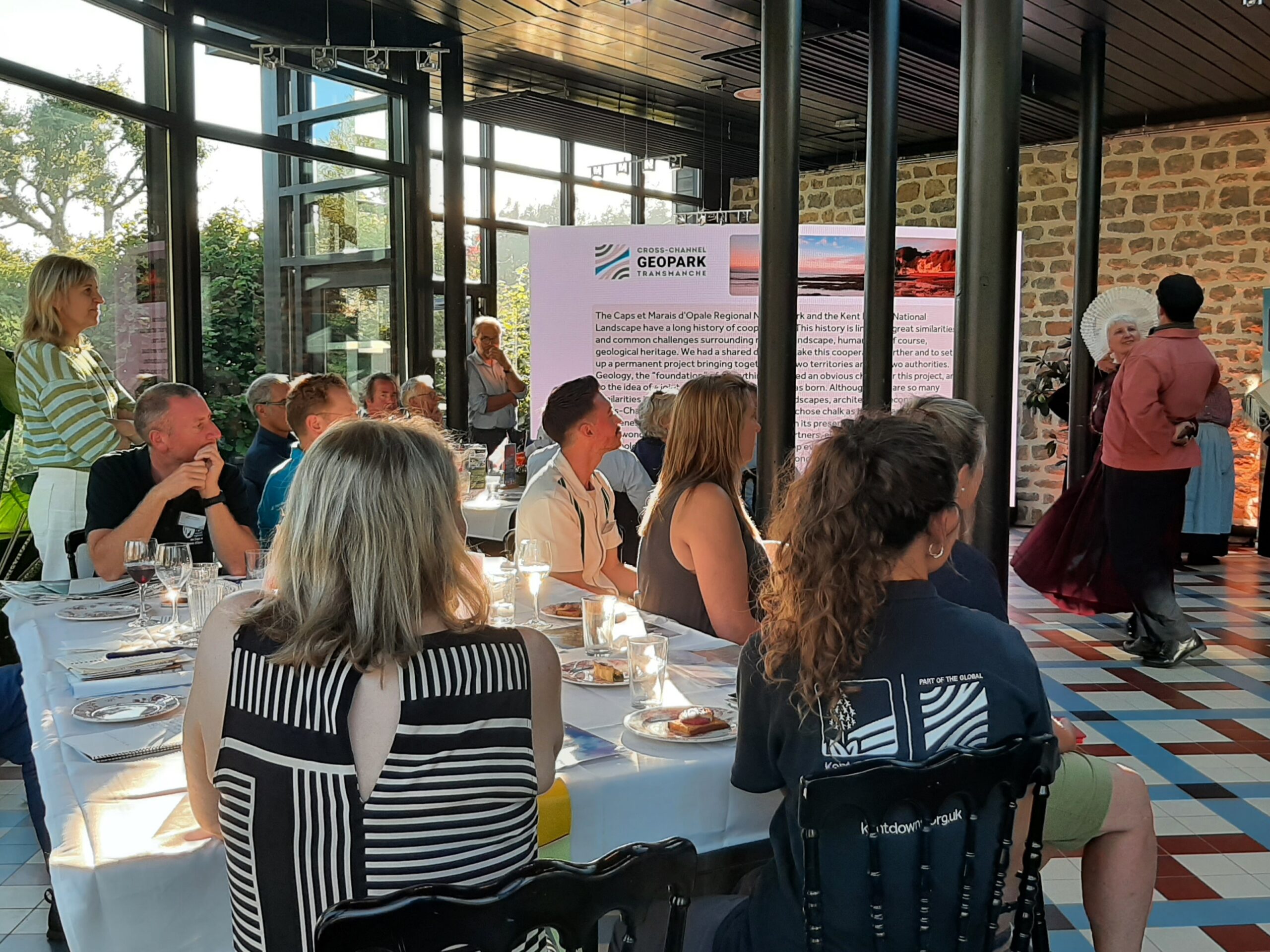
The day finished with a celebration of partnership, bringing together representatives from across the Geopark’s communities, education networks, marine partnerships and sustainable tourism sector.
Day 4 – Northern France: living landscapes, heritage and partnership in action
The fourth day of the UNESCO assessment journey took the assessors deeper into the landscapes of the Parc naturel régional des Caps et Marais d’Opale, exploring the many ways geological heritage connects with communities, industry, nature, culture and everyday life.
From visitor centres and quarries to wetlands and traditional crafts, the day showcased the breadth of the Cross-Channel Geopark Transmanche story – demonstrating how geology continues to shape landscapes, livelihoods and local identity.
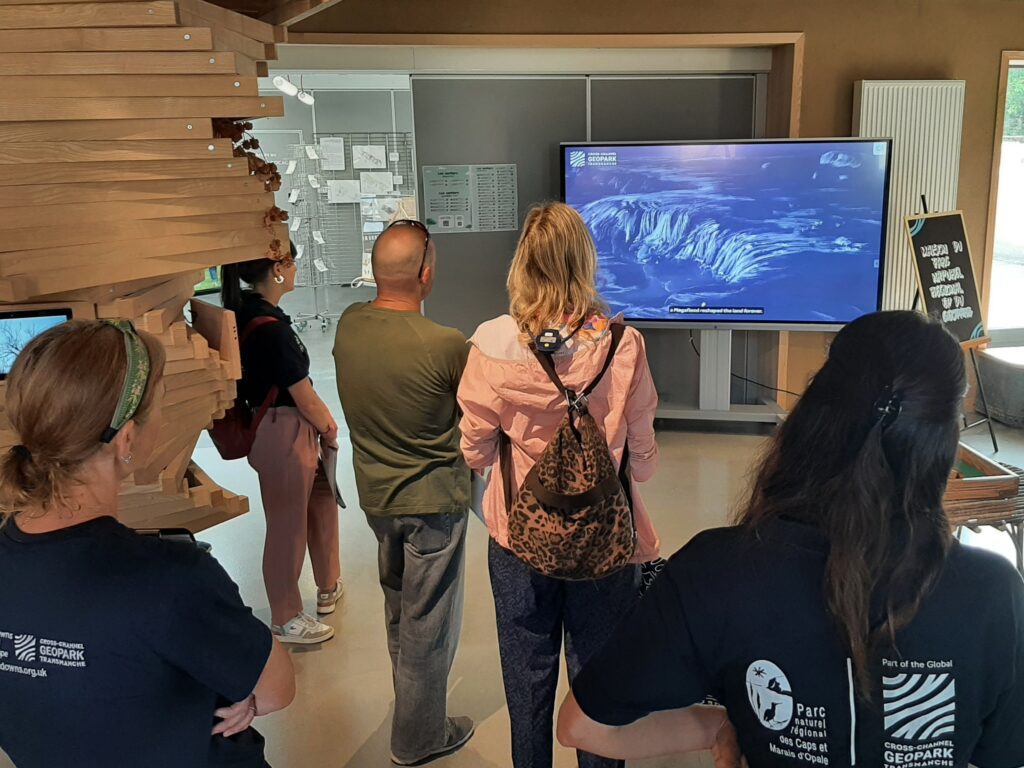
The morning began at the Maison du Parc et du Geopark in Le Wast, the home of the Parc naturel régional des Caps et Marais d’Opale and an important gateway for discovering the Geopark.
The assessors were welcomed by:
- The Mayor of Le Wast, who introduced the local community connection to the Geopark;
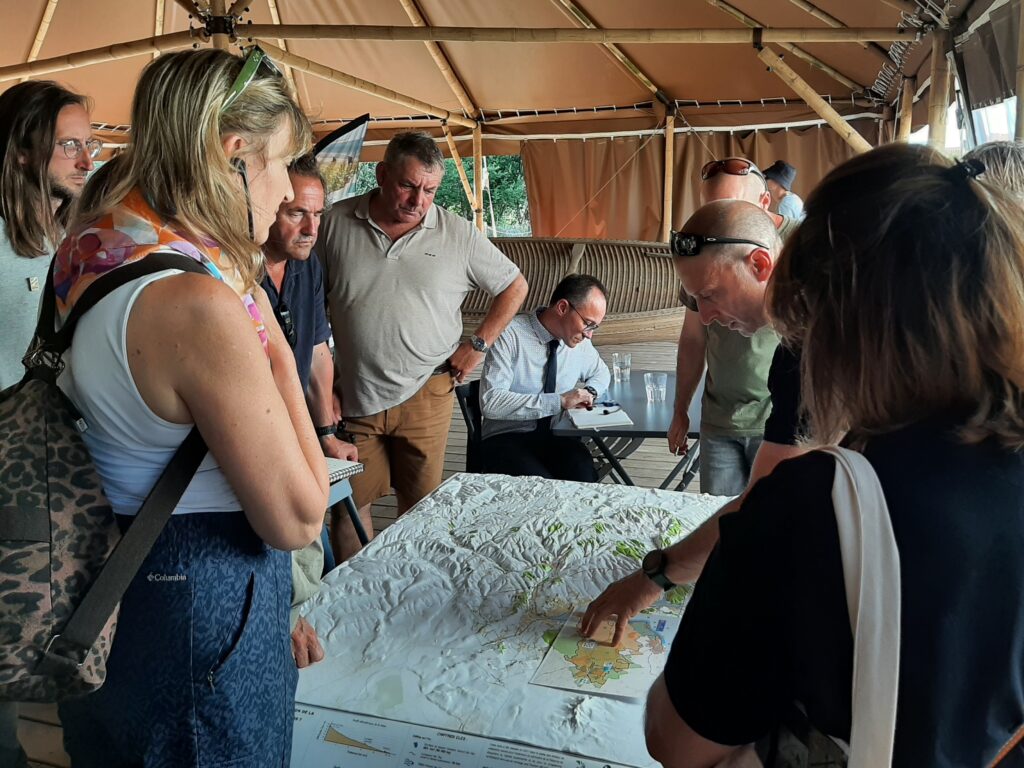
- Sarah, Isabel and Hélène, members of the Geopark team and Executive Committee, shared the different roles of the Maison du Parc et du Geopark: a visitor gateway and meeting place, a hub for welcoming visitors, educational activities and community engagement, and a space where the shared geological story of the Channel can be discovered. They also highlighted efforts to make the Geopark accessible to all and demonstrated traditional skills through dry-stone wall restoration and cob workshop techniques.
The visit highlighted the importance of making geological heritage visible and accessible – helping visitors and communities understand the deep history beneath the landscapes they know and love.
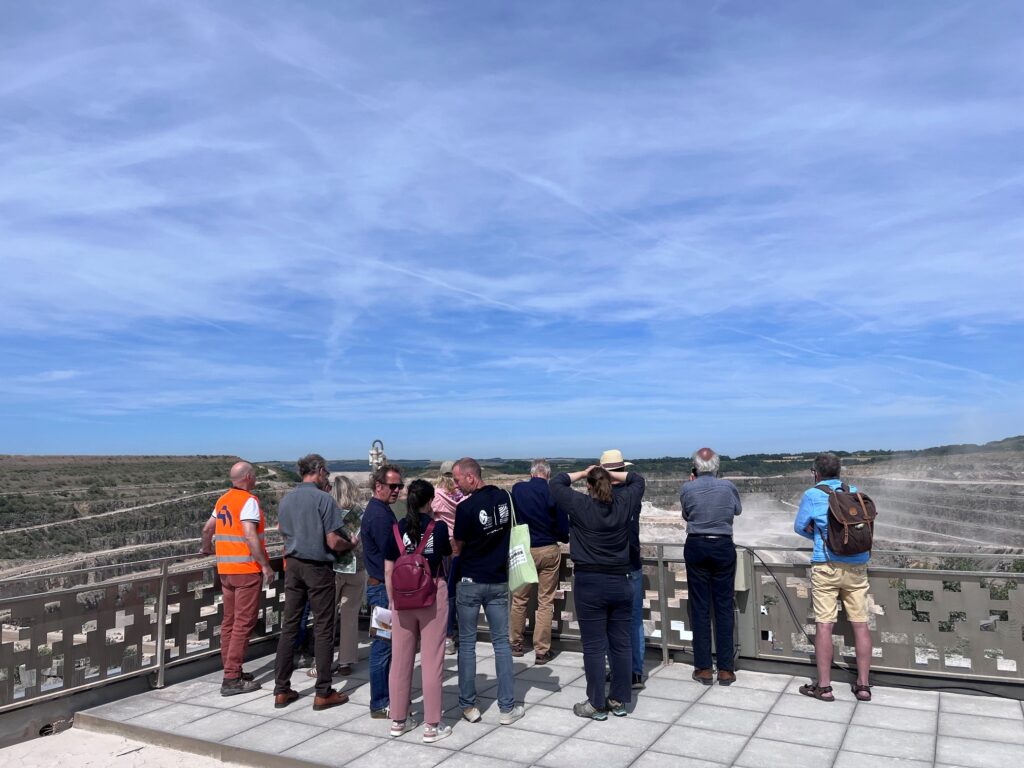
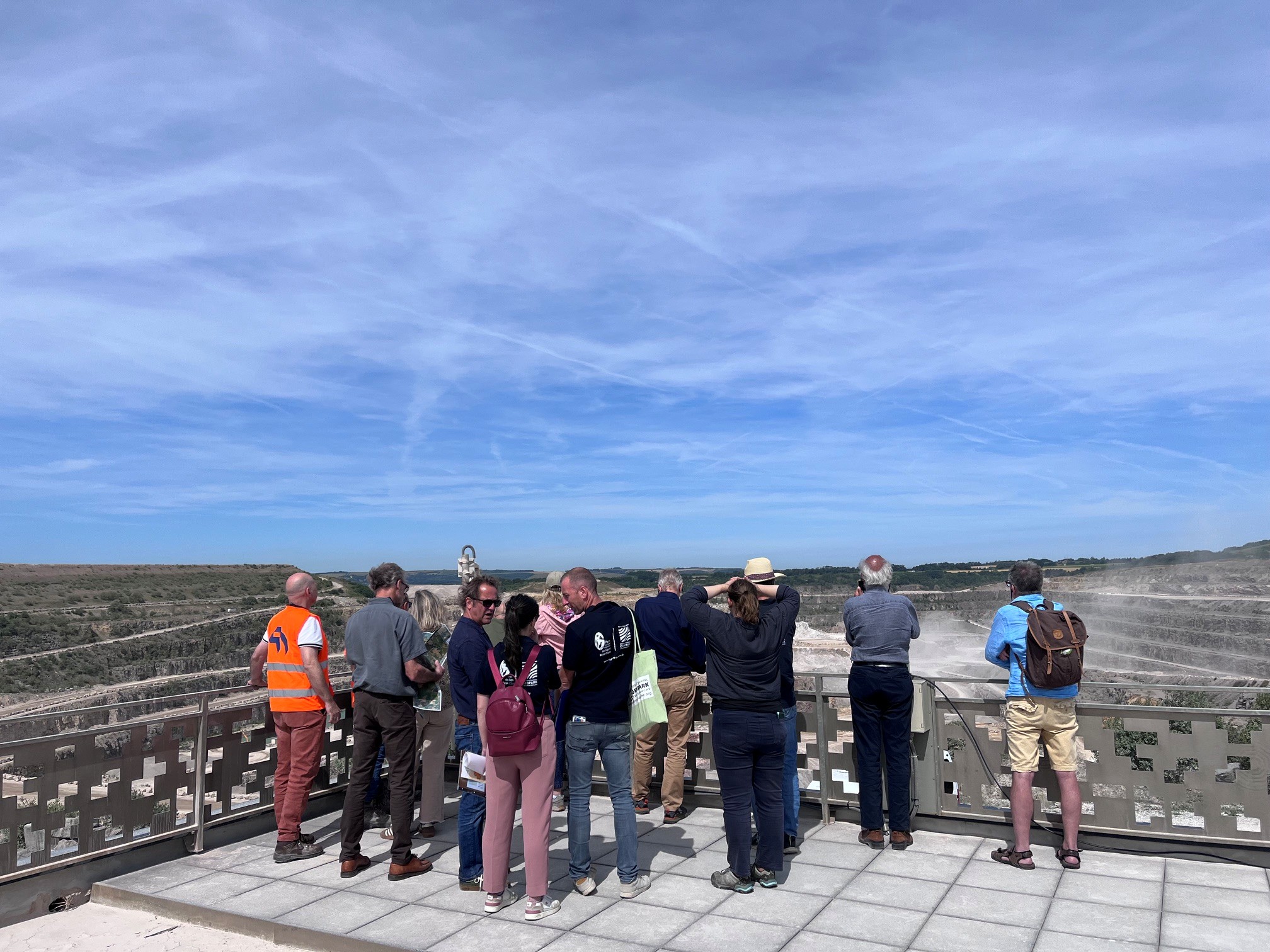
The journey continued to Carrières du Boulonnais quarry, the biggest quarry in France, showcasing an important connection between geological heritage, industry and sustainable development.
Hosted by:
- David Duwat, Manager of Carrières du Boulonnais, who presented the development of industrial tourism initiated by Carrières du Boulonnais in partnership with the Geopark, as well as the long-standing collaboration with the Parc naturel régional des Caps et Marais d’Opale. This partnership has led to remarkable achievements in landscape interpretation, education and biodiversity preservation.
- Arnaud Hamelin, geologist at Carrières du Boulonnais, and Olivier Averbuch, sedimentologist, scientific expert and member of the Geopark Scientific Committee, who together provided a complementary perspective on the international geological significance of the quarry. Combining field expertise and scientific research, they highlighted the exceptional value of the site, its geological history and its contribution to understanding the landscapes of the Geopark.
- Jean-Pierre Geib, Geopark Ambassador, who presented the Landscape Plan of the Marquise quarry basin and reflected on the successful 30th anniversary celebrations of this pioneering initiative, which continues to bring the general public closer to the quarrying world and its landscapes.
- Jonathan Larwood highlighted the cross-Channel connections and the shared geological story linking both sides of the Channel. The assessors discovered how quarrying, geological research, landscape interpretation and partnership can work together.
The visit explored the internationally important geology of the site, the role of industry in understanding and using geological resources, and the opportunities to connect visitors with the story of the landscape.
This visit provided an opportunity to meet the operators who form part of the Marquise quarrying basin and to highlight the long-standing partnership between the Geopark and local industry. Discussions focused on how businesses, scientists and local partners are working together to improve geological interpretation, support education, and contribute to the protection and understanding of the landscapes shaped by quarrying activities:
- Chaux et Dolomies
Lunch at the estaminet randonnée Le Lion d’Or in Hardinghen offered another opportunity to celebrate local identity, traditional knowledge and community life.
The assessors experienced the warmth and authenticity of this local venue, discovering regional food, traditional games and the intangible heritage that brings communities together. The visit highlighted how local businesses and cultural traditions contribute to the living identity of the Geopark.
The lunch also provided an opportunity to showcase “La Balade d’Hardinghen”, a comic book project designed to help visitors discover the inland areas of the Geopark. This initiative demonstrated how creative interpretation can reveal lesser-known landscapes, share local stories and encourage visitors to explore beyond the coastline.
The visit continued through the chalk grassland Sanghen, where Nolwène Henquez (CCPO) and Alexandre, from the Geopark team, shared the natural heritage of the area and the importance of interpretation, visibility and connecting people with the landscape.
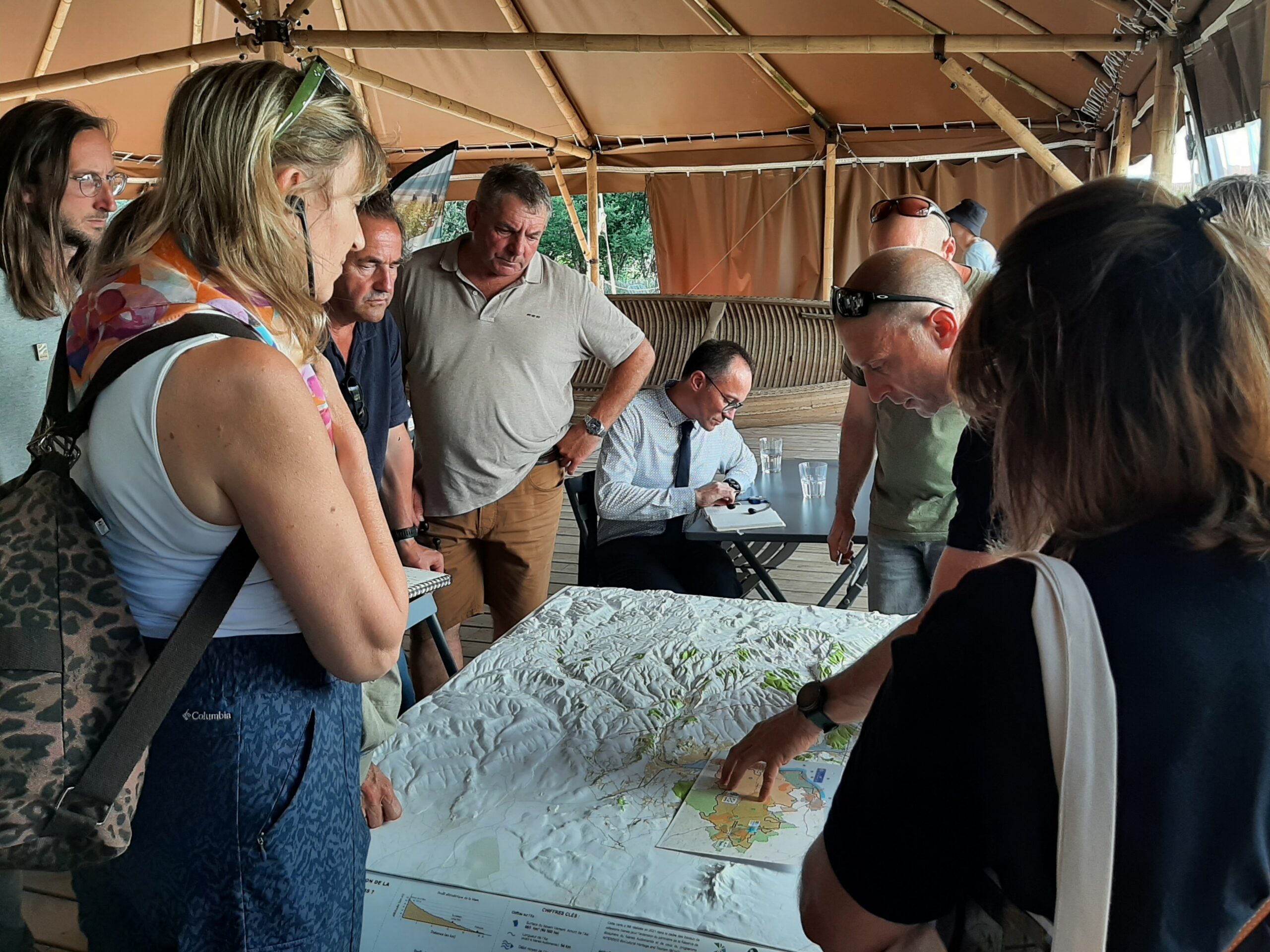
The final part of the day brought the assessors into the remarkable landscapes of the Audomarois marshes, a UNESCO Man and the Biosphere Reserve, where they explored the links between geology, water, biodiversity, heritage and sustainable tourism.
Hosted by:
- Rémi Colin, Les Faiseurs de Bateaux, who presented the economic activity of the organisation and the traditional skills involved in the restoration of bacove boats, highlighting the importance of preserving local craftsmanship and cultural heritage.
- Aurélien Brietz and Marie-Noëlle Cuevas, from the Parc naturel régional des Caps et Marais d’Opale, who introduced the Biosphere Reserve, its role in sustainable management, the challenges linked to water management, and its complementarity with the Geopark approach.
- Alexandre Dumont, from EDEN62 and Geopark Ambassador, who presented the educational work carried out at the site, showcasing how interpretation and engagement activities help people understand and connect with the natural and cultural heritage of the marshes.
The visit explored the traditional restoration of the bacove boats, the history of the marshes, natural flood management, biodiversity and the importance of maintaining traditional skills.
A boat journey through the marshes provided a fitting reminder of the interconnected nature of the Geopark – where geology, water, wildlife, heritage and people are all part of the same story.
The day ended with a warm welcome from Gîte Batistin, Gîte de la Reinette des Près and The Granby, showcasing the role of local businesses and accommodation providers in supporting sustainable tourism and creating authentic experiences for visitors.
Day 5 – Reflecting on the journey
The final day of the UNESCO assessment visit was a time for reflection, conversation and looking ahead.
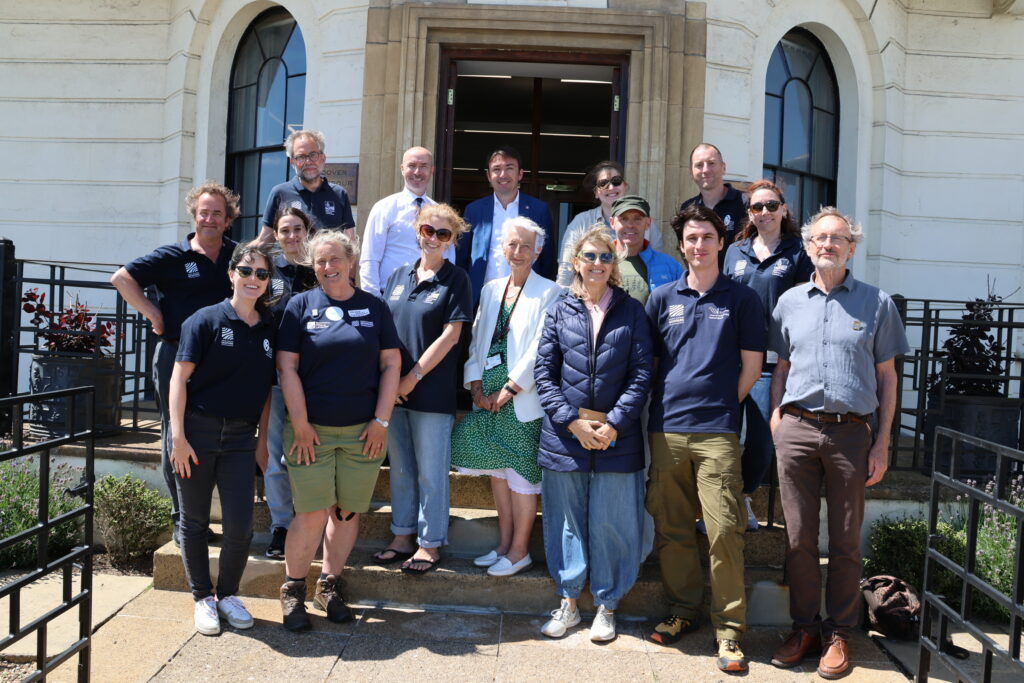
At Maison du Patrimoine in Saint-Omer, the assessors met with the Cross-Channel Geopark Transmanche team for a final debrief, reflecting on the experiences of the previous five days and the many stories they had heard along the way.
After visiting landscapes, communities and projects across both sides of the Channel, the assessors departed for their next UNESCO Global Geopark assessment visit.
Thank you for making this moment possible
The UNESCO assessment visit was a milestone for the whole Cross-Channel Geopark Transmanche community.
Made possible by the incredible generosity, enthusiasm and commitment of hundreds of people who shared their time, knowledge, stories and passion.
To every partner and ambassador who welcomed the assessors, hosted a visit, guided a walk, prepared a presentation, shared research, provided transport, supported logistics or helped create a memorable experience – thank you.
And to everyone who has supported the Cross-Channel Geopark Transmanche ambition over the past five years – thank you.
The assessors didn’t just see incredible geology. They saw a community united by a shared passion for place.
What happens next?
Following the visit, the UNESCO assessors will now prepare their evaluation report based on their findings.
The report will form part of the formal assessment process and will be reviewed alongside the Cross-Channel Geopark Transmanche application.
A final decision on whether the Cross-Channel Geopark Transmanche is awarded UNESCO Global Geopark status is expected in spring 2027.
Whatever the outcome, this week has been a remarkable celebration of everything the Cross-Channel Geopark Transmanche represents.
Popular articles
Explore the Cross-Channel Geopark with Our Geotouristic Map
Your guide to the Cross-Channel Geopark: download the free Geotouristic Map and…
The Best Viewpoints in the Cross-Channel Geopark
Discover the most spectacular viewpoints across the Cross-Channel Geopark, from the Kent…
Your guide to exploring the Cross-Channel Geopark with interpretation panels
Explore the Cross-Channel Geopark like never before with new interpretation panels that…